
Navigating Perception vs. Perspective

Updated: Feb 11
In the heat of a disagreement, we often feel like we are arguing about facts. In reality, most conflicts aren't about what happened, but about how we saw what happened and what it meant to us.
Understanding the distinction between perception and perspective is the difference between staying stuck in a loop of blame and finding a way forward.

Defining the Duo
While often used interchangeably, these two concepts function differently in our brains:
Perception: This is your sensory input and immediate interpretation. It’s the "What." It’s how you decode signals a raised eyebrow, a late text, or a tone of voice. Perception is often instinctive and can be easily skewed by stress or past trauma.
Perspective: This is your viewpoint or mental outlook. It’s the "Why." It is shaped by your life experiences, culture, values, and role. If perception is the photograph, perspective is the lens through which the photo was taken.
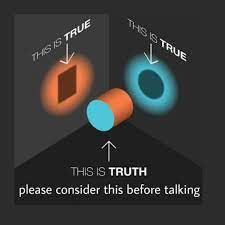
The Classic Example: Two people look at a number on the ground. One sees a 6, the other sees a 9. Their perception is the shape they see; their perspective is determined by where they are standing. Both are "right," but neither has the full truth.
Why They Clash in Conflict
Most conflicts escalate because we treat our perceptions as objective truths. When someone is late to a meeting:
Your Perception: "They don't value my time."
Their Perspective: "I stayed late to finish a crisis project so I wouldn't be distracted during our meeting."
Without checking in, you react to your perception, and they defend their perspective. This creates a "certainty trap," where both parties feel misunderstood and attacked.
Using These Tools in Daily Life
Shifting from reacting to analyzing allows you to de-escalate tension before it turns into a bridge-burning argument.
1. Practice "Perception Checking"
Instead of assuming your interpretation is correct, narrate it back to the other person.
Instead of: "Why are you being passive-aggressive?"
Try: "I noticed you’ve been quiet since I brought up the budget (Perception). I’m wondering if you’re frustrated with the plan, or if you’re just tired? (Checking)."
2. The "Seat-Switching" Technique
In a stalemate, literally ask: "If I were standing in your shoes, looking at me, what would I see?" This forces you to step out of your own narrative and acknowledge that their perspective is a product of their environment, not just "wrongness."
3. Separate Intent from Impact
Acknowledge that someone's perspective (their intent) might have been positive, even if your perception of the result (the impact) was negative.
"I know you intended to help by cleaning the kitchen, but my perception was that you were reorganizing things I had already set aside for a reason."
The Tight Squeeze: Perception vs. Perspective in a Crowded Room
Imagine you’re navigating a packed subway car or a narrow office hallway. Suddenly, someone’s shoulder slams into yours. Your coffee splashes, and you’re jolted off-balance.
In that split second, a conflict is born. Whether that conflict turns into a polite "Excuse me" or a heated confrontation depends entirely on how you navigate perception and perspective.
The Anatomy of the Bump
In an enclosed space, physical boundaries are thin, and our "fight or flight" responses are on high alert. Here is how the two concepts play out:
Perception (The "What"): You feel a sharp impact. You see a person moving quickly without looking. Your brain interprets this as: "This person is aggressive/clumsy/disrespectful."
Perspective (The "Why"): The other person is rushing to a family emergency, or perhaps they tripped on an uneven floor tile you didn't see. Their viewpoint is shaped by their destination and their physical surroundings.
Conflict Scenarios: Two Sides of the Same Impact
Let’s look at how a single bump can be interpreted through different lenses:
Feature | Person A (The "Bumpee") | Person B (The "Bumper") |
Perception | "I just got shoved. They didn't even say sorry." | "I lost my footing because the floor was slick." |
Perspective | Values personal space; feeling stressed and protective of their "bubble." | Feeling embarrassed; focused on not falling or missing a closing door. |
The Result | Aggressive "Watch where you're going!" | Defensive "It was an accident, relax!" |
How to Use This in the Moment
When space is tight and tempers are short, you can use these mental shifts to prevent a minor bump from ruining your day.
1. The 3-Second Rule
Before reacting, give yourself three seconds to acknowledge that your perception (that they were being a jerk) might not match their perspective (that they were struggling to stay upright).
The Thought: "I perceive a shove, but their perspective might be a struggle for balance."
2. Soften the Perception Check
If you feel the need to address it, focus on the physical reality rather than the character of the person.
Instead of: "You need to watch out, you're being reckless."
Try: "Oof, it’s tight in here! Are you okay, or did the floor just give way on you?"
Why it works: This acknowledges the shared "perspective" of the cramped environment rather than attacking their "intent."
3. Own Your Space (and Your Error)
If you are the one who did the bumping, realize that the other person's perception is one of being violated or startled. Even if your perspective is "it was a total accident," lead with an apology for the impact.
Try: "I am so sorry, I completely lost my balance in this crowd. I didn't mean to crowd you."
Conflict thrives on the belief that there is only one "correct" version of reality. By recognizing that your perception is just one data point filtered through your unique perspective, you create space for curiosity. Curiosity is the natural enemy of conflict.

About The Author
William DeMuth, Director of Training
With over 30 years of research in violence dynamics and personal safety, William specializes in evidence-based training with layered personal safety skills for real-world conflict resolution. He holds advanced certifications and has trained under diverse industry leaders including Lt. Col. Dave Grossman and Craig Douglas (ShivWorks), and is the architect of the ConflictIQ™ program. He actively trains civilians, law enforcement, healthcare workers, and corporate teams in behavioral analysis, situational awareness and de-escalation strategies.


