
FBI Backed Run Hide Fight: Practical Active Shooter Response Steps

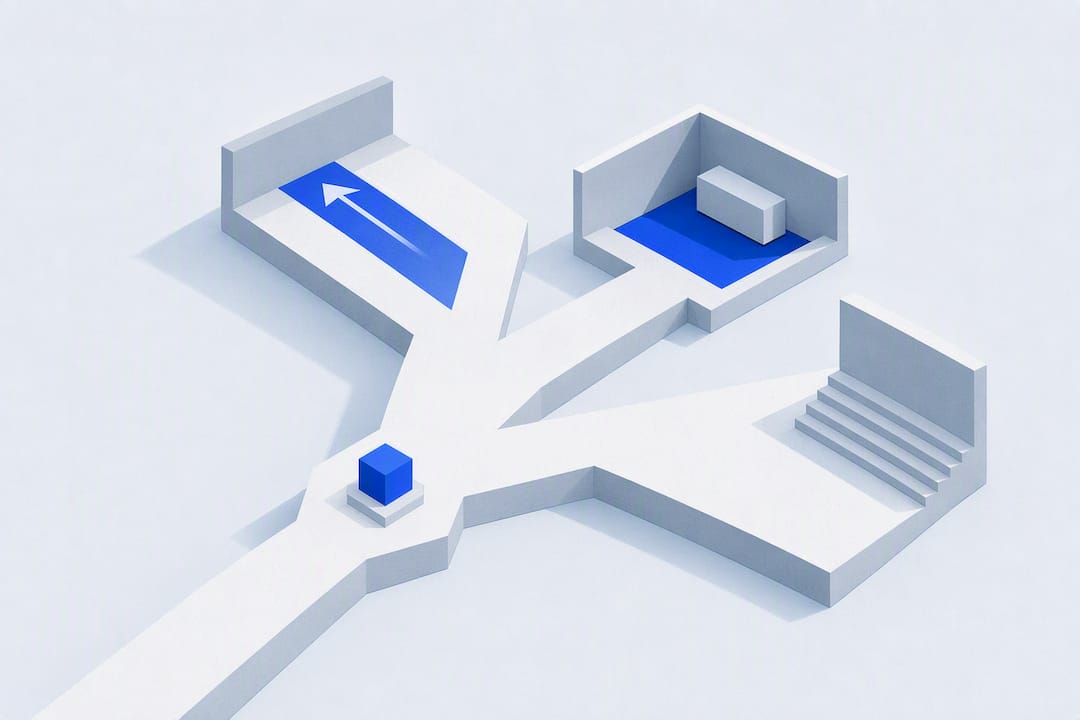
When gunfire erupts, the correct sequence of action is Run, Hide, Fight, in that order of preference: evacuate if you can do so safely, secure a hiding place if you cannot, and only as a last resort try to disrupt the shooter. The FBI, CISA, and Ready all endorse this framework because it works. Every second you spend deciding is a second you are not acting, so this guide gives you the steps now.
Executive Summary
Moving to an exit is the safest option if you can identify a clear, unobstructed path without exposing yourself to the threat.
Barricading, turning off lights, and staying low are crucial hiding tactics when escape is impossible, with cover being more effective than concealment.
Fighting should only be attempted as a last resort when you are directly confronted, have no escape options, and must act with aggression and improvised weapons.
Police prioritize stopping the shooter and may not assist injured individuals immediately; raise your hands and follow their instructions strictly.
Training through drills, planning, and regular practice is essential to turn knowledge into instinctual responses during an active shooter incident.
Table of Contents
Run: How to Evacuate Safely When You Have the Chance
Running is the preferred option whenever you can identify a safe way out. The decision has to happen fast, and it should be automatic, not deliberated in the moment. Ask yourself three things: Do I know an exit route? Is that route clear of the threat? Can I move without exposing myself unnecessarily? If the answer to all three is yes, go.
Once you commit to running, the rules are simple but easy to forget under stress.
Leave your belongings. A laptop bag or purse is never worth the seconds it costs you.
Keep your hands visible and empty as you move, both for your own safety and so arriving officers don’t mistake you for a threat.
Use walls, furniture, and doorframes as cover while you move rather than sprinting through open sightlines.
Help others only if it does not slow your own escape or put you back in the shooter’s path.
Once outside, keep moving away from the building. Don’t gather in the parking lot to watch.
Pro Tip: Make a habit of spotting two exits every time you walk into a restaurant, classroom, or conference room. This isn’t paranoia. It’s the same instinct pilots use before takeoff, and CISA’s preparedness guidance treats it as a core habit worth building deliberately.
Hide: Picking a Spot the Shooter Can’t Find or Breach
If running isn’t possible, your next move is to disappear from view and make your position as hard to breach as possible. A good hiding spot puts a locked door and, ideally, a solid barrier between you and the hallway. An office with a heavy door beats a bathroom stall with a flimsy one.
Once you’re in place, secure it methodically:
Lock the door, and if you can’t lock it, barricade it with furniture, filing cabinets, or anything heavy enough to slow entry.
Turn off lights and silence phones, including vibration mode, which can still be heard in a quiet room.
Move away from the door and any windows, and stay low.
Spread out rather than clustering together. A group in one corner is a single target; people spread across a room force the shooter to work harder and give more of you a chance to react. FBI training materials treat concealment (staying unseen) and cover (a barrier that can actually stop a round) as two different things, and cover is the better position when you have a choice between them.
If you can silently text 911 or a group chat with your location, do it. Do not call and speak if there’s any chance you’ll be overheard.
Fight: The Last Resort When There’s No Other Option
Fighting only makes sense when the shooter is in the room with you, there’s no path to run or hide, and your life is in immediate danger. This isn’t a plan you choose. It’s the one that’s left when every other option has already failed.
If you’re there, commit completely:
Act with total aggression and speed. Half measures get people killed.
Improvise weapons. Fire extinguishers, chairs, scissors, a laptop swung by its cord, all become tools.
Target the eyes, throat, and groin, where an untrained attacker has the least ability to defend.
If multiple people are present, coordinate an ambush rather than acting alone. A shooter distracted by one person is more vulnerable to a second.
Pro Tip: If you’re ever in this position, the goal isn’t to win a fight. It’s to disrupt the shooter long enough for others to escape or for law enforcement to arrive. Every second of disruption saves lives, and that’s the entire point.
What Should You Do When Police Arrive?
Officers responding to an active shooter are moving toward the threat, not toward you, even if you’re injured. Their job in the first minutes is to stop the shooting, not administer aid, and FBI guidance is direct about this: rescue teams follow behind the first officers specifically to treat the wounded.
When officers reach you:
Raise your hands and keep them empty and visible at all times.
Drop bags, phones, or anything in your hands immediately.
Avoid quick movements, pointing, or shouting, which can be misread under pressure.
Follow every instruction exactly, even if it seems to contradict what you expected.
Expect to be held for questioning as officers sort out who is a victim, witness, or suspect.
Don’t run toward officers for help. Let them come to you once the scene allows it.
What to Tell 911 and What to Do If You Can’t Speak
Dispatchers need specific details fast, and giving them clearly is one of the most useful things you can do from a hiding spot. Report the exact location (building, floor, room number), the number of shooters, physical descriptions, the type of weapons you saw, and the direction they were last moving. This information shapes how officers approach the building.
Call only when it’s safe to do so. If speaking would give away your position, leave the line open. Dispatchers are trained to listen for background information even when you can’t talk.
“Active shooter, third floor, north hallway, one shooter, male, dark jacket, rifle.”
“Can’t talk, leaving line open.”
Accurate details shrink the time officers spend searching and speeds up the moment help actually reaches you, as outlined in the Ready.gov active shooter guidance.
What First Aid Should You Give Once You’re Safe?
Once you’ve reached a secure location and confirmed the immediate threat has passed or officers have taken control, bleeding control becomes the priority. Severe blood loss can be fatal within about five minutes, which is often faster than paramedics can reach a victim inside an active scene.
Confirm the scene is secure, or you’re acting under direction from law enforcement, before approaching an injured person.
Call or confirm 911 has been notified.
Apply firm, direct pressure to the wound with whatever cloth or material is available.
For a limb wound that won’t stop bleeding with pressure alone, pack the wound or apply a tourniquet high and tight above the injury.
Free “Stop the Bleed” courses, often run through FEMA-affiliated programs, teach this in under an hour and are worth taking before you ever need them.
Direct pressure and a properly applied tourniquet can control life-threatening bleeding in the same window where blood loss would otherwise become fatal. Learning the technique in advance is what makes it usable under stress.
Why Training Turns Knowledge Into Action
Reading these steps once is not the same as being able to execute them while your hands are shaking and your ears are ringing. Some organizations seek training in crisis intervention, de-escalation, behavior analysis, and hands-on Run, Hide, Fight drills to help their people react from muscle memory instead of panic.
Repetition is what closes the gap between knowing the steps and doing them. Drills that walk staff through locking a specific door, identifying a specific exit, and practicing direct pressure on a mock wound build the kind of automatic response that a one-time read-through cannot. Organizations serious about active shooter preparedness build exit mapping, drills, and basic first-aid training into a regular schedule, not a once-a-year checkbox.
How Should Teams Communicate During an Active Shooter Event?
Communication during an active shooter event has two audiences: the people physically near you, and the people trying to coordinate a response from outside the building. Both need different information delivered differently.
With people near you, silence is often the safest form of communication. A pre-agreed hand signal for “stay,” “move,” or “quiet” does more good than whispered instructions that might carry through a thin door. Many organizations build these signals into their Emergency Action Plans precisely because verbal coordination becomes unreliable once adrenaline takes over.
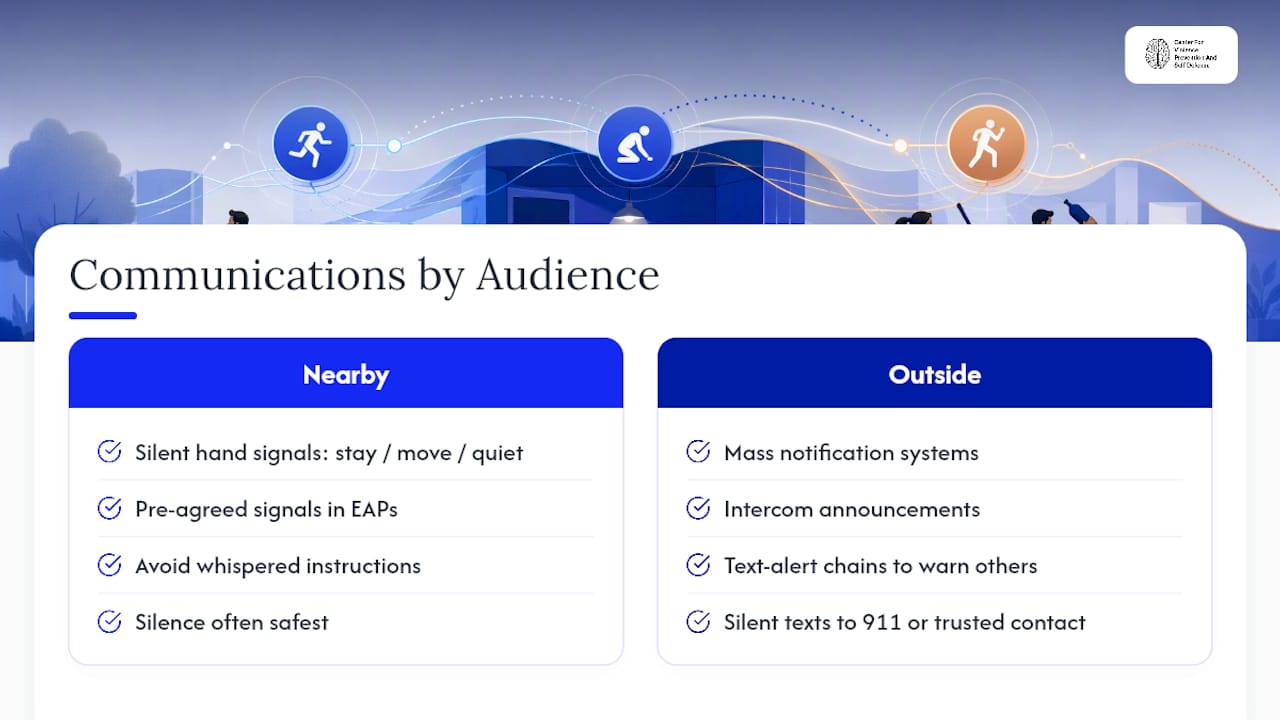
With the outside world, a mass notification system, an intercom announcement, or a text alert chain can warn people in other parts of a building before the threat reaches them. Schools and workplaces that have invested in these systems in advance give occupants in unaffected areas a head start to lock down before the danger is anywhere near them. That head start is often the difference between a room that hides successfully and one that gets caught off guard.
The same discipline applies to your own phone use. Silent texts to 911 or to a trusted contact can convey your location without giving away your position through sound. A single group text with a room number and one word, like “safe” or “hiding,” can also spare first responders the burden of checking every room individually once the scene is cleared. Plan this chain of communication before an incident, not during one, because devising a system in the middle of a crisis rarely goes well.
What Happens After the Incident? Reunification and Next Steps
Once law enforcement declares a scene secure, the immediate danger is over, but the logistics of accounting for everyone are just beginning. Organizations with a reunification plan built in advance move through this phase far faster than those improvising it.
A functioning plan designates a reunification point away from the original building, ideally at a location staff and family members were told about before any incident, not one announced over a bullhorn afterward. Names get checked against a roster. Anyone unaccounted for gets flagged to law enforcement immediately rather than assumed to be fine.
Expect to be interviewed. Officers and investigators will want your account of what you saw and heard while details are still fresh, and that process can take hours even if you were never in direct danger. This is normal and it is not an accusation. It’s part of piecing together what happened.
If you were in the building, do not leave the area without checking in with responding officers or the designated reunification point, even if you feel completely fine. Families searching for missing loved ones rely on those check-ins, and an unaccounted-for person who simply went home creates hours of unnecessary fear for people who care about them. Organizations that walk through post-conflict procedures as part of their planning tend to handle this phase with far less chaos than those encountering it cold.
How Do Survivors Cope With the Psychological Aftermath?
The adrenaline that got you through the incident doesn’t simply switch off once the danger passes. Shaking hands, a racing heart, tunnel vision, and a strange sense of detachment are common in the hours immediately afterward, and none of them mean something is wrong with you.
Psychological first aid in the immediate aftermath is less about talking through what happened and more about basic stabilization: water, a place to sit, a blanket, and a person who can simply stay with you without demanding a detailed account. Pushing someone to recount the event in vivid detail within the first hours can do more harm than good. That conversation belongs with a trained counselor, not a well-meaning bystander.

In the days and weeks that follow, intrusive memories, sleep disruption, irritability, and a heightened startle response are common and typically ease over time. If they persist for weeks or intensify rather than fade, that’s a signal to seek a mental health professional with experience in trauma, not a sign of personal weakness. Employers and schools that bring in trauma-informed counseling in the days following an incident, rather than treating it as a one-day event, tend to see people recover more steadily.
Witnesses and bystanders who weren’t physically harmed can still experience real psychological impact. Survivor’s guilt, in particular, shows up often in people who escaped unharmed while others did not, and it deserves the same attention as any other trauma response.
What Should Bystanders Do During and After the Incident?
A bystander’s job during the event itself is narrow: follow Run, Hide, Fight for your own safety first. You cannot help anyone if you become a second casualty, and heroics that ignore your own survival odds rarely end well for anyone involved.
Where bystanders genuinely help is in the margins. A person calmly directing others toward a known exit, without shouting or creating panic, can prevent a bottleneck that costs lives. Someone who silently texts a location to 911 while others are too frightened to move gives responders information they wouldn’t otherwise have. A bystander trained in bleeding control who steps in once a space is secure can be the difference between a survivable injury and a fatal one.
After the incident, bystanders play another role: accurate witnesses. What you saw, heard, and remember, including details that seem small, like the direction a shooter moved or a description of clothing, matters to the investigation and to future prevention efforts. Resist the urge to embellish or fill in gaps with assumption. Investigators need precision, not narrative.
Bystanders also shape the emotional tone in the aftermath. Panic is contagious, but so is calm. A person who stays steady, speaks in a measured voice, and avoids amplifying fear in a crowded reunification area does real, measurable good for everyone around them, even without saying much at all.
A Note on Survival Mindset From Shawn Lebrock
The people who freeze, run back for a phone, or bunch together in a corner aren’t making a moral failure. They’re making an untrained decision under extreme stress. Rehearsing your exits, practicing direct pressure on a wound, even mentally walking through the steps once a month, replaces panic with a decision you’ve already made. Seek out real training. It’s the gap between hoping you’d react well and knowing you will.
— Shawn Lebrock
Get Your Team Trained Before You Need It
Reading through Run, Hide, Fight builds awareness, but awareness fades under real stress unless it’s been rehearsed. Training built specifically for organizations often covers evacuation planning, hiding and barricading technique, first-aid response, and the behavioral awareness that helps people recognize a threat before it escalates.
Schools, healthcare facilities, corporate teams, and community groups work with CVPSD to turn this article’s steps into drills their staff can actually execute, not just recognize. Organizations that also want to stock physical preparedness supplies, including bleeding-control kits, can look to partners like StokdUp for disaster-ready gear. If your organization hasn’t run a Run, Hide, Fight drill this year, contact CVPSD to schedule a session and find out what tailored training looks like for your team.
Sources
FAQ
What Is the Run, Hide, Fight Framework?
Run, Hide, Fight is the federally endorsed active shooter response protocol: evacuate if it’s safe, hide and secure your location if you can’t escape, and fight only as an absolute last resort when your life is in immediate danger.
Should I Always Run First in an Active Shooter Situation?
Running is preferred whenever you have a clear, safe path to an exit, but if no safe route exists, moving straight to hiding is the correct choice instead.
What Should I Tell 911 During an Active Shooter Event?
Give the exact location, number of shooters, physical descriptions, weapon types, and direction of movement, and if you can’t safely speak, leave the line open so dispatchers can listen.
How Long Do I Have to Control Severe Bleeding?
Severe blood loss can become fatal in about five minutes, which is why direct pressure or a tourniquet applied immediately after reaching safety can be lifesaving.
Does CVPSD Offer Active Shooter Training for Organizations?
Active shooter training in crisis intervention, de-escalation, and Run, Hide, Fight drills tailored to schools, healthcare facilities, corporations, and community groups is available through some providers.
Recommended
About the Author: William DeMuth is the Director of Training at the Center for Violence Prevention and Self Defense (CVPSD) in Freehold, NJ. With over 35 years of research in violence dynamics and personal safety, William specializes in evidence-based training that bridges the gap between compliance and real-world conflict resolution. The architect of the ConflictIQ™ program, he holds advanced certifications and has trained under diverse industry leaders. Today, he actively trains civilians, hea


