
Public Health Guide to BTAM and a Buyer Checklist for Safety Leaders

Behavior analysis for threats, known formally as Behavioral Threat Assessment and Management (BTAM), is a fact-based, multidisciplinary process that identifies, inquires into, and manages individuals who may pose a risk of violence. Its value is practical: earlier, non-punitive intervention before behavior escalates. Organizations from schools to hospitals now build BTAM programs around guidance from the Department of Homeland Security, NCITE at the University of Nebraska, and CVPSD’s own training experience.
Table of Contents
What Is BTAM and Why Does Context Matter More Than Content?
BTAM exists to answer one question responsibly: is this person on a path toward violence, and what can be done to redirect them? The Department of Homeland Security frames it as a systematic process built on multidisciplinary teams that offer alternatives to punishment and support early, sustained intervention. That framing matters because most people who eventually commit targeted violence never issue a direct threat. They leak concerning behavior in fragments: a comment overheard in a break room, a grievance posted online, a sudden withdrawal from coworkers or classmates.
That is why BTAM practitioners lean on context, not just content. A single alarming statement means little without knowing the person’s history, stressors, and access to means. Overreacting to isolated words can stigmatize someone who needs support, not suspicion.
A sound program does three things well:
Connects concerning individuals to services rather than isolating them.
Reduces risk through documented, team-based decisions instead of one person’s gut call.
Fits inside a broader supportive system, whether that is a school’s multi-tiered support structure or a hospital’s culture-of-safety initiative.
Who Belongs on a Behavioral Threat Assessment Team?
A BTAM team works only if it has the right mix of people in the room before a crisis, not after. The core team typically covers four functions, and each one fills a gap the others cannot.
A safety or security lead who understands facility access, existing incident history, and law enforcement liaison procedures.
A human resources or administrative representative who can speak to employment or enrollment status, disciplinary history, and policy constraints.
A mental health or clinical consultant who can help interpret behavioral warning signs without diagnosing from a distance.
A senior leader with decision authority, so the team can act on recommendations instead of waiting on approval chains.
Smaller organizations rarely have all four in-house, and that is fine. Practitioners at NCITE note that effective teams need to be both committed and accessible for rapid response, which means a school district or mid-size employer can formalize a standing relationship with an outside psychologist, a regional prevention coordinator, or local law enforcement rather than trying to staff every seat internally. An extended team, including legal counsel, community mental health agencies, and threat consultants, gets activated for complex cases while the core team handles routine screening.
How Do You Build a BTAM Program Step by Step?
Programs fail most often because they skip the groundwork and jump straight to forming a committee. Build in this order instead.
Secure leadership buy-in. Tie BTAM directly to existing safety, HR, or student-support goals so it reads as an extension of the mission, not a new bureaucratic layer.
Define scope and policy. Spell out what counts as a reportable concern, who receives reports, and how confidentiality is protected, including an anonymous reporting channel for people who fear retaliation.
Stand up the reporting infrastructure. A hotline, an online form, or a simple email alias works, provided staff actually know it exists and trust it.
Triage every report through a screener. A short initial review sorts cases into “no further action,” “monitor,” or “escalate to full assessment.”
Run the full assessment for escalated cases. Gather facts from multiple sources, weigh them against structured professional judgment rather than instinct, and document the reasoning behind every decision.
Build the management plan. Pair the risk finding with concrete interventions and a review date.
The operational guidance from NCITE treats these steps as sequential, not optional; a program that skips the policy stage and jumps straight to case management usually runs into privacy or legal exposure later. CVPSD’s guidance on creating a workplace violence prevention plan walks through the same policy groundwork in more operational detail.
Pro Tip: Keep the screener short. If your intake form takes longer than ten minutes to complete, staff will quietly stop using it, and that silence looks like safety when it is actually a reporting failure.
What Training Do Different Roles Actually Need?
Not everyone on staff needs the same depth of training, and buying one-size-fits-all instruction wastes budget while leaving your core assessors under-prepared. NCITE research on baseline BTAM capabilities recommends a tiered training structure that scales with responsibility.
Tier 1, foundational awareness: every employee or staff member learns to recognize warning signs and knows how to report them. A short annual module covers this.
Tier 2, reporters and supervisors: managers, teachers, and frontline supervisors get deeper training on documentation and initial triage decisions.
Tier 3, core assessors: team members conducting full assessments need specialized instruction in structured interviewing, risk formulation, and case management.
Tier 4, master trainers: a small group trained to train others, sustaining the program without permanent dependence on outside consultants.
Statistic Callout: NCITE’s baseline capability findings list routine training and dedicated work management capacity among the top elements separating programs that hold together from ones that fade within a year.
Delivery should mix formats. Instructor-led sessions work best for Tier 3 skill-building, blended online modules cover Tier 1 efficiently across large staff populations, and tabletop simulations keep every tier sharp between real cases.
How Do Teams Move From Assessment to Ongoing Case Management?
Assessment is the fact-finding phase, and it works only when teams resist the urge to fill gaps with assumptions. Gather information from multiple sources: supervisors, peers, records, and, where appropriate, the individual themselves. The Department of Homeland Security’s guidance is explicit that most people moving toward violence never state their intent outright, so teams have to piece together indirect signals like sudden isolation, fixation on grievances, or acquisition of weapons.
Once the facts are in, the team forms a risk opinion, not a prediction. No tool can promise certainty, but structured frameworks reduce blind spots that individual judgment misses. From there, a management plan should include:
A specific service referral, whether that is an employee assistance program, school counseling, or community mental health care.
A monitoring schedule with a named owner, so no one assumes someone else is watching the case.
A safety plan for anyone directly affected, updated as circumstances change.
Reassessment isn’t a formality. Set a cadence, often 30 to 90 days depending on risk level, and define clear criteria for escalating a case to law enforcement or closing it once risk indicators subside. CVPSD’s overview of workplace threat assessment covers how these monitoring decisions play out in practice.
How Do You Keep a BTAM Program From Burning Out Its Team?
Programs that run on the energy of one dedicated staff member collapse the moment that person leaves or gets overloaded. Burnout is one of the most common, and most preventable, reasons BTAM programs lose fidelity over time. Rotate case responsibilities across team members and cap how many active cases any one person carries.
Routine tabletop exercises matter more than most organizations expect. NCITE’s operational research found that scenario-based drills are a high-value, low-cost way to keep skills sharp without waiting for a real case to test the team. Pair that internal practice with an external consultation relationship. DHS’s CP3 program connects organizations with regional prevention coordinators and grant resources specifically for this kind of capacity-building.

What Should You Look for When Choosing a BTAM Training Provider?
Procurement decisions get easier once you know which claims actually matter. Run any prospective provider through this checklist before signing a contract.
Curriculum alignment with DHS, NTAC, NCITE, or NASP guidance, not a proprietary framework invented in isolation.
Instructors with genuine multidisciplinary backgrounds, spanning security, clinical, and legal perspectives.
Scenario-based competency testing, not just a slideshow and a quiz.
Continuing education credits that satisfy licensing or certification requirements for your staff.
Customization for your sector, whether healthcare, education, corporate, or government.
Written assurance that training content complies with applicable state and local laws.
A path to post-training consultation, so questions that surface during a real case do not go unanswered.
Pro Tip: Ask any provider for a sample after-action report template before you sign. If they cannot show you how they document a closed case, they have not run enough real programs to teach yours.
A Practitioner’s Take on Where BTAM Programs Go Wrong
Most BTAM programs do not fail from lack of knowledge. They fail because a single training day gets mistaken for a finished program. Buy-in has to be renewed constantly, not banked once and forgotten. Treating BTAM as a disciplinary shortcut, a way to remove someone quietly, undermines the trust that makes reporting work in the first place. And when internal expertise runs thin, the honest move is calling in outside consultation rather than guessing.
Build Your BTAM Program With CVPSD’s Training and Consulting
CVPSD is the direct route to a working BTAM program instead of piecing one together from webinars and borrowed templates. Our instructor-led and online courses map to the tiered model outlined above: foundational awareness for every employee, deeper skill-building for supervisors and reporters, and specialized instruction for core assessors handling full case management. We also offer train-the-trainer certification so your organization sustains the program internally instead of depending permanently on outside instructors.
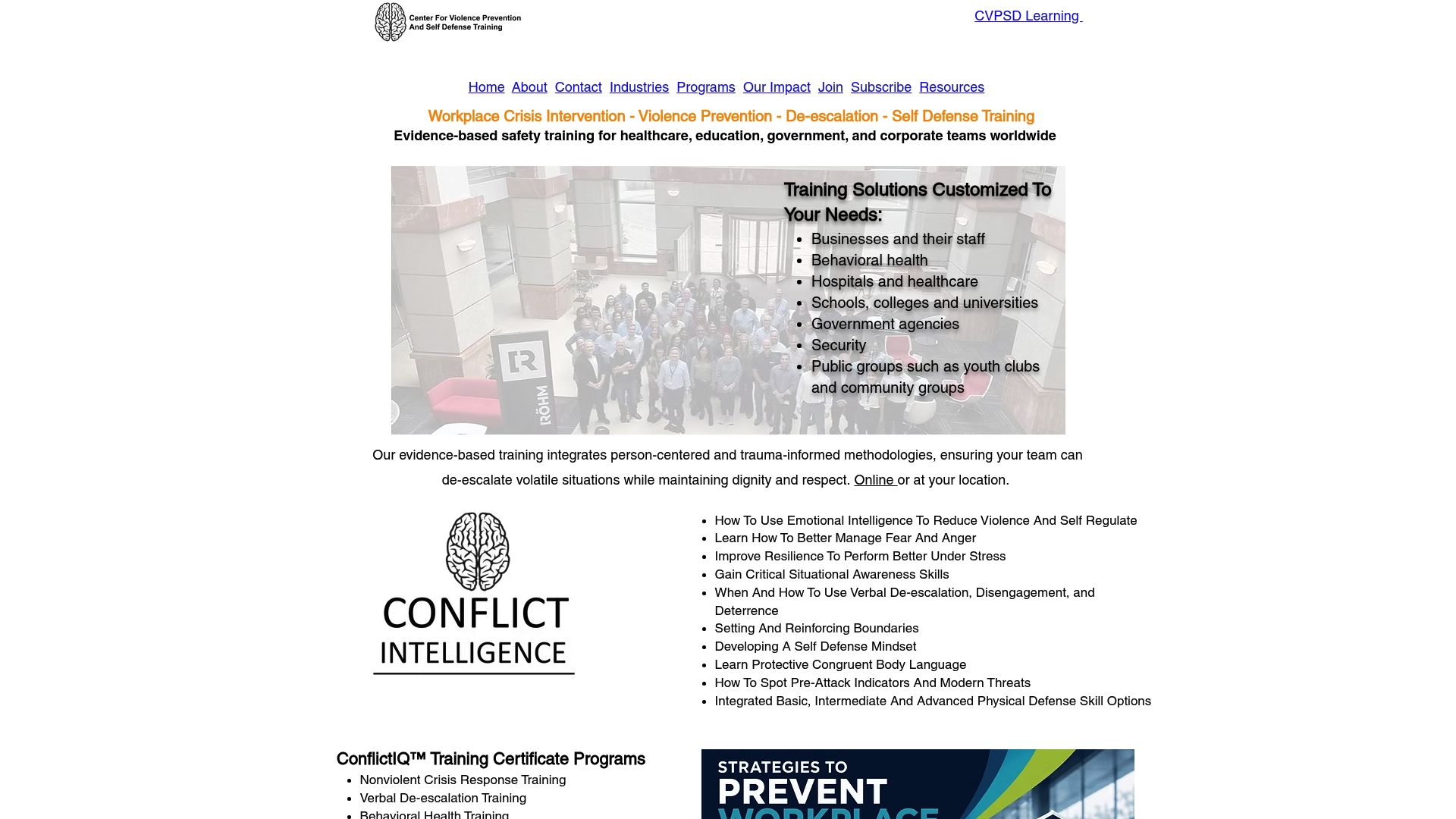
Programs are built to serve a variety of organizational settings and are designed in alignment with applicable laws and regulations. Beyond training, CVPSD provides consulting and advisory services for organizations that need external expertise on a specific case or program gap, along with scenario practice to keep teams sharp between real incidents. If your organization is ready to move from ad hoc awareness to a structured, sustainable BTAM program, reach out to CVPSD to request a training quote or schedule a consultation.
Where to Go Deeper on BTAM Guidance
DHS: Behavioral Threat Assessment and Management, the federal framework behind most program definitions.
NCITE tiered training research, University of Nebraska.
AHA BTAM resource compendium for healthcare settings.
Sources
FAQ
What Is Behavioral Threat Assessment and Management?
BTAM is a fact-based, multidisciplinary process organizations use to identify, assess, and manage individuals who may pose a risk of violence, favoring early intervention over punishment, according to the Department of Homeland Security.
Who Should Sit on a BTAM Core Team?
A functional core team usually includes a safety or security lead, a human resources representative, a mental health consultant, and a senior leader who can authorize action, with an extended team of legal, clinical, or law enforcement partners available for complex cases.
How Often Should Staff Receive BTAM Training?
Foundational awareness training should happen at onboarding and be refreshed annually for all staff, while core assessors need more frequent, specialized training and regular scenario practice to stay sharp, following the tiered model NCITE research supports.
When Should a BTAM Team Involve Law Enforcement?
Law enforcement should be brought in when facts indicate imminent danger, access to weapons, or escalating behavior beyond what internal monitoring and services can safely manage, and that threshold should be defined in written policy before a case ever arises.
How Can a Small Organization Sustain a BTAM Program?
Small organizations can sustain a program by rotating case responsibilities to prevent burnout, running routine tabletop exercises, and formalizing outside consultation relationships. Programs like CVPSD’s training and advisory services help fill expertise gaps without a full-time internal team.
Recommended
About the Author: William DeMuth is the Director of Training at the Center for Violence Prevention and Self Defense (CVPSD) in Freehold, NJ. With over 35 years of research in violence dynamics and personal safety, William specializes in evidence-based training that bridges the gap between compliance and real-world conflict resolution. The architect of the ConflictIQ™ program, he holds advanced certifications and has trained under diverse industry leaders. Today, he actively trains civilians, hea


