
Community Violence Prevention Strategies: A 2026 Guide

Updated: Jul 30
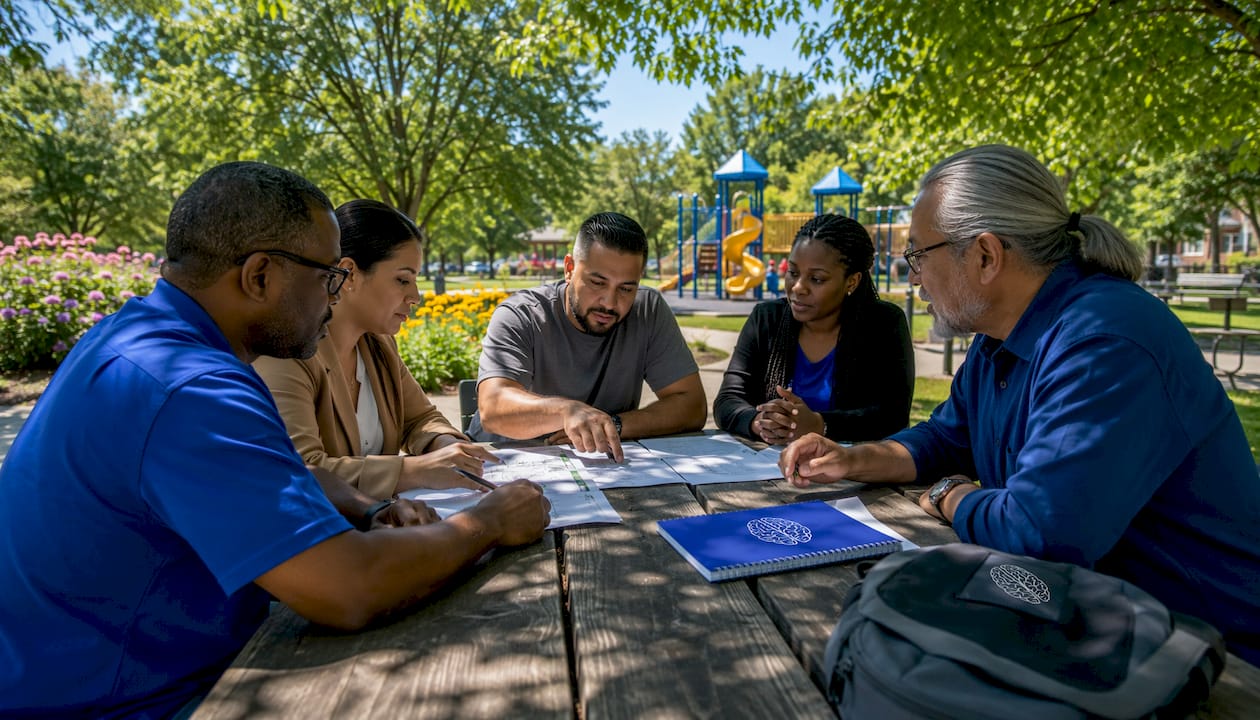
Community violence prevention strategies are defined as community-led, evidence-based efforts that interrupt cycles of violence before they escalate. The most effective programs treat violence as a contagious disease, shifting focus from punishment to public health intervention. Programs like Detroit’s ShotStoppers and frameworks from the Giffords Center for Violence Intervention show that credible messengers, coalition building, and social cohesion are the core pillars of lasting violence reduction. Community leaders who understand these pillars can build programs that protect neighborhoods and save lives.
What are the top 7 community violence prevention strategies?
The seven strategies below reflect the strongest evidence from current community violence intervention (CVI) research. Each one addresses a specific driver of violence and works best when combined with the others.
1. Community violence interruption
Community violence interruption (CVI) is the practice of deploying trained outreach workers to mediate conflicts before they turn deadly. Workers identify disputes in real time, engage the people involved, and negotiate peaceful resolutions. CVI programs combine individual engagement with neighborhood mobilization to address violence at both the personal and geographic level. This dual focus is what separates CVI from traditional law enforcement responses.
Key features of effective CVI programs include:
Real-time conflict mediation in violence hot spots
Follow-up case management for individuals at highest risk
Trauma-informed care to address underlying harm
Cognitive behavioral therapy referrals for long-term behavior change
2. Deploying credible messengers
Credible messengers are community members with direct lived experience of violence, incarceration, or gang involvement. Their authority comes from personal history, not institutional titles. Credible messengers maintain sustained, high-trust relationships that agency-led outreach simply cannot replicate. A social worker from outside the neighborhood rarely earns the same access or influence.
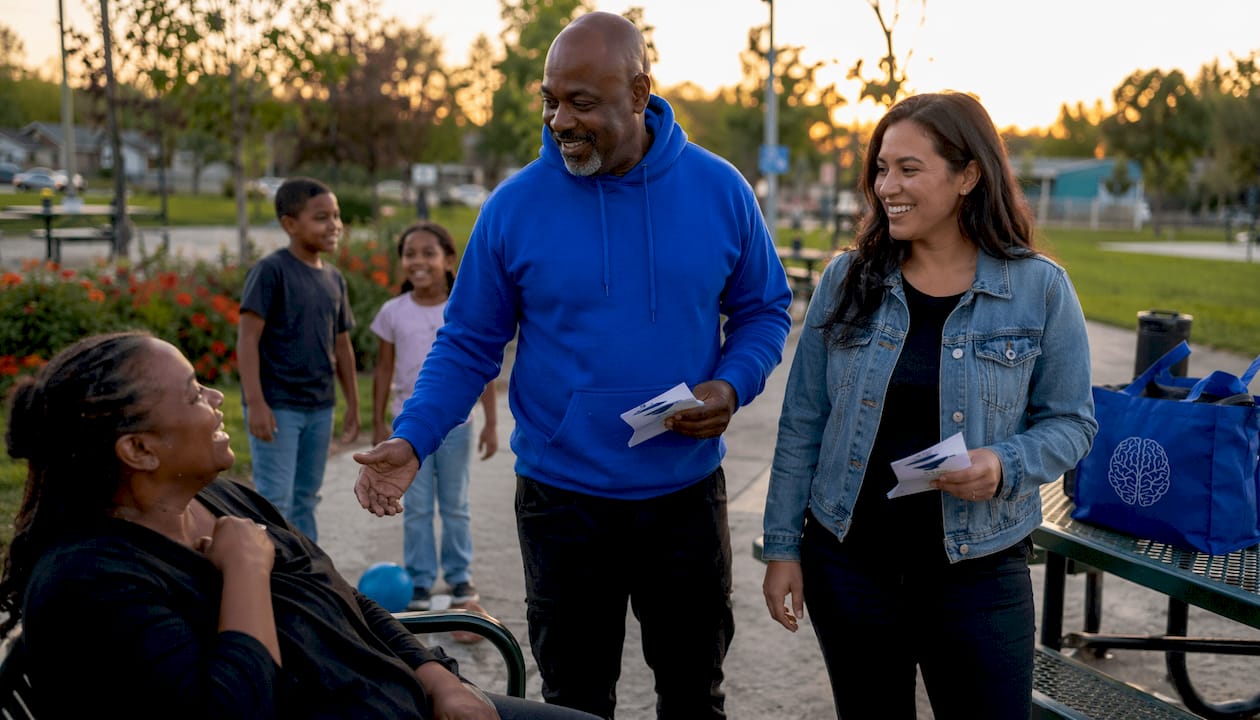
This matters because trust is the mechanism through which behavior change happens. When a credible messenger tells a young person that retaliation is not worth it, that message lands differently than the same words from a police officer or a nonprofit administrator. Programs that prioritize credible messengers consistently outperform those that rely on outside professionals alone.
Pro Tip: When recruiting credible messengers, prioritize candidates who are already respected in the specific blocks or zip codes where violence is concentrated. Neighborhood-level credibility matters more than city-wide reputation.
3. Building coalitions for systemic support
No single organization can prevent community conflict alone. Coalitions bring together CVI programs, social service agencies, schools, faith communities, and government offices under a shared framework. The Giffords Center identifies 11 stages in building effective state-level CVI coalitions, covering assessment, governance, advocacy, member engagement, funding, and long-term sustainability. That breadth reflects how much coordination genuine violence reduction requires.
Coalitions also create accountability to the communities they serve. When high-risk residents have a seat at the governance table, programs stay grounded in real neighborhood needs rather than funder priorities.
4. Strengthening social cohesion
Social cohesion is defined as the degree of trust and shared values among neighbors. When residents trust one another and local institutions, violence rates decline and community members engage more in informal social control. This means neighbors intervene in disputes, report suspicious activity, and look out for vulnerable residents without being asked.
Building social cohesion requires consistent, visible community presence. Block associations, neighborhood clean-up events, youth sports leagues, and community gardens all contribute. These activities seem small, but they create the relational fabric that makes a neighborhood resistant to violence.
5. Focused deterrence
Focused deterrence is a strategy that concentrates intervention resources on the small number of individuals statistically most likely to commit or become victims of violence. Research consistently shows that a very small percentage of people in any neighborhood drive the majority of violent incidents. Focused deterrence combines direct outreach to those individuals with a clear message: community support is available, but continued violence will bring a coordinated response from multiple agencies.
This approach works because it is specific. Rather than broad awareness campaigns, it targets the exact people at the center of conflict networks. It also pairs accountability with genuine offers of help, which makes the message credible rather than purely punitive.
6. Trauma-informed care and mental health support
Violence produces trauma, and unaddressed trauma produces more violence. Trauma-informed care means that every interaction with a high-risk individual acknowledges the role that past harm plays in current behavior. Effective CVI programs integrate trauma-informed care alongside cognitive behavioral therapy and social cohesion efforts to address violence at its psychological roots.
For community leaders, this means partnering with mental health providers who understand street-level trauma. It also means training outreach workers to recognize trauma responses and respond with calm, non-threatening communication rather than confrontation. CVPSD’s crisis intervention techniques are built on exactly this foundation.
7. Resource mobilization and flexible funding
Programs cannot sustain violence reduction work without stable, flexible funding. Short-term grants limit hiring consistent staff, and the relational work at the heart of CVI requires continuity. A credible messenger who disappears after six months because funding ran out leaves a gap that is very hard to fill.
Detroit’s ShotStoppers initiative demonstrates what flexible funding can accomplish. ShotStoppers funded five organizations to deploy localized strategies including conflict mediation and gang-rivalry meetings, and homicide rates declined in funded neighborhoods. The flexibility to adapt tactics to local conditions was central to that success.
How coalition building strengthens violence prevention programs
Coalitions are the infrastructure that turns individual programs into systemic change. A single CVI organization can interrupt conflicts. A coalition can change the conditions that produce them.
The stages of effective coalition development
The Giffords Center’s 11-stage coalition framework provides a practical roadmap for community leaders. The stages move from initial assessment and stakeholder mapping through governance design, policy advocacy, and long-term sustainability planning. Each stage builds on the previous one, so skipping ahead creates gaps that undermine the whole structure.
A well-governed coalition does four things well:
Establishes clear decision-making authority so no single agency dominates
Maintains direct accountability to high-risk community members
Coordinates data sharing among CVI workers, social services, and residents
Advocates for public investment in community-led violence reduction
Pro Tip: Start coalition building with a formal community assessment before recruiting organizational members. Understanding the specific violence patterns, trust networks, and resource gaps in your area will shape every governance decision that follows.
Sustaining coalition impact over time
Coalitions fail most often when founding energy fades and no formal structure exists to maintain momentum. Building a coordinated ecosystem of CVI workers, social service providers, and residents sharing real-time data is what separates coalitions that last from those that dissolve after the first grant cycle ends.
Governance structures matter as much as program content. Coalitions with rotating leadership, transparent budgets, and regular community reporting sustain member engagement far longer than those run by a single charismatic director.
Why community trust is the foundation of violence prevention
Social cohesion is not a soft outcome. It is a primary protective factor against violence. Communities with high levels of interpersonal trust see lower rates of violent crime because residents actively intervene in disputes and support one another through hardship.
The role of credible messengers in building trust
Credible messengers do not just interrupt conflicts. They rebuild the social trust that violence erodes. Their community legitimacy far outweighs what any outside agency can offer. An outreach worker who grew up on the same block, served time, and came back to prevent others from making the same choices carries moral authority that no credential can replicate.
Police departments increasingly act as secondary partners in CVI programs, supporting community-led organizations rather than leading the work. This shift reflects a hard-won recognition that law enforcement presence alone does not build the trust needed for lasting violence reduction. Community leaders who understand this distinction build programs that actually reach the people most at risk.
For practical guidance on conflict prevention best practices, CVPSD offers frameworks specifically designed for community leaders working in at-risk neighborhoods.
What funding challenges limit violence prevention programs?
Funding instability is the single most common reason effective CVI programs collapse. Short-term, restricted grants force organizations to hire part-time staff, limit outreach hours, and constantly redirect energy toward grant writing instead of community work.
Sustainable programs require a different financial model. Key strategies include:
Pursuing multi-year government contracts rather than annual grants
Diversifying revenue across federal, state, local, and philanthropic sources
Building a data infrastructure that demonstrates measurable outcomes to funders
Professionalizing the CVI workforce with competitive salaries and benefits
Partnering with hospitals and health systems, which have financial incentives to reduce violence-related emergency care
Investing in program infrastructure beyond frontline workers sustains impact over time. Data systems, supervisory capacity, and organizational management are not overhead. They are what keeps frontline workers effective and accountable.
Key Takeaways
The most effective community violence prevention programs combine credible messengers, coalition governance, social cohesion efforts, and flexible long-term funding to produce lasting reductions in violence.
Point | Details |
Treat violence as a public health issue | Shifting from punishment to intervention produces better outcomes than law enforcement alone. |
Credible messengers are irreplaceable | Workers with lived experience build trust that outside agencies cannot replicate. |
Coalitions require formal governance | Structured decision-making and data sharing sustain coalition impact beyond the founding phase. |
Flexible funding is non-negotiable | Multi-year, unrestricted funding allows programs to hire consistent staff and maintain relational work. |
Social cohesion reduces violence | Communities with high interpersonal trust engage in informal social control that deters conflict. |
What I’ve learned from watching these programs work and fail
The programs that actually reduce violence share one quality that rarely appears in grant applications: they are genuinely trusted by the people most at risk. That trust is not built through branding or outreach campaigns. It is built through years of consistent presence by people who have something real in common with the individuals they serve.
What I have seen fail, repeatedly, is the assumption that a well-designed program structure can substitute for that trust. Organizations sometimes spend months developing governance frameworks, logic models, and evaluation plans before they have a single credible messenger on staff. The structure matters, but it cannot come first.
The Detroit ShotStoppers model is instructive precisely because it inverted the usual approach. It gave flexible money directly to organizations that already had community credibility, then let them design their own tactics. The results were real because the authority was real.
Community leaders who want to build effective violence reduction programs should start with one question: who in this neighborhood do people actually listen to? Find those people first. Build the structure around them, not the other way around. The coalition, the data systems, and the funding strategy all matter. But none of them work without the human relationships at the center.
The other lesson I keep returning to is that violence prevention education is not a one-time event. It is an ongoing commitment that requires the same patience and consistency we ask of credible messengers themselves.
CVPSD programs for community violence prevention
CVPSD is a 501©(3) nonprofit that provides evidence-based training and education to community leaders, organizations, and advocates working to reduce violence in at-risk neighborhoods.
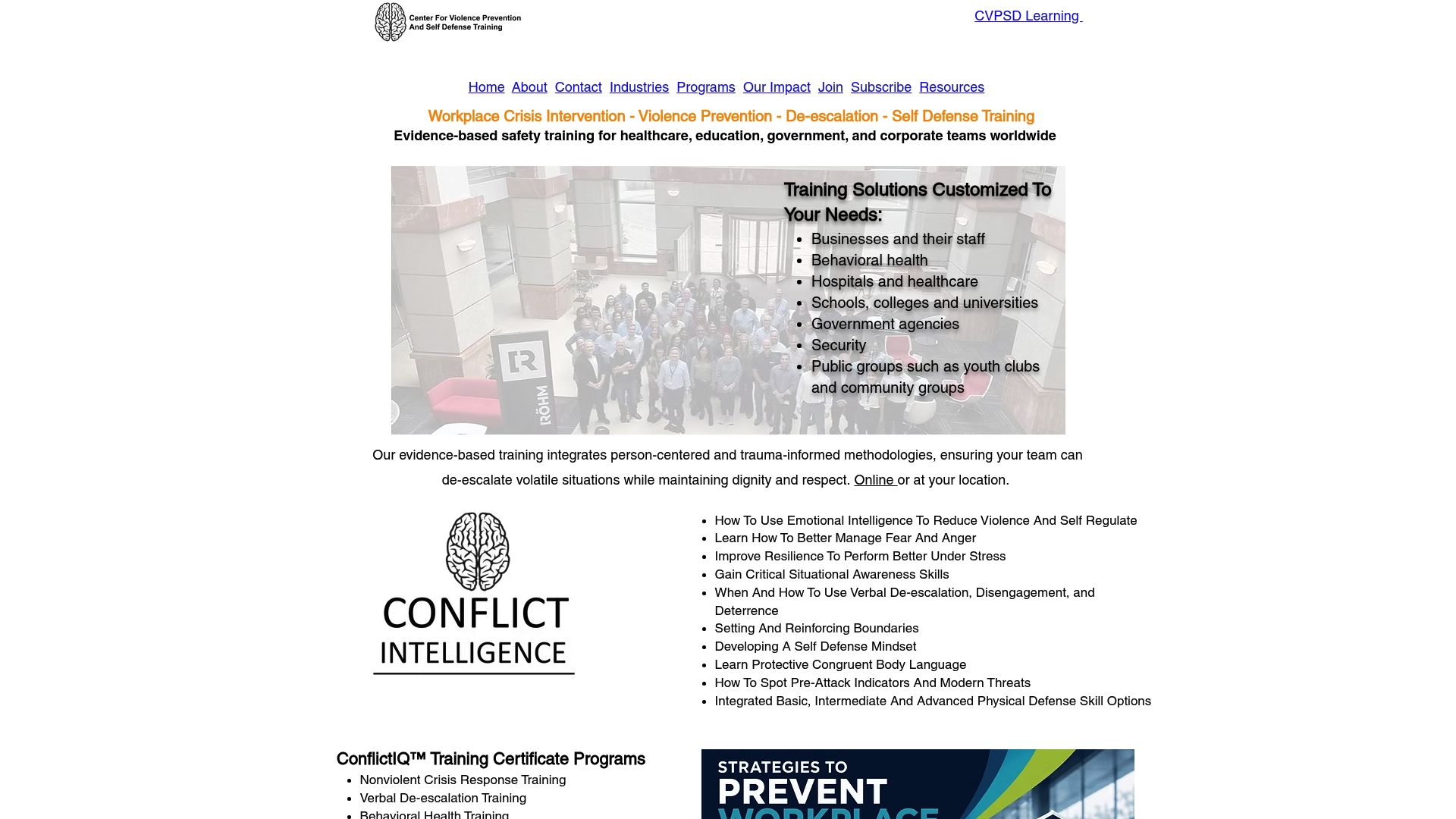
CVPSD’s programs include crisis intervention techniques, de-escalation training, behavior analysis, and nonviolent conflict resolution. These programs are designed for the real conditions community leaders face, not classroom simulations. Whether you are building a new violence prevention program or strengthening an existing one, CVPSD offers practical training resources for every stage of that work. Programs meet state and local legal requirements and are available in both online and in-person formats.
FAQ
What is community violence intervention (CVI)?
Community violence intervention is a public health approach that deploys trained outreach workers to interrupt conflicts before they turn violent. CVI programs focus on the individuals and locations at highest risk.
Why do credible messengers work better than traditional outreach?
Credible messengers have direct lived experience with violence, which gives them trust and access that outside professionals cannot earn. That trust is the mechanism through which behavior change actually happens.
How do you build a community violence prevention program?
Start by identifying credible community members with existing trust in high-risk areas, then build coalition governance and funding structures around them. The Giffords Center’s 11-stage framework provides a detailed roadmap for this process.
What is the biggest barrier to sustaining violence prevention programs?
Short-term, restricted grant funding is the most common reason effective programs collapse. Multi-year, flexible funding is required to hire consistent staff and maintain the relational work that reduces violence.
How does social cohesion prevent violence?
Social cohesion creates informal social control, meaning neighbors actively intervene in disputes and support one another without institutional prompting. Communities with high trust levels consistently show lower rates of violent crime.
Recommended


