
How to Recognize Early Warning Signs of Violence

Updated: Jul 9

Early warning signs of violence are observable behavioral patterns that typically appear before a violent act occurs. Recognizing these signals gives you time to act, seek help, and protect yourself or others. The FBI Behavioral Analysis Unit confirms that mass attackers reveal escalating warning signs over time rather than acting on sudden impulse. Violence is rarely random. Understanding how to recognize early warning signs of violence is one of the most practical safety skills any person can develop, whether at home, at work, or in the community.
What are the common early warning signs of violence?
The most consistent early warning signals for violence are behavioral, not physical. They appear gradually, often disguised as personality quirks or relationship intensity. Knowing what to look for changes everything.

Behavioral and emotional indicators
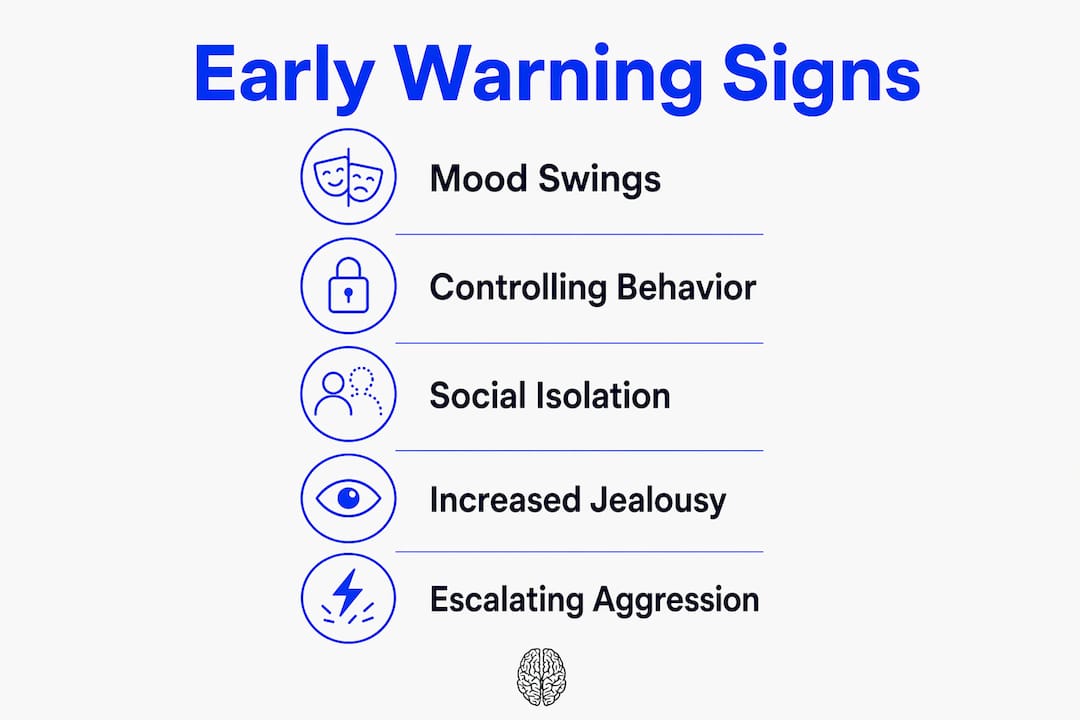
Research on domestic violence identifies a clear cluster of early warning signs that include extreme jealousy, controlling behavior, unpredictable mood swings, and isolation tactics. These patterns develop slowly, which makes them easy to dismiss at first. Over time, they compound into a recognizable threat profile.
Key indicators to watch for include:
Extreme jealousy and possessiveness. The person monitors your location, contacts, and activities without consent.
Controlling behavior. They dictate what you wear, who you see, or how you spend money.
Unpredictable mood swings. Calm one moment, explosive the next, with no clear trigger.
Verbal threats. Direct or veiled statements about harm, even framed as jokes.
Isolation tactics. Gradually cutting you off from friends, family, or support networks.
Blame shifting. Abusers frequently use phrases like “You made me do this” to transfer responsibility for their behavior onto the victim.
Subtle signs that are easy to miss
Two patterns deserve special attention because they are frequently overlooked. The first is “love bombing,” which involves excessive affection early in a relationship to establish control quickly. It feels like genuine devotion but functions as a manipulation tactic. The second is a “two-sided” personality, where a person appears charming and sociable in public but becomes aggressive or demeaning in private. Victims often struggle to reconcile these two versions of the same person, which can delay their recognition of the threat.
Pro Tip: Trust the pattern, not the moment. A single kind gesture does not cancel a history of controlling behavior. Look at the overall pattern across weeks and months, not isolated incidents.
How to identify signs of violence in different environments
Early indicators of aggression do not look the same in every setting. The context shapes how warning signals appear and who is positioned to notice them.
Environment | Common warning signals | Who typically notices first |
Personal relationships | Jealousy, isolation, love bombing, blame shifting | Partner, close friends, family members |
Workplace | Withdrawal, verbal outbursts, threats, grievance fixation | Coworkers, supervisors, HR personnel |
Community or school | Social isolation, expressed hopelessness, fascination with violence | Teachers, neighbors, peers, community members |
Violence arises from cumulative stressors and behavioral shifts, not sudden snaps. That progression means the people closest to someone are often the first to notice something is wrong, even before they can name it.
In workplace settings, warning signals often include a sudden change in performance, increased conflict with colleagues, or fixation on a specific grievance. A person who was once engaged may withdraw completely or begin making statements that suggest hopelessness or resentment. These shifts deserve attention, not dismissal.
In community and school environments, social isolation combined with expressed anger at a group or institution is a well-documented pattern. Peers and neighbors are frequently the first to observe these changes. Noticing behavioral changes and speaking up is the most effective non-physical form of intervention available to ordinary people. Many victims of overlooked violence share characteristics with underserved cold case victims, where early signals were present but went unreported.
How do you safely assess and respond to warning signs?
Recognizing a threat is only the first step. Responding safely and effectively requires a structured approach that does not put you at greater risk.
Document what you observe. Write down specific behaviors, dates, and times. Concrete records are more useful than general impressions when speaking with authorities or support professionals.
Name it clearly. Identify the behavior as a warning sign rather than explaining it away. Normalization is one of the most common barriers to early intervention.
Share your concerns with a trusted person. Tell a friend, family member, supervisor, or counselor what you have observed. Sharing concerns with trusted individuals reduces the likelihood of violence escalating.
Contact appropriate resources. Depending on the setting, this may mean speaking with HR, a school counselor, a domestic violence hotline, or law enforcement. Do not wait for violence to occur before reaching out.
Avoid direct confrontation with the person of concern. Physical intervention is not your role. Your role is to observe, document, and report.
Monitor ongoing behavior. A single warning sign may not be definitive. A pattern of escalating behaviors is the clearest signal that professional intervention is needed.
Pro Tip: If you feel unsafe raising a concern directly, use anonymous reporting options. Many workplaces, schools, and law enforcement agencies offer confidential tip lines specifically for this purpose.
Safety planning is a structured process used by domestic violence professionals to help people at risk create a step-by-step plan for leaving or managing a dangerous situation. CVPSD’s violence prevention training covers safety planning as part of its broader curriculum on recognizing and responding to threats.
Common mistakes when recognizing violent tendencies
The biggest barrier to early intervention is not ignorance. It is the very human tendency to explain away what feels uncomfortable to acknowledge.
Denial. Telling yourself the behavior is a one-time event or that the person “didn’t mean it” delays recognition and response.
Normalization. Accepting controlling or threatening behavior as normal relationship dynamics, especially when it has been present from the beginning.
Fear of being wrong. Worrying about overreacting or damaging a relationship can silence legitimate concern. Reporting a concern that turns out to be unfounded is far less harmful than staying silent about a real threat.
Misreading emotional manipulation. Victims experiencing persistent anxiety from managing an abuser’s mood swings often internalize the problem as their own fault. This is a direct result of manipulation, not a reflection of reality.
Stigmatizing the person of concern. Effective early intervention requires empathy alongside caution. The goal is prevention, not punishment.
Cognitive dissonance plays a significant role here. When an abuser’s public charm conflicts with private aggression, victims often spend considerable time trying to reconcile the two versions before seeking help. Understanding this dynamic helps both victims and bystanders respond with patience rather than judgment.
Tools and resources for violence prevention
Reliable resources exist for both people experiencing warning signs and those concerned about someone else.
Resource | Type | Purpose |
National Domestic Violence Hotline (1-800-799-7233) | Crisis hotline | Immediate support and safety planning |
FBI “Prevent Mass Violence” PSA | Government resource | Education on behavioral warning signs |
CVPSD online training programs | Nonprofit education | Structured training in recognition and response |
Nonprofit resource | Articles, shelter locator, and expert guidance | |
Educational resource | Warning sign checklists and safety planning tools |
CVPSD’s work in violence prevention education reaches schools, workplaces, and community organizations across the country. The organization provides training grounded in evidence-based research, covering behavior analysis, crisis intervention, and de-escalation. For people who want to go deeper, CVPSD’s resources on reading crisis warning signs offer structured frameworks for identifying escalating risk in real time. Awareness resources for overlooked victims of violence also provide context on how early signals are missed and what communities can do differently.
Key takeaways
Recognizing early warning signs of violence requires observing behavioral patterns over time, not reacting to a single incident, and responding through documentation, trusted communication, and professional resources.
Point | Details |
Violence follows a pattern | FBI research confirms attackers show escalating warning signs over time, not sudden impulse. |
Key signs are behavioral | Jealousy, isolation, blame shifting, and mood swings are the most consistent early indicators. |
Context shapes the signal | Warning signs look different at home, at work, and in community settings. |
Response requires structure | Document, report, and use professional resources rather than confronting the person directly. |
Denial is the main barrier | Normalization and fear of overreacting are the most common reasons early signs go unaddressed. |
Why vigilance is a community responsibility, not just a personal one
Working in violence prevention for years teaches you something that most safety guides skip over. The people who catch warning signs earliest are almost never trained professionals. They are coworkers who notice someone has gone quiet. They are neighbors who see a pattern of late-night arguments. They are friends who feel something is off but talk themselves out of saying anything.
The instinct to stay out of it is understandable. Nobody wants to be wrong, and nobody wants to damage a relationship over a hunch. But in my experience, the people who look back on a violent incident and say “I knew something was wrong” are far more common than the people who say “I had no idea.” The signals were there. The hesitation was the problem.
What I have found is that speaking up does not require certainty. You do not need to be sure something violent is about to happen. You need to share a specific observation with a specific person who can help. That is the entire job. CVPSD’s approach to recognizing threats of violence reinforces this point consistently: the community member who notices and speaks up is as important as any trained responder.
CVPSD training for violence recognition and prevention
CVPSD is a 501©(3) nonprofit that provides evidence-based education on violence prevention to individuals, schools, workplaces, and community organizations across the country.
CVPSD’s programs cover behavior analysis, crisis intervention, and de-escalation, giving participants the skills to identify warning signals early and respond without putting themselves at risk. Training is available both online and in person, designed to meet the needs of everyday people, not just security professionals. Whether you are concerned about a relationship, a coworker, or someone in your community, CVPSD offers structured, practical education that builds real confidence. Visit CVPSD’s training programs to learn more and find a program that fits your situation.
FAQ
What are the earliest warning signs of violence?
The earliest warning signs include extreme jealousy, controlling behavior, blame shifting, and unpredictable mood swings. These patterns typically appear gradually and intensify over time rather than appearing all at once.
Can violence really be predicted from behavioral signs?
FBI Behavioral Analysis Unit research confirms that most violent acts are preceded by observable behavioral escalation, not sudden impulse. Recognizing this progression early creates opportunities for intervention before violence occurs.
What should I do if I notice warning signs in someone I know?
Document specific behaviors with dates, share your concerns with a trusted person or professional, and contact appropriate resources such as a hotline, HR department, or law enforcement. Avoid direct confrontation with the person of concern.
Is love bombing always a warning sign of violence?
Love bombing, which involves excessive early affection to establish control, is a recognized manipulation tactic associated with abusive relationship dynamics. It does not guarantee violence will occur, but it is a documented early indicator that warrants attention.
How do warning signs differ between domestic and workplace settings?
Domestic settings often show signs like isolation, jealousy, and physical intimidation, while workplace settings more commonly involve withdrawal, grievance fixation, and verbal outbursts directed at colleagues or supervisors. Both settings share the pattern of escalating behavioral change over time.
Recommended


