
Lone Worker Safety: Risks, Protocols, and Best Practices

Updated: Sep 1
Lone worker safety means identifying and controlling the hazards that come with working alone, out of sight or earshot of a colleague who could help if something goes wrong. The single most important next step is a focused lone worker risk assessment paired with a clear check-in method, before anything else changes.
If you’re a worker, start today with two habits:
Confirm someone knows your schedule, location, and expected finish time before every solo task.
Agree on a check-in method (call, text, or app) and what happens if you miss one.
If you manage others, your first move is different: run a risk assessment on every role that involves solo work, then set the supervision level each role actually needs.
Executive Summary
Conduct a comprehensive risk assessment covering tasks, locations, health, equipment, and client contact before implementing controls for lone workers.
Set precise timing protocols for check-ins, including retries and escalation steps, to ensure timely emergency response when a worker misses a check-in.
Incorporate thorough training in situational awareness, de-escalation, and first aid to ensure workers respond effectively during emergencies and under stress.
Regularly test the entire system through drills, device checks, and simulation of missed check-ins to identify and fix failures proactively.
Build a safety culture that encourages open incident reporting, supervisor oversight, and continuous program review to adapt to changing work conditions.
Table of Contents
Who Counts as a Lone Worker?
A lone worker is anyone who performs their job without direct supervision or a colleague within sight or hearing distance. That includes people working alone at a fixed site, in a vehicle, or moving between locations for most of the day.
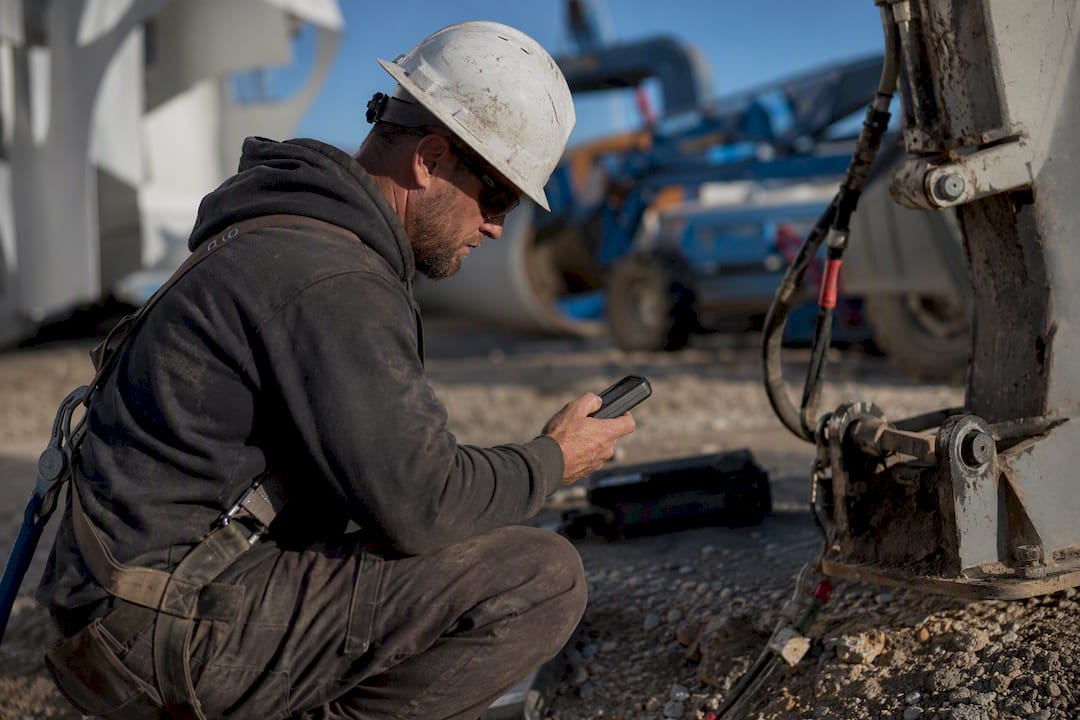
Common examples include home healthcare aides, field service technicians, after-hours retail staff, maintenance crews, security officers, and delivery drivers. Social workers conducting a home visit risk assessment before entering an unfamiliar household fall squarely into this category, and their exposure often gets underestimated.
Lone-worker situations also appear in ordinary workplaces you wouldn’t expect:
A staffer closing alone after the rest of the team leaves.
Someone assigned to an isolated task, like a warehouse night audit.
A worker covering a shift gap when a coworker calls out sick.
Why Lone Work Carries Elevated Risk
Lone work multiplies ordinary hazards because nobody is there to notice, intervene, or call for help. The CDC’s NIOSH Science Bulletin notes that working alone can delay or deny emergency response entirely, and the psychosocial toll of isolation compounds the physical risk over time.
The most common danger categories break down like this:
Physical hazards and equipment incidents — a fall, a machinery malfunction, or an exposure with no one present to shut down equipment or apply first aid.
Medical emergencies — a cardiac event, seizure, or diabetic episode where minutes matter and no witness exists to call 911.
Workplace violence — public-facing roles like home healthcare, retail, and delivery carry direct exposure to aggressive clients, customers, or strangers.
Environmental and remote-site exposure — extreme heat, cold, confined spaces, or wildlife hazards on isolated routes.
Psychosocial isolation — chronic anxiety and burnout from repeated solo shifts, rarely tracked but well documented in occupational health research.
A home health aide who collapses mid-visit with no one aware for hours. A field technician injured on a rural service call outside cell coverage. A retail associate confronted during an after-hours close. Each scenario shares one root problem: delayed detection, not the hazard itself.
How to Run a Lone Worker Risk Assessment
A usable lone worker risk assessment evaluates five variables together, not in isolation: the task, the location, the worker’s health status, the equipment involved, and the likelihood of client or public contact. OSHA’s hazard identification guidance frames this as a systematic process, not a one-time form.
Set decision rules before you need them:
Require a second person or a live-monitored device for certain high-risk tasks such as working at height alone, entering an unfamiliar residence, or handling cash after dark.
Escalate to a scheduled check-in system for moderate-risk, routine solo work.
Document any role where lone work is deemed unacceptable without additional controls, and record the alternative chosen.
Apply the hierarchy of controls: eliminate the solo exposure where possible, substitute a safer method (daylight visits instead of night calls), add engineering controls (locked vehicle cabins, panic hardware), then layer in administrative controls like check-in schedules and training. Recordkeeping isn’t optional here. Every completed assessment, every exception granted, and every incident report becomes the evidence trail that shows your program is more than a policy binder.
Pro Tip: Involve the worker in the assessment itself. People who help design their own check-in schedule are far more likely to actually use it instead of treating it as a box to check.
Building a Lone Worker Safety Plan: Check-Ins and Escalation
A lone worker safety plan lives or dies on what happens the moment a check-in gets missed. Three models cover most situations:
Scheduled check-ins — the worker calls, texts, or taps an app at set intervals (every 30, 60, or 90 minutes depending on risk level).
Buddy systems — a paired colleague tracks status in real time, common in field service and security roles.
Passive monitoring — a device or app tracks motion, location, or inactivity without requiring the worker to act.
Whichever model you choose, the fail-safe rule matters more than the method: define exactly what happens when a check-in doesn’t come in, and write it down.
A workable escalation sequence looks like this:
Minute 0-5: automated retry (a second call or app ping).
Minute 5-15: supervisor verification call to the worker and, if unanswered, to their emergency contact.
Minute 15-30: designated responder dispatched to the last known location.
Beyond 30 minutes or any sign of danger: contact 911 and hand off the situation to professional emergency response.
Assign a named responder for every shift, not a general “someone will handle it.” After any activation, close the loop with an incident report and a short review: what worked, what didn’t, and whether the timeline needs adjusting.
Social Worker and Frontline Training Topics That Actually Reduce Risk
Lone worker safety training should build five specific skills, not just cover policy. Situational awareness (reading exits, body language, and environmental cues), de-escalation, crisis intervention, basic first aid, and hands-on device training all belong in the curriculum. This matters intensely for social worker home visit safety, where staff walk into unpredictable households with no advance read on the environment.
Teach workers to trust early warning signs and disengage rather than push through discomfort.
Give supervisors clear responsibility for checking in on solo staff, not just receiving their check-ins.
Build a non-punitive reporting culture, so workers flag near-misses instead of hiding them out of fear of blame.
Deliver training through a mix of in-person scenarios and short digital refreshers, with formal retraining at least annually.
CVPSD’s situational awareness training series and workplace violence de-escalation programs both map directly onto these modules.
Choosing Lone Worker Monitoring Devices Without Overpromising
Device categories split into a few practical tiers: smartphone safety apps, one-touch panic buttons, fall-detection wearables, GPS or satellite trackers, and vehicle telematics for mobile roles. Each solves a different problem, and none of them solves the human response gap on its own.
Integration with a tested response protocol matters more than any single feature. A panic button that alerts an empty inbox does nothing; a panic button tied to a named responder and a documented escalation path does everything.
Coverage dead zones defeat GPS and satellite devices in rural or below-grade locations, so validate real routes before relying on them.
False alarms erode trust in the system fast if nobody tunes sensitivity settings early.
Data privacy and ongoing maintenance costs add up, especially for wearables tracking location continuously.
Before signing with any vendor, ask about their response service-level agreement, how they handle worker location data, and whether they support live testing during rollout.
Pro Tip: Run a “ghost” test before full deployment: send a worker along a typical route and log where signal drops or false alarms trigger, so you fix gaps before a real emergency exposes them.

Testing and Continuous Improvement
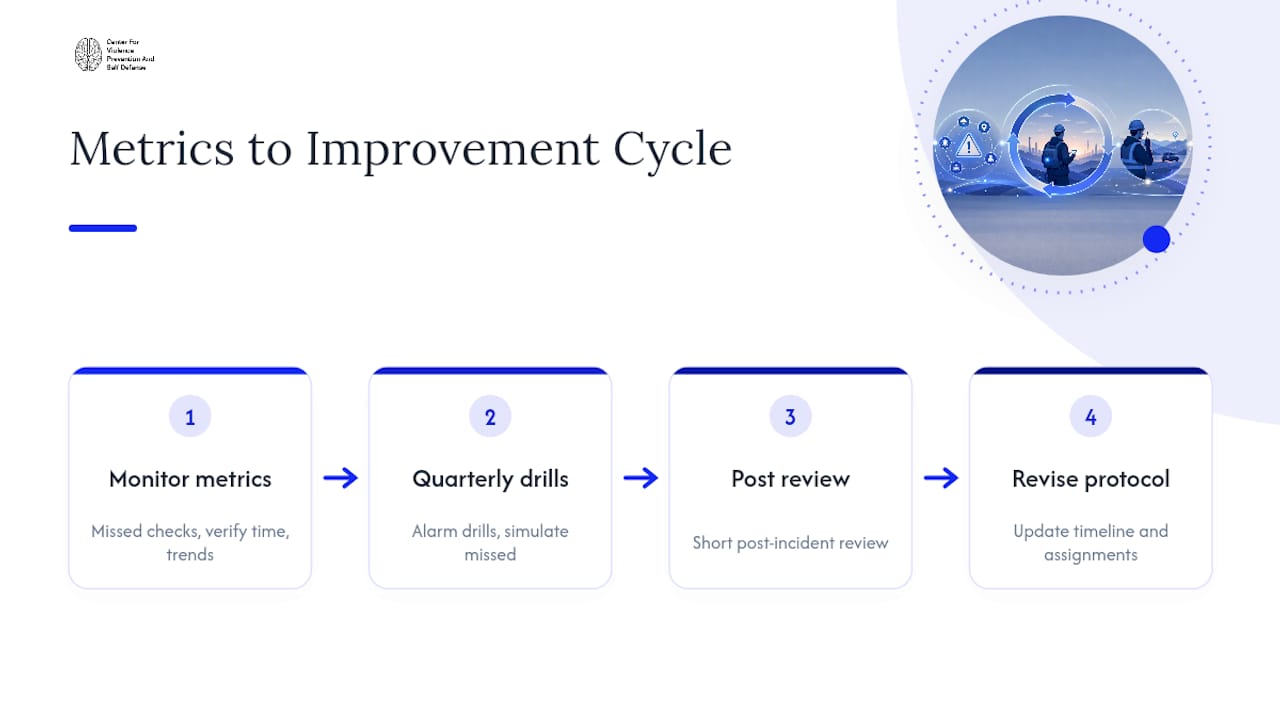
A lone worker safety checklist only works if you test it under realistic conditions, not just review it on paper. Schedule quarterly alarm drills, simulate a missed check-in to time your escalation response, and inspect device batteries and connectivity monthly.
Track a few core metrics: missed check-in frequency, average time to responder verification, and incident classification trends. After any real activation, run a short post-incident review and revise the protocol if the timeline or responder assignment didn’t hold up.
Legal Responsibilities and Employer Liabilities
Employers carry a direct legal obligation to protect lone workers, even when no single OSHA standard names “lone work” explicitly. OSHA’s General Duty Clause requires employers to maintain a workplace free of recognized hazards, and courts and OSHA investigators have applied that standard to violence, medical emergency response gaps, and unsafe solo assignments alike.
Where specific standards do exist, they can effectively restrict or condition lone work. Certain confined-space entries, high-voltage electrical tasks, and immediately dangerous atmospheres carry standards that require a second person or an attendant, meaning a lone-worker assignment for that task may itself be a violation.
Liability exposure grows sharply after an incident if an organization can’t show it identified the risk. A documented risk assessment, a written check-in protocol, and training records don’t just reduce actual danger. They form the paper trail that demonstrates due diligence if OSHA investigates or a worker’s compensation claim escalates into litigation.
State and local requirements add another layer. Healthcare licensing boards, home care agencies, and security contractor regulations often carry their own supervision and reporting mandates that stack on top of federal duty. Organizations operating across multiple states should treat the strictest applicable rule as the baseline, not the exception.
Insurance carriers increasingly ask about lone worker protocols during underwriting, particularly for home healthcare, field service, and security firms. A written plan, even a simple one, can affect premium calculations and claims outcomes after an incident. Skipping the assessment doesn’t just raise physical risk. It raises the financial and legal exposure sitting behind it.
Mental Health Support Strategies for Isolated Workers
Isolation carries its own slow-building risk that rarely shows up in an incident report until it becomes a resignation or a burnout crisis. Workers who spend most of their shift alone report higher rates of anxiety and chronic stress, and that toll compounds when they also carry the psychological weight of public-facing risk.
Build support into the schedule itself, not just an employee assistance program flyer in the break room. Regular one-on-one check-ins with a supervisor, focused on wellbeing rather than task completion, catch strain before it becomes a crisis. Peer support pairings, where lone workers connect briefly with a colleague doing similar work, reduce the sense of professional isolation even when the physical solo work continues.
Normalize talking about difficult encounters. A home health aide who had a frightening interaction with a client’s family member needs a debrief, not just a form to file. Treat these conversations as routine safety practice, the same way you’d treat a near-miss report on a physical hazard.
Watch for warning signs that point beyond normal job stress: withdrawal from team communication, increasing reluctance to take solo assignments, or a spike in missed check-ins that isn’t explained by signal issues. These often signal burnout building quietly before it becomes a resignation or a safety incident.
Give workers a clear, judgment-free path to request backup, reassignment, or a temporary reduction in solo shifts. A worker who feels safe asking for support before a crisis is a worker who stays, and one who reports problems honestly instead of pushing through alone.
Making Lone Worker Safety Part of Company Culture
Policies fail quietly when nobody above frontline staff treats them as real. The strongest lone worker programs get built into how the organization operates day to day, not filed away as a compliance document nobody revisits.
Leadership visibility matters more than most safety officers expect. When a manager personally checks a missed check-in log every morning, staff learn the system is watched and real. When that log sits untouched for weeks, workers learn the opposite fast, and adherence drops.
Fold lone worker procedures into onboarding from day one, not as an afterthought after someone’s first solo shift. New hires who learn the check-in system alongside their actual job tasks treat it as part of the work, not an extra burden layered on top.
Reward reporting instead of punishing it. A worker who flags a near-miss, a missed check-in caused by a dead zone, or a client interaction that felt off should never face blowback for raising it. Organizations that quietly penalize honesty train their staff to hide the exact information a safety program needs to function.
Revisit the program on a fixed schedule, not only after something goes wrong. An annual review that checks staffing changes, new routes, updated devices, and shifting client populations keeps the plan aligned with how the work actually happens now, not how it looked when the policy was written.
CVPSD Perspective: Why Training and Culture Matter as Much as Devices
Devices catch attention because they’re tangible. Training and culture are harder to see, which is exactly why they get underfunded, even though they determine whether a device ever gets used correctly under pressure. A panic button means nothing if the worker who needs it froze because they never practiced de-escalation, or didn’t report a warning sign because they feared blame.
CVPSD’s staff safety training programs build the behavioral layer that makes every check-in schedule and every device actually work when it counts. Pair the technology with the training, not one or the other.
— Shawn Lebrock
Get Help Designing a Lone Worker Safety Program
CVPSD trains the people behind every check-in system, so your protocols hold up when a real incident happens, not just on paper.

As a nonprofit focused on evidence-based crisis intervention and de-escalation, CVPSD designs training seminars for healthcare, education, corporate, and government organizations that need their lone worker plans backed by real skill, not just a device subscription. Programs cover situational awareness, de-escalation, and crisis response, delivered online or in person and built to meet your state and local requirements. If your organization is building or revising a lone worker safety plan, visit CVPSD to discuss a tailored training program for your team.
Key Takeaways
Lone worker safety succeeds when a documented risk assessment, a tested check-in system, and behavioral training work together, not when any single device carries the load alone.
Point | Details |
Start with assessment | Evaluate tasks, locations, worker health, equipment, and public contact before choosing controls. |
Define escalation timing | Set exact minute marks for retry, supervisor verification, responder dispatch, and 911 contact. |
Train beyond devices | Teach situational awareness, de-escalation, and first aid so technology gets used correctly under stress. |
Test the system regularly | Run missed check-in drills and device checks quarterly to catch failures before a real incident. |
Build a non-punitive culture | Reward incident reporting to surface risks early instead of hiding them. |
Pair CVPSD training with tools | CVPSD’s crisis intervention and de-escalation programs strengthen the human response behind any monitoring technology. |
Additional Resources
Sources
FAQ
What Are the Safety Protocols for Lone Workers?
Core protocols include a documented risk assessment, a scheduled check-in method, a written escalation plan for missed check-ins, and training in situational awareness and de-escalation.
What Are the OSHA Regulations for Lone Workers?
OSHA has no single standard naming lone work, but the General Duty Clause requires employers to address recognized hazards, including workplace violence and delayed emergency response for solo staff.
What Are the Main Risks to Lone Workers?
The biggest risks are delayed medical response, workplace violence, equipment or physical hazards, environmental exposure, and long-term psychosocial harm from isolation, according to NIOSH.
What Are Five Ways to Stay Safe When Working Alone?
Set a regular check-in schedule, carry connected safety technology, prepare for workplace violence scenarios, complete safety training, and maintain social support, based on guidance from the Texas Department of Insurance.
Does a GPS or Satellite Device Guarantee Lone Worker Safety?
No single device guarantees safety. Coverage gaps, false alarms, and battery failures mean any device needs a tested human response protocol behind it to be reliable.
Recommended


