
Practice Stress Inoculation in Self-Defense Training

Updated: Jul 2
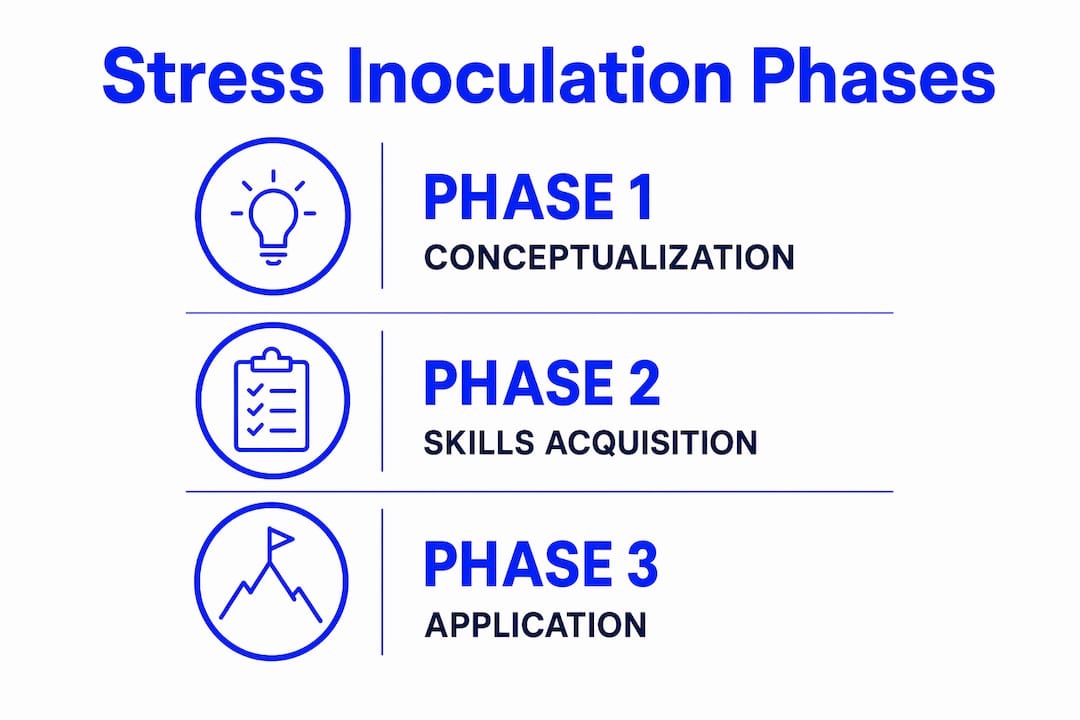
Stress inoculation training (SIT) is defined as the deliberate conditioning of your mind and body to perform effectively under acute stress by combining realistic physical drills with mental resilience techniques. Developed by psychologist Donald Meichenbaum, SIT follows a three-phase model: conceptualization, skills acquisition, and application. When you practice stress inoculation self-defense training, you are not just learning to fight. You are training your nervous system to treat a threat as a solvable problem rather than a paralyzing event. Cvpsd integrates this evidence-based framework into its self-defense programs, giving practitioners a structured path from awareness to reliable physical response.
What are the core phases of stress inoculation self-defense training?
Stress Inoculation Training builds a repertoire of coping responses and the confidence to engage stress rather than avoid it. Each of its three phases serves a distinct purpose, and skipping any one of them creates gaps that show up under real pressure.
Phase 1: Conceptualization
Conceptualization means identifying your personal stress triggers and understanding how your body reacts to threat. You learn to recognize cognitive distortions, such as catastrophic thinking, that amplify fear before a confrontation begins. This phase is not passive reading. It involves structured reflection, journaling, and guided discussion with a trainer who can help you map your specific fear responses.
Phase 2: Skills acquisition
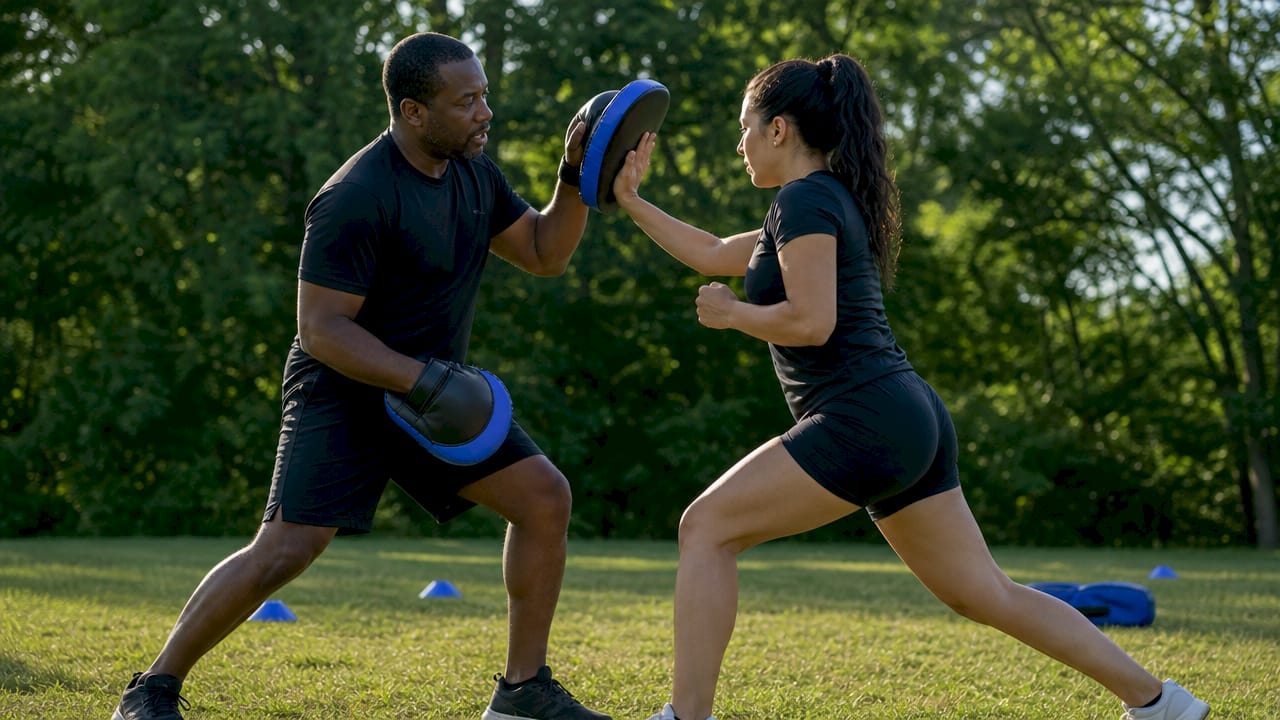
Skills acquisition covers both mental and physical tools. On the mental side, you practice diaphragmatic breathing, coping self-talk, and emotional labeling. On the physical side, you drill fundamental strikes, defensive postures, and movement patterns. The goal is to build each skill to the point where it requires minimal conscious effort.
Phase 3: Application
Graduated scenario practice begins with the least stressful situations and increases in intensity toward real-world challenge. This phase uses imagery, role-play, and stepped exposure to test whether your skills hold under mounting pressure. Role-players introduce emotional realism that solo visualization cannot replicate.
Start with low-stakes verbal confrontation scenarios.
Add physical contact with a padded training partner.
Introduce time pressure and multiple role-players.
Simulate environmental stressors such as low light or confined spaces.
Conduct full-intensity pressure tests with a trained evaluator present.
Pro Tip: Record your scenario sessions on video. Watching your own reactions under stress reveals fear patterns that you cannot perceive in the moment.
What mental resilience strategies enhance your performance under stress?
The greatest threat in a violent confrontation is often internal. Intelligent self-talk and emotional recognition activate survival instincts by managing the internal fear that can freeze you before you act. Self-defense expert Tony Blauer describes this as coaching yourself through the encounter the same way a calm teammate would. That internal voice is trainable.
Effective mental preparation for self-defense relies on four core strategies:
Emotional labeling: Name the fear you feel in the moment. Saying “I am afraid” to yourself reduces the amygdala’s threat response and restores prefrontal function.
Coping self-talk: Replace “I can’t handle this” with task-focused language such as “breathe, move, decide.” Self-instruction training applies before, during, and after a stressor, making it a durable skill.
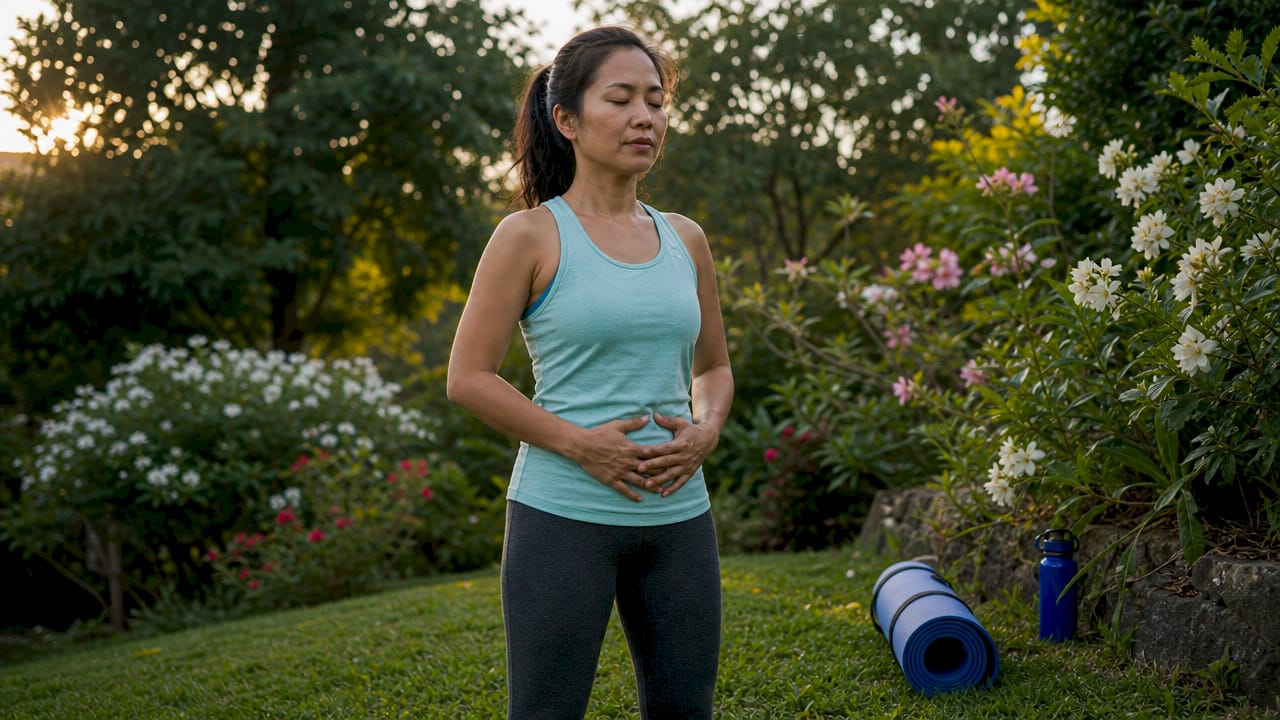
Tactical breathing: Inhale for four counts, hold for four, exhale for four. This activates the parasympathetic nervous system and slows the heart rate enough to restore fine motor control.
Neurological anchoring: Pairing a consistent tactile or auditory cue with breathing under stress creates an automatic calming response. Over time, that cue triggers calm without conscious thought during an encounter.
Mental toughness training at Cvpsd builds these skills progressively, so they become automatic rather than effortful under real conditions.
Pro Tip: Practice your coping self-talk phrases out loud during physical drills. Saying them under exertion trains your brain to access them when adrenaline is high.
How do you physically practice self-defense techniques under high stress?
Physical skill breaks down under adrenaline when it has not been tested under stress. Targeting soft tissue during self-defense triggers involuntary flinch responses regardless of an attacker’s size or strength. Simple strikes to the eyes, throat, or groin remain effective precisely because they do not require fine motor precision, which is the first thing adrenaline degrades.
The recoil principle is a foundational concept in reality-based self-defense. After delivering a strike, you immediately reset your position, scan for additional threats, and identify an exit. This sequence, hit, reset, scan, prevents tunnel vision and keeps you mobile rather than committed to a single exchange.
Effective physical drills for stress inoculation self-defense training include:
Physical preloading: Perform intense exercise such as burpees or sprints immediately before drilling defensive moves. This replicates the elevated heart rate of a real encounter and forces your technique to function under fatigue.
Pressure testing: Gradual intensity increases in a safe gym environment build confidence and muscle memory that transfer to real encounters. Start with cooperative partners and progress to resisting ones.
Role-play with emotional realism: High-fidelity drills with physical preloading calibrate the nervous system for genuine stress responses. A role-player who shouts, invades personal space, and behaves unpredictably creates stressors that a static bag drill never will.
Scenario repetition: Repeat each scenario enough times that your response becomes reflexive. Novelty creates hesitation. Familiarity creates speed.
Cvpsd’s reality-based workshops apply this exact progression, moving practitioners from controlled drills to full-scenario pressure tests with trained role-players.
What tools and environment support effective stress inoculation practice?
The training environment shapes how well skills transfer to real situations. High-fidelity stress scenarios are essential because imagination alone does not sufficiently prepare the nervous system for real threats. A practitioner who only visualizes confrontations has trained their imagination, not their nervous system.
The table below compares training approaches by stress level and the tools each requires.
Training approach | Stress level | Key tools | Primary benefit |
Solo visualization | Low | Quiet space, guided script | Builds mental rehearsal baseline |
Partner drilling | Low to moderate | Mats, protective gear, cooperative partner | Develops technique under light contact |
Scenario role-play | Moderate to high | Role-players, padded suits, timed drills | Conditions nervous system to real stressors |
Full pressure testing | High | Trained evaluator, resisting role-players, varied environments | Validates skill transfer under maximum stress |
Graduated exposure is the key principle. You begin with solo visualization and move toward full pressure testing only after your skills are stable at each prior level. Skipping levels produces practitioners who perform well in the gym and freeze outside it.
Mental prerequisites matter as much as physical ones. You need a genuine willingness to engage fear rather than avoid it, consistent attendance, and a trainer who can calibrate stress levels safely. Situational awareness is the foundation that makes all other training more effective, because it gives you more time to activate your coping skills before a situation escalates.
Key takeaways
Stress inoculation self-defense training works because it conditions the nervous system through graduated exposure, mental self-coaching, and realistic physical drills, not through willpower alone.
Point | Details |
Three-phase structure | Follow conceptualization, skills acquisition, and application in sequence to build durable coping skills. |
Internal fear is the first opponent | Train intelligent self-talk and emotional labeling to manage fear before it freezes your response. |
Tactical breathing is a physical tool | Pair a consistent cue with four-count breathing to create an automatic calming response under stress. |
Physical preloading bridges the gap | Drill defensive moves after intense exercise to replicate adrenaline-impaired conditions before they happen for real. |
Graduated exposure is non-negotiable | Move from visualization to full pressure testing in stages; skipping levels creates false confidence. |
What I have learned from years of watching people train under stress
The most common mistake I see is practitioners who invest heavily in technique but almost nothing in mental rehearsal. They can execute a clean strike on a bag. They freeze when a role-player screams in their face. The gap is not physical. It is the absence of trained emotional recognition.
The second mistake is the opposite: people who spend hours on visualization and self-talk but rarely pressure-test their physical skills. Imagination is useful for building a mental baseline. It is not a substitute for a resisting training partner. The nervous system learns from real stressors, not imagined ones.
What actually works is patient, consistent layering. You build the mental vocabulary first, then attach it to physical movement, then test both under graduated stress. The practitioners who progress fastest are not the most athletic. They are the ones who show up consistently, stay honest about their fear responses, and treat each scenario as information rather than a performance.
The skills you build through this process transfer well beyond self-defense. Emotional self-coaching under pressure is useful in medical emergencies, workplace crises, and any situation where fear threatens to override clear thinking. That transferability is one of the most underappreciated benefits of this training method.
“Stress is simply the adaptation of our bodies and minds to change.” – Peter G. Hanson, M.D
Cvpsd’s programs for stress inoculation and self-defense readiness
Cvpsd is a 501©(3) non-profit that combines evidence-based mental resilience training with practical physical self-defense instruction. Its programs are built on the same three-phase SIT framework described throughout this article, delivered by experienced instructors in both online and in-person formats.
Whether you are new to self-defense or looking to pressure-test skills you already have, Cvpsd offers structured courses that incorporate scenario-based drills, tactical breathing protocols, and expert-guided role-play. Programs serve individuals, schools, community organizations, and government agencies, and all training meets state and local legal standards. Visit Cvpsd’s training programs to find a course that fits your schedule and experience level.
FAQ
What is stress inoculation training in self-defense?
Stress inoculation training in self-defense is a three-phase method that conditions your mind and body to function under acute stress. It combines cognitive coping skills, tactical breathing, and graduated physical scenario practice.
How does tactical breathing help during a self-defense encounter?
Tactical breathing activates the parasympathetic nervous system, slowing heart rate and restoring fine motor control. Pairing it with a consistent cue creates an automatic calming response that works without conscious effort.
Why is pressure testing necessary in self-defense training?
Pressure testing exposes whether your skills hold when adrenaline degrades fine motor function. Without it, techniques that work in calm drilling often fail in real encounters.
How often should you practice stress inoculation drills?
Consistent, regular practice is more effective than infrequent high-intensity sessions. Short weekly scenario drills build the neurological pathways that make coping responses automatic over time.
Can stress inoculation training reduce anxiety beyond self-defense?
SIT can decrease anxiety and trauma symptoms while improving emotional regulation and assertiveness. The self-coaching skills it builds apply to any high-pressure situation, not only physical confrontations.
Recommended
No Easy Targets- A Complete Self-Defense System for Every Body Type, Personality, and Skill Level
Research From 500 Violent Encounters - In Real Fights, Avoidance Wins Every Time
Reality-Based Self-Protection: Why Pre-Situational Awareness Is Your First Line of Defense
How Overhooks and Underhooks Offer Better Control And Visibility To Weapons In a Clinch Fight

About the Author: William DeMuth is the Director of Training at the Center for Violence Prevention and Self Defense (CVPSD) in Freehold, NJ. With over 35 years of research in violence dynamics and personal safety, William specializes in evidence-based training that bridges the gap between compliance and real-world conflict resolution. The architect of the ConflictIQ™ program, he holds advanced certifications and has trained under diverse industry leaders. Today, he actively trains civilians, healthcare workers, and corporate teams in situational awareness, threat assessment, behavior analysis, de-escalation strategies, and physical tactics.


