
Prevent Domestic Violence Escalation: Steps That Work


Stopping domestic violence from getting worse starts with one decision: acting before the next incident, not after. The most effective prevent domestic violence escalation steps are not reactive. They are planned, practiced, and personalized to your specific situation and risk level. Whether you are currently living with an abusive partner or supporting someone who is, the strategies in this guide are grounded in evidence-based crisis intervention and survivor-centered safety planning.
Table of Contents
1. Immediate steps to prevent domestic violence escalation
When tension rises, your first priority is physical safety. These steps can reduce harm in the moment and create space to plan what comes next.
Move away from danger zones. Avoid arguments in the kitchen, bathroom, garage, or any room with weapons. Move to lower-risk spaces with access to an outside door.
Use a code word. Agree on a word or phrase with a trusted neighbor, friend, or family member. When you use it, they know to call for help or come over.
Do not escalate verbally. A calm, quiet voice carries more authority than raised words. Avoid direct challenges to the abuser’s control.
Buy time deliberately. If violence feels unavoidable, temporary submission is a recognized survival tactic. There is no shame in it. The goal is to stay safe long enough to plan.
Know your exits. Mentally rehearse which doors, windows, or stairwells you would use. Practice this at night and with children if they are present.
Keep keys and essentials accessible. Your purse, phone, and car keys should be within reach or stored where only you can find them.
Protect vital areas if attacked. If physical violence occurs and you cannot escape, make yourself physically small. Curl into a ball and cover your face and scalp with entwined fingers to reduce injury.
Pro Tip: No two situations are identical. Adapt these steps to your home layout, your partner’s patterns, and your personal risk level. What works for one person may not work for another.
2. Recognizing signs and patterns of escalating abuse
Escalation is rarely sudden. Abusers typically increase coercive tactics gradually, often triggered by a perceived threat to their control, such as a partner gaining independence, employment, or outside relationships. Recognizing the pattern early gives you more time and more options.

Escalation occurs when an abuser intensifies tactics to reassert power. This can look like tighter financial control, increased surveillance, or more frequent verbal attacks. Understanding this pattern is not about predicting the future. It is about reading the present clearly.
Common warning signs that abuse is escalating include:
Threats to harm you, your children, or pets
A history of strangulation or choking (a strong predictor of lethal violence)
Weapons in the home, or threats to use them
Extreme jealousy or accusations of infidelity
Isolation from friends, family, or coworkers
Monitoring your phone, location, or finances
Destruction of property or belongings
Controlling when and how you sleep, eat, or leave the home
Escalating frequency or severity of physical incidents
Coercive control, the pattern of behavior that strips away a person’s freedom and autonomy, often precedes physical violence. Learning to identify coercive control behaviors early is one of the most effective domestic abuse prevention steps available. Recognizing your own limits and boundaries matters too. When you notice yourself adjusting your behavior constantly to avoid triggering your partner, that adjustment is itself a warning sign.
3. Comprehensive safety planning steps to prevent violence escalation
A safety plan is not a single document. It is a living set of decisions, updated as your situation changes. Evidence-based safety planning is most effective when it covers multiple scenarios, is kept with a trusted person, and is rehearsed, not just written.
Identify safe rooms and exits. Know which spaces in your home have outside access and fewest hazards. Avoid rooms where weapons are stored.
Establish a code word and check-in schedule. Choose a word your children or trusted contacts will recognize as a signal for danger. Set regular check-in times; if you miss one, they know to act.
Prepare an emergency bag. Pack essential documents, including birth certificates, Social Security cards, passports, financial records, and health insurance cards. Add cash, medication, and a change of clothes. Store the bag somewhere accessible but hidden from your partner.
Secure copies of critical documents. Keep copies of identification, bank statements, tax returns, and lease or mortgage documents in a safe deposit box or with a trusted person outside the home.
Plan your vehicle for quick departure. Back your car into the driveway, keep it fueled, and lock all doors except the driver’s door. Hide a spare set of keys where only you can access them.
Avoid items that can be weaponized. If your partner has a history of strangulation or grabbing, avoid wearing scarves or jewelry that could be used against you.
Use a separate, private phone. A prepaid cellphone kept hidden gives you a way to call for help even if your partner controls your primary device. Memorize key phone numbers in case the phone is taken.
Protect your digital privacy. Use a public library computer or a trusted friend’s device to research resources. Your partner may be able to track your browsing history on shared devices.
Rehearse the plan with your children. Teach them how to call 911, use a code word, and go to a pre-arranged safe location. Practice in the dark.
Pro Tip: Review your safety plan regularly, not just when things feel dangerous. Situations evolve, and your plan should too. Keep it with someone you trust completely, not in a shared space at home.
4. Where to find help and support resources for domestic violence

Reaching out is one of the hardest steps. Knowing exactly where to turn before a crisis makes it far more likely you will act when it counts.
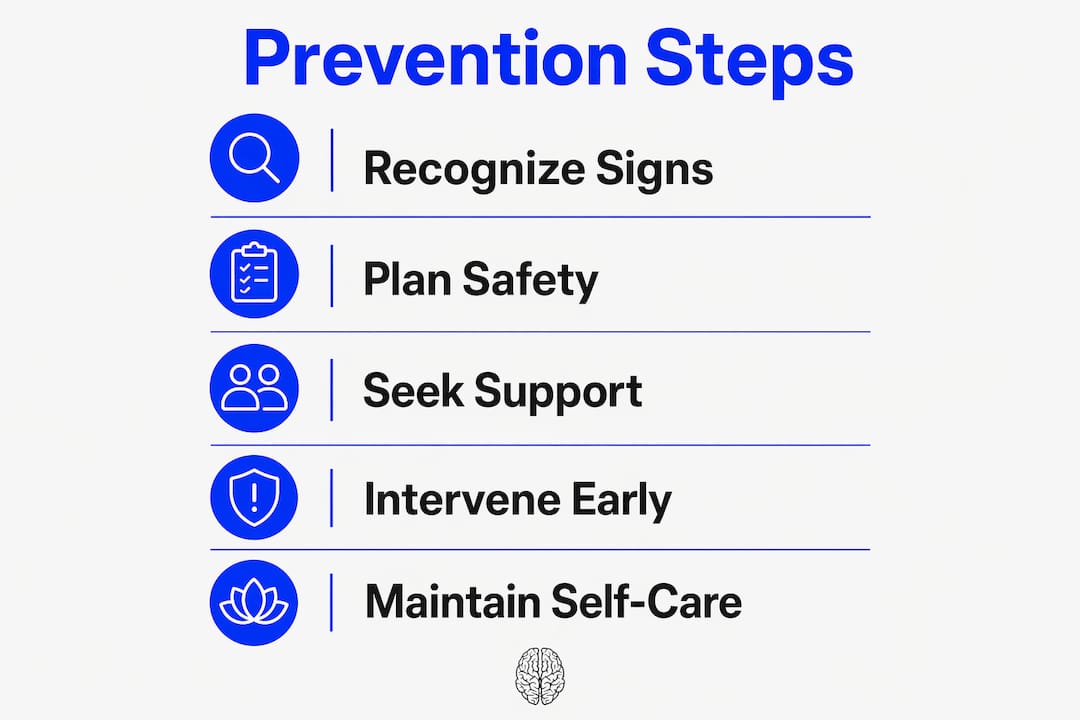
The National Domestic Violence Hotline is available 24 hours a day, 7 days a week at 1-800-799-SAFE (7233). Trained advocates can help you develop a personalized safety plan, connect you with local shelters, and provide confidential support. You can also chat online at thehotline.org if calling is not safe.
Key support resources and what they offer:
Emergency shelters: Safe, confidential locations for you and your children. Most provide food, clothing, and child care at no cost.
Legal aid services: Help obtaining protective orders, navigating family court, and understanding your rights. Many domestic violence agencies connect survivors with attorneys who work on a sliding scale or pro bono.
Counseling and support groups: Individual therapy and peer support groups address trauma, rebuild confidence, and reduce isolation.
Job training and housing assistance: Transitional housing programs and employment support help survivors build financial independence after leaving.
Technology and digital safety: Use separate accounts, private browsing, and a device your partner does not have access to. Courts can keep your address and phone number confidential upon request.
Legal protective orders are an important layer of protection, but they work best as part of a broader plan that includes physical, social, and digital safety measures. Carry your protective order with you at all times and register it with your county’s protection order registry.
Your support network is part of your safety plan. Scheduled check-ins with trusted people, using a private space like a bathroom for the call, create a reliable lifeline. If you miss a check-in, your contact knows to act. For a broader list of resources across the United States, CVPSD maintains a domestic violence resource guide that covers shelters, hotlines, and legal services by region.
Pro Tip: Memorize the National Domestic Violence Hotline number and at least two trusted contacts’ numbers. If your phone is taken or destroyed, you can still reach help.
5. Expert-recommended crisis intervention and de-escalation methods
When violence feels imminent, the instinct to fight back or argue is understandable. But crisis intervention specialists consistently advise a different approach: prioritize survival over confrontation, and plan your exit rather than your response.
The CDC’s prevention framework emphasizes that reducing intimate partner violence requires action at multiple levels, including individual skills, relationship education, community support, and legal protections. No single tactic is sufficient on its own.
Effective de-escalation methods recommended by crisis professionals include:
Lower your voice, not just your words. Speaking quietly and slowly signals calm and reduces the physiological arousal that drives aggression.
Avoid direct eye contact during peak tension. In high-threat situations, sustained eye contact can be read as a challenge.
Acknowledge feelings without agreeing. Phrases like “I can see you’re upset” validate emotion without conceding control or accepting blame.
Do not threaten to leave during an active incident. Serious injuries most often occur when survivors attempt to leave. Plan your departure carefully, not impulsively.
Use physical positioning deliberately. Stay near an exit. Do not allow yourself to be cornered in a room without an outside door.
Focus on the immediate moment. Do not bring up past incidents or future plans during a volatile exchange. Keep the conversation narrow and non-threatening.
Self-care and mental health resilience are not secondary concerns. Trauma from ongoing abuse affects decision-making, memory, and physical health. Connecting with a counselor who specializes in domestic violence, even by phone or online, builds the emotional reserves needed to act on a safety plan. CVPSD’s community training programs include crisis intervention techniques and behavior analysis designed to help survivors and their support networks recognize danger and respond effectively.
Bystanders and community members also play a role. Checking in on a neighbor, offering a code word system, or simply communicating “I’m here and I won’t judge you” can be the opening a survivor needs to ask for help. The CDC’s bystander empowerment approach treats community intervention as a prevention strategy, not just a response to crisis.
CVPSD offers training that goes beyond awareness
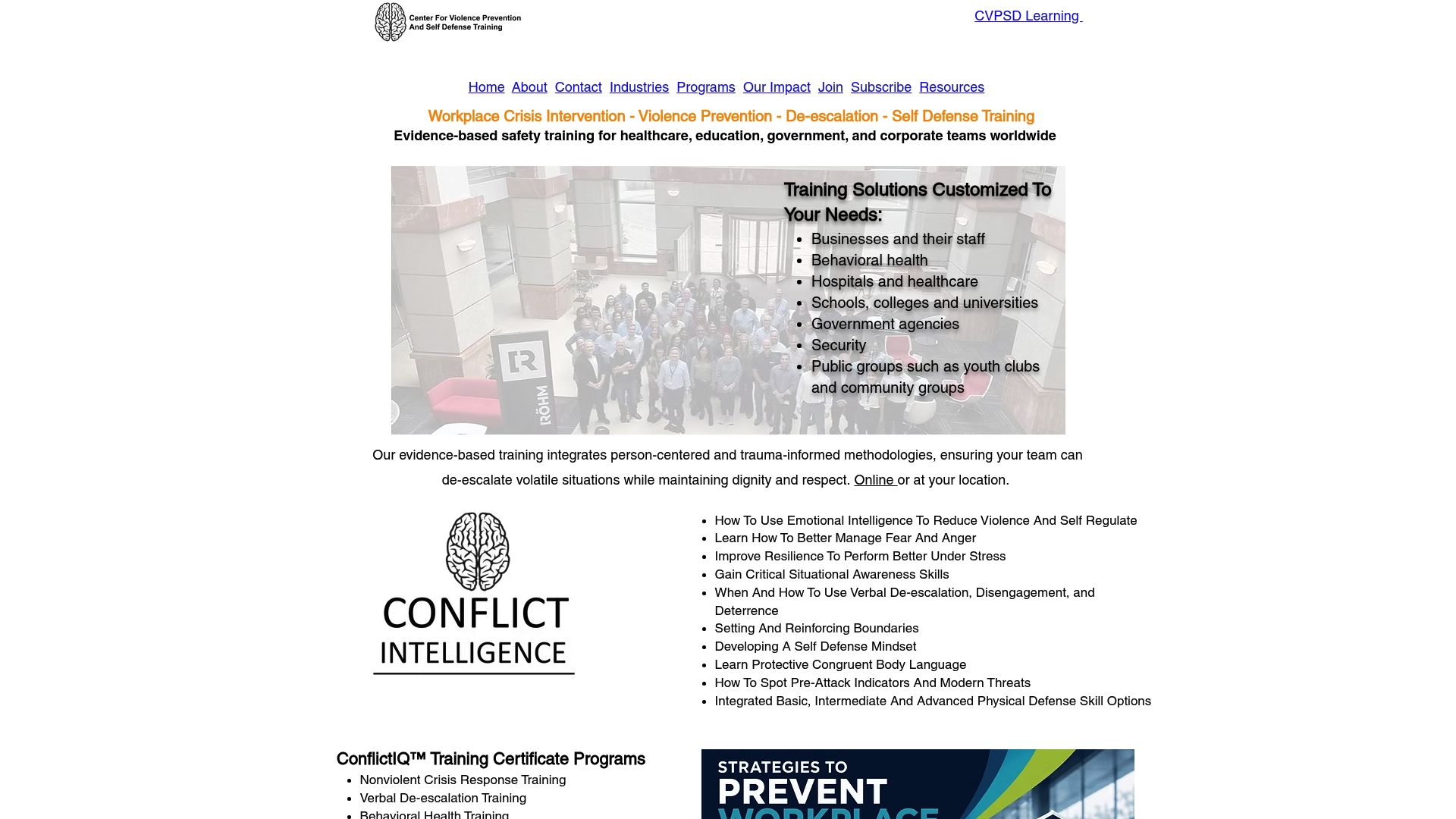
Knowing the steps to prevent escalation is one thing. Practicing them with trained professionals is another. CVPSD, the Center for Violence Prevention and Self-Defense, is a 501©(3) nonprofit that delivers evidence-based crisis intervention, de-escalation training, and physical self-defense education to individuals, schools, community organizations, and government agencies across the United States.
What sets CVPSD apart is the combination of behavioral analysis, real-world de-escalation techniques, and self-defense skills taught together, not as separate courses. Programs are available online and in person, and all meet state and local legal standards. Whether you are a survivor building your own safety skills or a community organization looking to protect the people you serve, CVPSD’s training is built for your situation.
Visit cvpsd.org to learn more about available programs and schedule training for yourself or your organization.
Key Takeaways
Preventing domestic violence escalation requires a layered approach: early recognition, a practiced safety plan, and a reliable support network working together.
Point | Details |
Act before the crisis | Immediate de-escalation steps, including moving to safer rooms and using code words, reduce harm in the moment. |
Recognize escalation early | Warning signs like strangulation history, weapons access, and extreme jealousy signal increasing danger before violence peaks. |
Safety plans must be dynamic | Update your plan regularly, rehearse it with children, and keep it with a trusted person outside the home. |
Layered support is most effective | Protective orders work best when combined with physical, social, and digital safety measures, not used alone. |
CVPSD provides structured training | CVPSD delivers evidence-based crisis intervention and de-escalation programs for individuals and community organizations nationwide. |
Recommended


