
School Violence Prevention Tips for Educators and Parents

Updated: Jul 30

School violence prevention is defined as the set of proactive, evidence-based strategies schools use to reduce all forms of violence in educational settings before it occurs. Effective prevention does not rely on a single tactic. It combines trauma-informed care, clear conduct policies, mental health support, restorative discipline, and active community involvement. More than two-thirds of children experience at least one traumatic event by age 16, which means most students carry experiences that directly affect their behavior and safety at school. These school violence prevention tips address that reality head-on, giving parents, educators, and administrators a practical framework grounded in current research.
1. School violence prevention tips start with trauma-informed approaches
Trauma is one of the strongest predictors of aggressive behavior in school settings. When students experience trauma outside school, their nervous systems stay in a heightened state. That state makes conflict more likely and de-escalation harder.

Trauma-informed school programming addresses this by training staff to recognize trauma responses and respond with empathy rather than punishment. Social-emotional learning (SEL) programs teach students to name emotions, manage reactions, and resolve conflict without aggression. Behavioral Intervention Plans (BIPs) provide structured, individualized support for students who show repeated disruptive or threatening behavior.
Practical trauma-informed tactics for classrooms include:
Validation: Acknowledge the student’s feelings before addressing the behavior. “I can see you’re frustrated” lowers defensiveness immediately.
De-escalation techniques: Use a calm, quiet voice. Slow your movements. Avoid crowding the student physically.
Physical positioning: Stand near an exit or supervision point. This protects you and avoids cornering the student.
Offering choices: Give the student two acceptable options rather than a single directive. Choice restores a sense of control and reduces fight-or-flight responses.
Multi-tiered systems of support (MTSS) layer these interventions so that universal prevention reaches all students, targeted support reaches at-risk students, and intensive services reach those in crisis.
Pro Tip: If a student escalates despite calm redirection, reduce demands rather than increase them. Backing off temporarily is not a loss of authority. It is a de-escalation skill that prevents physical confrontation.
2. Clear policies and reporting mechanisms build accountability
A school without a written, enforced code of conduct leaves students and staff without clear boundaries. That ambiguity creates space for violence to grow unaddressed.
A strong code of conduct defines unacceptable behavior in plain language, spells out consequences, and explains exactly how to report threats or incidents. Anonymous reporting channels are especially important. Students who witness bullying or threatening behavior are far more likely to report it when they trust the process will not expose them to retaliation.
Key elements every school policy should include:
A clear prohibition of all forms of bullying, harassment, and physical aggression
Prohibition of corporal punishment, which research links to worse mental health outcomes and increased violence risk
Defined roles for security staff versus classroom educators, so students know who handles what
Anonymous reporting options, such as tip lines or digital forms
Transparent consequences that students and families understand in advance
Policies developed with input from teachers, students, and parents earn more trust and see higher compliance. Administrators who build policy collaboratively reduce the “us versus them” dynamic that often fuels resentment and conflict.
Simulation-based active shooter drills that use graphic props or physical contact can traumatize students and damage school culture. Non-sensorial lockdown drills, designed for each developmental level, prepare students without causing harm.
3. Mental health support reduces violence at its root
Aggressive behavior in students rarely appears without warning. Most students who act out violently have underlying mental health needs, trauma histories, or both. Addressing those needs early is the most direct path to preventing violence.
Schools that employ counselors, school psychologists, and peer support programs create multiple points of contact for struggling students. A student who trusts a counselor is more likely to disclose a threat before it becomes an incident. Peer support programs extend that reach by training students to recognize distress in classmates and connect them to help.
Behavioral Intervention Plans are the most underused tool in this space. Every student with a pattern of aggressive or threatening behavior should have one. Educators who work with aggressive students and find no BIP on file should advocate immediately for one to be created.
Effective mental health supports include:
On-site licensed counselors with manageable caseloads
Referral pathways to community mental health providers
Peer mentorship and student wellness programs
Regular check-ins for students flagged as at-risk
Staff training in recognizing signs of depression, anxiety, and trauma
Pro Tip: Ask your school’s administration for a list of students with active BIPs at the start of each school year. Knowing which students have structured support plans helps you respond consistently and avoid inadvertently escalating a situation.
4. Restorative practices and positive school climate prevent repeat incidents
Punitive discipline, particularly suspensions and expulsions, removes students from the learning environment without addressing the behavior that caused the problem. NASSP research shows that punitive measures widen achievement gaps and reduce overall school safety. Removing a student from school does not teach them how to handle conflict differently.
Restorative practices replace punishment with accountability. A restorative conference brings together the student who caused harm, the person harmed, and a facilitator. The goal is to repair the relationship and build skills, not simply assign consequences. Students who go through restorative processes are less likely to repeat the same behavior.
“Schools are safer and more equitable when discipline focuses on restoration rather than exclusion. Restorative approaches also help narrow achievement gaps by keeping students connected to their education rather than pushing them out.”
Building a positive school climate reinforces restorative work. Shared norms, mutual respect between staff and students, and visible celebration of positive behavior all reduce the triggers that lead to violence. When students feel they belong, they are less likely to harm the community they value.
Involving students in safety planning is one of the most overlooked strategies in preventing school violence. Student advisory groups, peer mediation programs, and student-led anti-bullying campaigns give young people ownership over their school’s culture.
5. Anti-bullying strategies require consistent enforcement
Bullying is one of the most documented precursors to school violence. Students who are chronically bullied and receive no support from adults are at significantly higher risk for both victimization and retaliatory aggression.
Effective anti-bullying strategies go beyond posters and assemblies. They require consistent adult response every time bullying is observed or reported. Staff who witness bullying and do not intervene send a clear message that the behavior is tolerated.
Schools should train every staff member, including bus drivers, cafeteria workers, and coaches, to recognize and respond to bullying. Bystander intervention training teaches students to safely support a peer being bullied without escalating the situation. These skills reduce the social reward that bullying often provides to the aggressor.
Equity gaps in prevention programs are a serious concern. Research analyzing 160 randomized controlled trials found that only 1 in 16 trials reporting on violence prevention adequately addressed effects on vulnerable subgroups, including students with disabilities, LGBTQ+ students, and students from low-income families. Prevention programs must be designed with these students in mind, not adapted as an afterthought.
6. Physical security measures work best alongside climate-building
Locked doors, monitored entry points, and security cameras are reasonable baseline measures. They reduce opportunity for external threats and create a record when incidents occur. However, physical security alone does not prevent violence that originates inside the school community.
Balancing physical security with trust-building is the standard recommended by national school safety experts. A school that feels like a prison does not feel safe to students. When students feel surveilled rather than supported, they are less likely to report concerns to adults.
Over-reliance on School Resource Officers (SROs) for discipline, rather than for genuine safety emergencies, feeds the school-to-prison pipeline. Administrators should define clear boundaries for SRO involvement and ensure that behavioral issues are handled by trained educators and counselors first.
Physical security measures that support rather than undermine safety include controlled entry with visitor check-in, interior locks on classroom doors, and monitored common areas. These measures work best when paired with a school culture where students trust adults enough to speak up.
7. Roles of parents, educators, and administrators in school safety
Preventing school violence requires every adult in a child’s life to play an active, coordinated role. No single person or department can carry this responsibility alone.
Parents should maintain open, non-judgmental communication with their children about school life. Parental involvement in early identification of warning signs, such as social withdrawal, sudden behavior changes, or expressions of hopelessness, is one of the most effective early intervention tools available. Parents should contact the school immediately when they notice these changes, not wait to see if the situation resolves on its own.
Educators need training in de-escalation, trauma awareness, and mandatory reporting protocols. De-escalation tactics such as active listening, a calm tone, and controlled movements are skills that can be taught and practiced. Educators should also know exactly how to report a concern and to whom.
Administrators lead policy implementation and set the tone for school culture. They are responsible for ensuring that mental health resources are funded, that restorative programs are implemented with fidelity, and that staff receive ongoing training. Administrators who model calm authority and transparent communication build the trust that makes every other prevention strategy more effective.
Multidisciplinary teams that include counselors, administrators, educators, and community partners are the most effective structure for school safety planning. These teams meet regularly, review threat assessments, and coordinate responses across departments.
Key takeaways
Effective school violence prevention requires layered strategies that address trauma, enforce clear policies, support mental health, and build a restorative school culture.
Point | Details |
Trauma-informed care is foundational | Over two-thirds of children experience trauma by 16; schools must train staff to respond with empathy, not punishment. |
Policies need teeth and trust | Anonymous reporting, clear consequences, and collaborative development make conduct codes effective. |
Mental health support prevents escalation | Counselors, BIPs, and peer programs address root causes before behavior becomes violent. |
Restorative practices outperform punishment | Suspensions widen achievement gaps; restorative conferences repair harm and reduce repeat incidents. |
Every stakeholder has a defined role | Parents, educators, and administrators each carry specific responsibilities that work best in coordination. |
What I’ve learned about school safety that most articles miss
The conversation about school violence prevention gets dominated by two extremes: more security hardware or more therapy. Both matter, but neither works in isolation, and schools that pick one and ignore the other consistently underperform on safety outcomes.
What I’ve seen work, time and again, is the investment in relationships before a crisis happens. A student who has one trusted adult at school is dramatically less likely to become a perpetrator or a victim. That relationship does not require a special program or a budget line. It requires a teacher who notices when a student stops showing up to class, or a counselor who follows up after a hard week.
The other thing most articles skip is the danger of performative safety measures. Graphic active shooter drills that simulate real violence do not make students safer. They make students more anxious and less trusting of the adults who run them. Non-sensorial, age-appropriate lockdown drills accomplish the same preparedness goal without the psychological cost.
Families are the most underutilized resource in violence prevention education. Schools that treat parents as partners, not just as recipients of newsletters, catch warning signs earlier and respond faster. That partnership is not complicated. It starts with a phone call before there is a problem.
CVPSD training and resources for school safety
Schools that want to move from awareness to action need more than a policy document. CVPSD, the Center for Violence Prevention and Self-Defense, is a 501©(3) non-profit that provides evidence-based training for educators, administrators, and parents across the country.
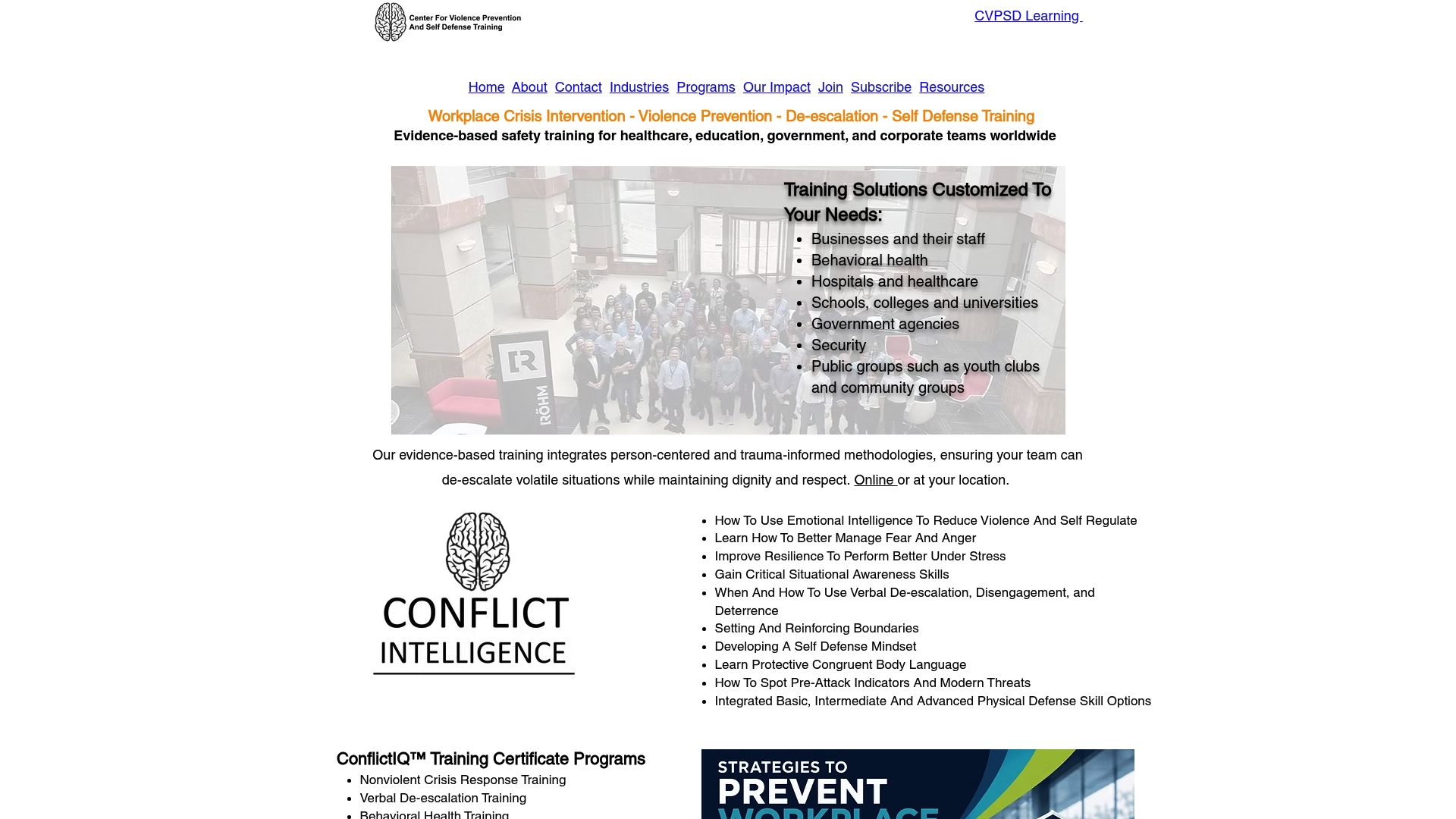
CVPSD’s programs cover crisis intervention techniques, de-escalation solutions, behavior analysis, and physical safety skills. Training is available online and in person, and all programs meet state and local requirements. Whether your school needs conflict resolution advisory services or a full staff training on trauma-informed care, CVPSD builds the program around your community’s specific needs. Visit CVPSD to connect with a training specialist and review the full catalog of school safety resources updated for 2026.
FAQ
What is the most effective school violence prevention strategy?
No single strategy works alone. Research supports a layered approach combining trauma-informed care, mental health support, restorative discipline, clear policies, and active family involvement.
How can parents help prevent school violence?
Parents should maintain open communication with their children, monitor for behavioral changes like social withdrawal or expressions of hopelessness, and contact the school immediately when concerns arise.
What are Behavioral Intervention Plans and why do they matter?
A Behavioral Intervention Plan (BIP) is a structured, individualized document that outlines specific strategies for supporting a student with aggressive or disruptive behavior. Every student with a pattern of threatening behavior should have one on file.
Are active shooter drills harmful to students?
Drills that use graphic props or simulate physical contact can traumatize students and damage school culture. Non-sensorial lockdown drills, designed for each developmental level, are the recommended alternative.
How do restorative practices reduce school violence?
Restorative practices replace punitive discipline with structured accountability conversations that repair harm and build conflict resolution skills. NASSP research shows they reduce repeat incidents and keep students connected to their education.
Recommended


