
Secondary Violence Prevention: A 2026 Guide for Community Leaders

Updated: Jul 9
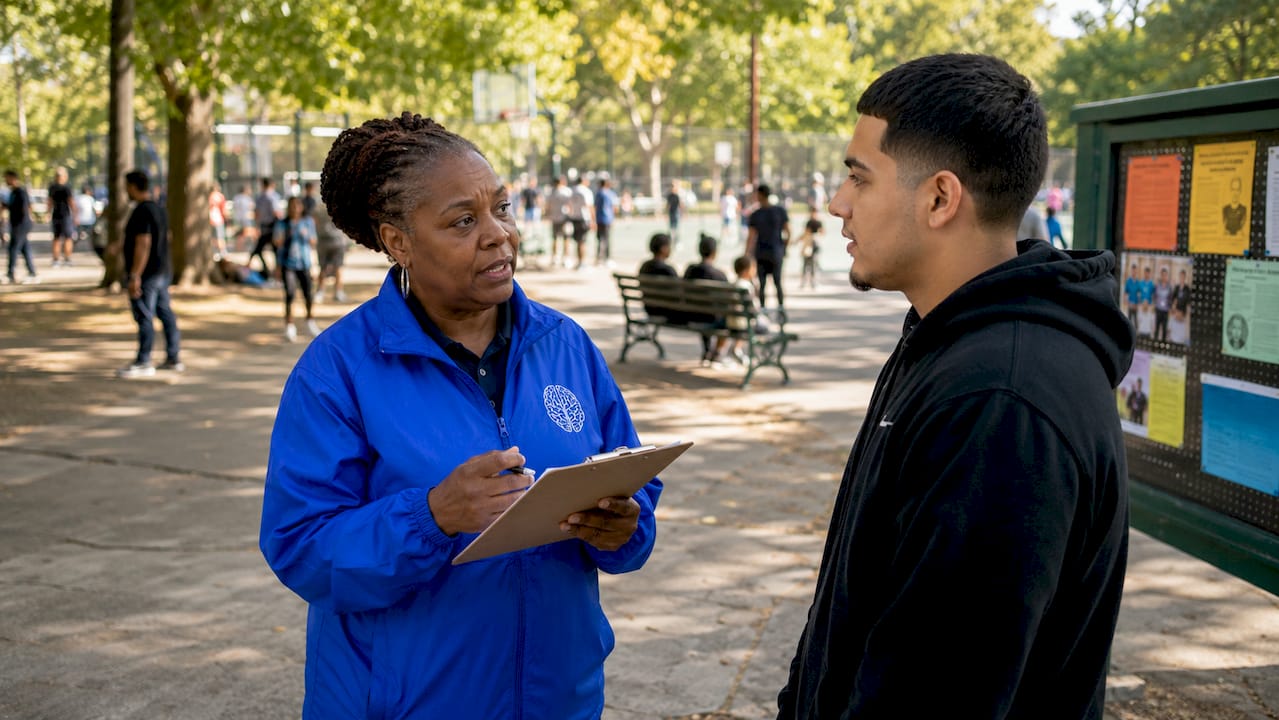
Secondary violence prevention is defined as the set of targeted interventions applied immediately after violence occurs to stop further harm and prevent recurrence. Where primary prevention stops violence before it starts, secondary prevention steps in the moment after. It targets victims, witnesses, and at-risk individuals during the critical window when they are most receptive to support and change. Interpersonal violence causes about 500 deaths every day in the Americas alone. That scale makes secondary prevention not a supplemental program but a public health necessity.
The public health field frames violence as a preventable disease, which shifts the entire response from reactive to proactive. Secondary prevention sits at the center of that shift. CVPSD builds its community training programs around this exact framework, recognizing that the period immediately following a violent incident is both the most dangerous and the most teachable moment.
What is secondary violence prevention, and what strategies make it work?
Hospital-Based Violence Intervention Programs, known as HVIPs, are the most evidence-supported model in secondary violence prevention today. These programs place trained intervention specialists directly inside trauma centers to reach victims while they are still receiving medical care. The timing is deliberate. Research shows that HVIPs reduce reinjury or perpetration risk by approximately 50%. That reduction is not marginal. It means half as many people return to the emergency room as victims or offenders.
The core strategies within effective secondary violence intervention programs include:
Credible messenger outreach: Specialists with lived experience in violence build trust faster than traditional clinical roles. Credible messengers connect with victims on a human level, reducing defensiveness and increasing engagement with support services.
Case management and social support: Connecting individuals to housing, employment, mental health care, and substance use treatment addresses the conditions that sustain violence cycles.
Trauma-informed counseling: Practitioners trained in trauma responses provide immediate emotional support without retraumatizing the individual.
Safety planning: Specialists work with victims to identify threats, reduce exposure to dangerous environments, and build a concrete plan for the days and weeks ahead.
Coordination with the American College of Surgeons Committee on Trauma: ACS Committee on Trauma standards provide accreditation benchmarks that guide HVIP integration into trauma care systems.
Pro Tip: When building or evaluating an HVIP, prioritize hiring intervention specialists from the same community as the population you serve. Shared background accelerates trust and improves program retention.
How does cross-sector collaboration improve prevention outcomes?
No single agency can deliver effective secondary prevention alone. Cross-sector collaboration among law enforcement, mental health, and social work sectors is the defining feature of programs that achieve lasting results. Each sector brings a different relationship with the at-risk individual, and combining those relationships creates a support structure that is harder to fall through.
Effective multidisciplinary models follow a clear sequence:
Identify the at-risk individual. Law enforcement, hospitals, or community organizations flag someone who has experienced or perpetrated violence and is at elevated risk of future involvement.
Assign a lead coordinator. One person or agency takes primary responsibility for the case to prevent duplication and gaps in care.
Share information within legal frameworks. Data-sharing agreements between agencies allow timely communication without violating privacy rights.
Deliver parallel services. Mental health counselors, social workers, and intervention specialists work simultaneously rather than sequentially, reducing delays.
Review and adjust regularly. Case conferences held weekly or biweekly allow teams to respond to changing circumstances before a situation escalates.
The Strong Cities Network documents that coordinated multidisciplinary care produces better outcomes for at-risk individuals than siloed responses. The practical implication is direct: community leaders who build formal partnerships before a crisis occurs respond faster and more effectively when one does.
Real-world collaborative frameworks also address a challenge that single-agency programs cannot. Preventing violence in communities requires addressing social determinants, including poverty, housing instability, and lack of employment, that no hospital or police department can resolve independently. Social services, nonprofits, and faith communities fill those gaps when formal coordination structures are in place.

What challenges arise when implementing secondary prevention programs?
Integration failures are the most common reason secondary prevention programs underperform. Programs not embedded in medical infrastructure lose access to the patient at the most critical moment. A program that operates outside the hospital, waiting for a referral that never comes, misses the window entirely.
The key implementation challenges include:
Missed timing: The period immediately after injury is often called the “golden hour” for intervention. Timely engagement post-injury significantly improves outcomes by reaching individuals before retaliatory thinking solidifies.
Lack of trauma-informed training: Staff who are not trained in trauma responses can inadvertently retraumatize victims, reducing trust and program participation.
Cultural mismatch: Programs designed without input from the communities they serve often fail to resonate. Culturally responsive approaches require community co-design, not just cultural sensitivity training.
Funding instability: Many programs rely on short-term grants. When funding cycles end, programs collapse before they can demonstrate long-term impact.
Accountability gaps: Secondary prevention must balance supportive intervention with accountability. Aligning primary and secondary prevention to address harmful beliefs, including rigid masculinity norms, is necessary for lasting behavior change.
Pro Tip: Map your local trauma center’s patient intake process before designing a secondary prevention program. Identify exactly where an intervention specialist can be introduced without disrupting clinical care.
The economic case for addressing these challenges is clear. Interpersonal violence incidents cost up to $14,820 each, and lifetime costs for sexual violence victims can exceed $386,000. Investing in well-integrated secondary prevention programs is not just a moral choice. It is a fiscally responsible one.
How can community leaders apply these strategies locally?
Community leaders are often the first to recognize that violence is escalating in their area, and the last to receive formal support for addressing it. The gap between recognition and response is where secondary prevention programs live or die. Practical application requires a structured approach, not improvisation.
Action | What it looks like in practice |
Assess local risk | Map violence hotspots, hospital admission data, and existing service gaps in your area. |
Build hospital partnerships | Meet with trauma center leadership to discuss HVIP integration or referral pathways. |
Train credible messengers | Recruit and train community members with lived experience to serve as intervention specialists. |
Secure sustainable funding | Pursue federal, state, and foundation grants specifically designated for violence intervention. |
Monitor outcomes | Track reinjury rates, program participation, and service connections to demonstrate impact. |
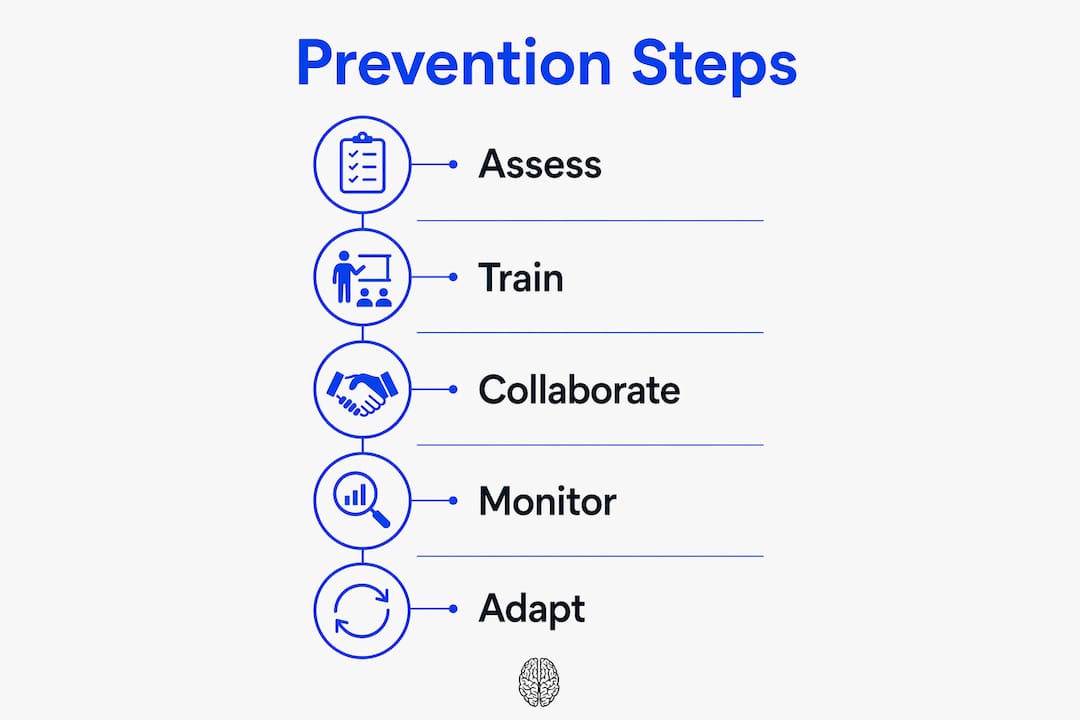
Assessment comes first. Without a clear picture of where violence concentrates and what resources already exist, new programs risk duplicating effort or missing the populations most in need. CVPSD’s conflict prevention best practices offer a practical starting point for community leaders building this foundation.
Training credible messengers is the step most community leaders underestimate. These individuals require structured preparation in trauma-informed communication, safety planning, and boundary-setting. Without that preparation, even the most trusted community member can cause unintentional harm. Pairing lived experience with professional training produces the most effective intervention specialists. Understanding why violence prevention education matters for communities provides the rationale that helps leaders secure buy-in from local stakeholders.
Monitoring outcomes closes the loop. Programs that track data can demonstrate effectiveness to funders, adapt to changing community needs, and build the evidence base that attracts future investment.
Key Takeaways
Secondary violence prevention works when timely, trauma-informed intervention is embedded in medical and community systems and supported by sustained cross-sector collaboration.
Point | Details |
Define the window | The period immediately after injury is the most critical time to engage victims and interrupt violence cycles. |
Use HVIPs | Hospital-Based Violence Intervention Programs reduce reinjury and perpetration risk by approximately 50%. |
Deploy credible messengers | Specialists with lived experience build trust faster and improve program engagement significantly. |
Collaborate across sectors | Law enforcement, mental health, and social services must coordinate formally to deliver complete support. |
Invest early | Each interpersonal violence incident costs up to $14,820; prevention investment pays for itself. |
What I’ve learned from working in this field
The programs that work are not the most sophisticated ones. They are the ones that show up at the bedside within hours, not days. Every time I have seen a secondary prevention program struggle, the reason traces back to the same problem: the intervention arrived too late, or the person delivering it had no relationship with the community they were trying to reach.
The field is slowly learning that credibility cannot be manufactured. You cannot hire a consultant to build trust in a neighborhood that has been failed by institutions for decades. You have to recruit from within, train carefully, and then get out of the way and let those practitioners do their work. That is uncomfortable for organizations that want to control outcomes, but it is the truth.
Funding remains the most persistent obstacle. Short-term grants create programs that disappear before they can prove their value. The communities that need these programs most are also the ones least likely to have stable, long-term funding pipelines. Advocating for multi-year violence intervention funding at the state and federal level is not a policy abstraction. It is the difference between a program that changes lives and one that closes after 18 months.
The growing recognition of violence as a public health issue gives me real confidence. When hospitals, public health departments, and community organizations speak the same language about violence, coordination becomes possible. That shift is happening, and community leaders who position themselves at the intersection of those systems now will be the ones who shape what secondary prevention looks like in the next decade.
CVPSD’s resources for secondary violence prevention
CVPSD works directly with community leaders, nonprofits, schools, and government agencies to build the knowledge and skills needed to prevent violence before it escalates further.
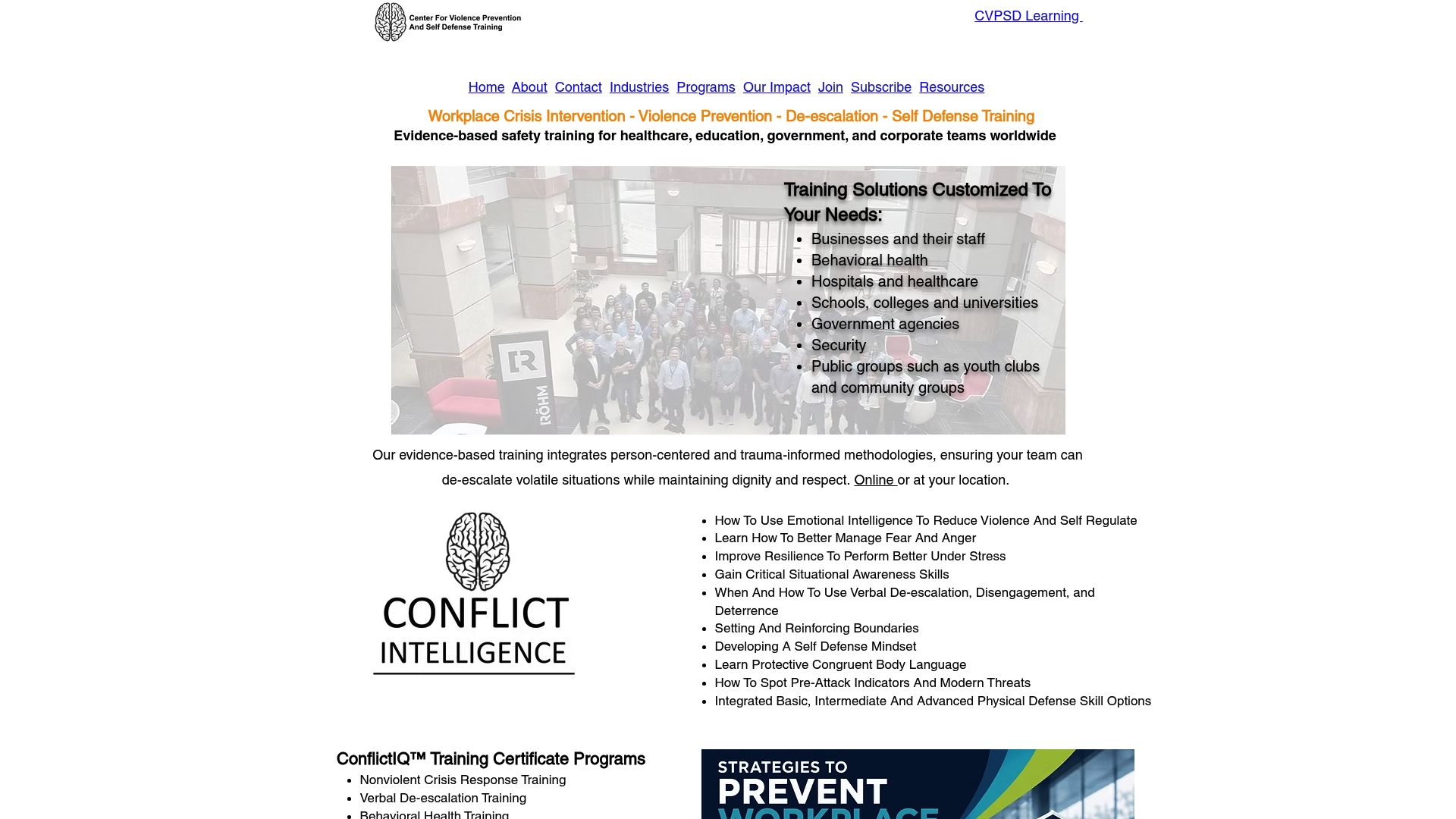
CVPSD’s training programs cover crisis intervention techniques, de-escalation solutions, and behavior analysis, all grounded in evidence-based research. These programs are designed for the practitioners and leaders who are already on the ground in at-risk communities. Whether you are building a new secondary prevention initiative or strengthening an existing one, CVPSD offers real-world violence solutions that translate directly into community practice. Connect with CVPSD at cvpsd.org to explore training options, partnership opportunities, and resources tailored to your community’s needs.
FAQ
What is secondary violence prevention?
Secondary violence prevention is the set of interventions applied immediately after violence occurs to reduce further harm and prevent recurrence. It targets victims and at-risk individuals during the critical post-incident window using programs like HVIPs, credible messenger outreach, and trauma-informed case management.
How do HVIPs reduce violence recurrence?
Hospital-Based Violence Intervention Programs place trained specialists inside trauma centers to engage victims immediately after injury. Research shows participation cuts the risk of reinjury or violence perpetration by approximately 50%.
Why are credible messengers important in secondary prevention?
Credible messengers bring lived experience with violence, which builds trust with victims faster than traditional clinical or law enforcement roles. That trust is the foundation for effective engagement and sustained participation in support services.
What does cross-sector collaboration look like in practice?
Cross-sector collaboration means law enforcement, mental health providers, social workers, and community organizations share information and coordinate services around a single at-risk individual. Formal data-sharing agreements and regular case conferences are the practical mechanisms that make this work.
How can a community leader start a secondary prevention program?
Start by mapping local violence data and existing service gaps, then build formal partnerships with your nearest trauma center and social service agencies. Recruit and train credible messengers from within the community before launching any direct intervention services.
Recommended


