
Self-Defense College Campus Safety Guide 2026

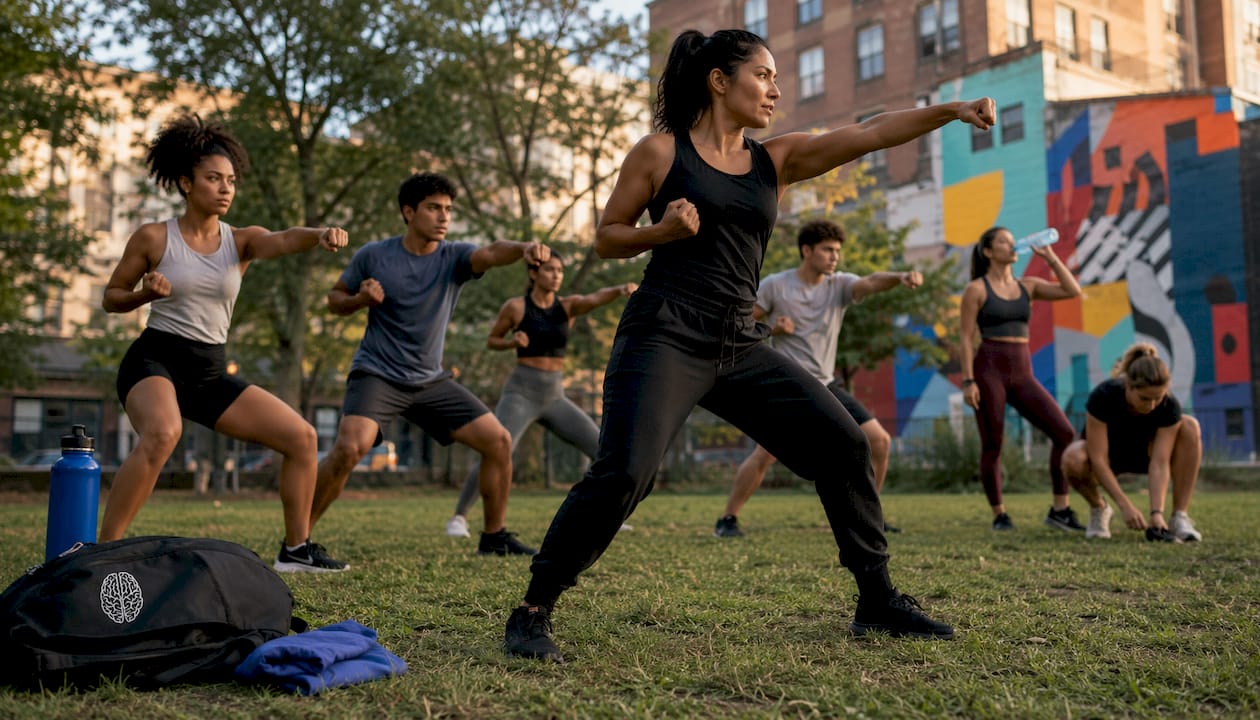
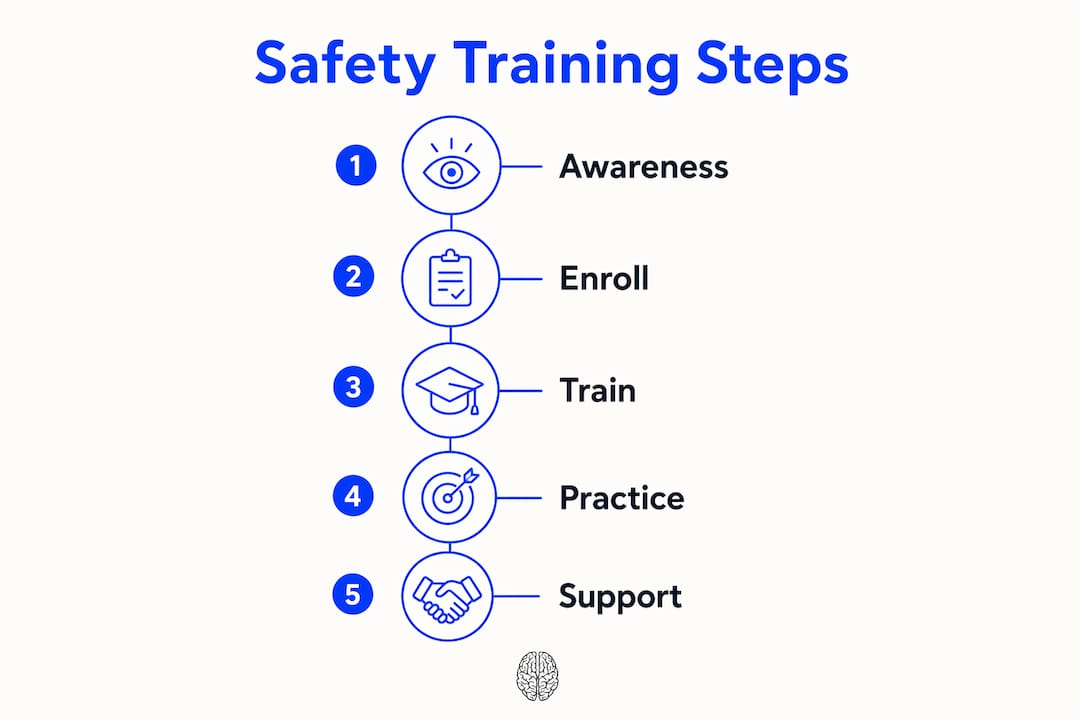
Prioritize situational awareness, use your campus emergency systems, and enroll in evidence-based training that pairs de-escalation with practical physical skills. Those three actions, taken together, give you the strongest foundation for personal safety on campus. Start today:
Sign up for alerts. Enroll in your school’s emergency notification system and save campus police and 911 in your phone.
Use SafeWalk or campus escort. These free services exist precisely for moments when you are alone after dark.
Book evidence-based training. CVPSD offers campus programs that cover crisis intervention, de-escalation, and physical self-defense. Request a program to get started.
Table of Contents
Situational awareness is your first and most reliable line of defense
How to use campus emergency systems and what to confirm with your school
What evidence-based self-defense and violence-prevention training actually covers
U.S. legal realities and campus policies that shape self-defense
If an incident occurs: immediate steps, reporting, and support
How to keep skills fresh and integrate safety into student life
Why CVPSD is a trusted resource for campus violence prevention
CVPSD offers evidence-based campus training you can book today
Situational awareness is your first and most reliable line of defense
Situational awareness is an active, trainable habit, not a passive trait. It means continuously reading your environment, noting who is nearby, and identifying exits before you need them. Campus safety officials at Penn State frame it as the foundational layer of all campus safety practice.
Concrete micro-habits make the difference:
Keep one earbud out, or remove headphones entirely, in parking lots, stairwells, and low-traffic paths after dark.
Keep your phone accessible for emergencies but not in your hand while walking alone at night.
Travel in groups of three or more whenever possible, especially after 10 PM.
Trust your instincts. If a location or situation feels wrong, leave immediately and move toward lights and people.
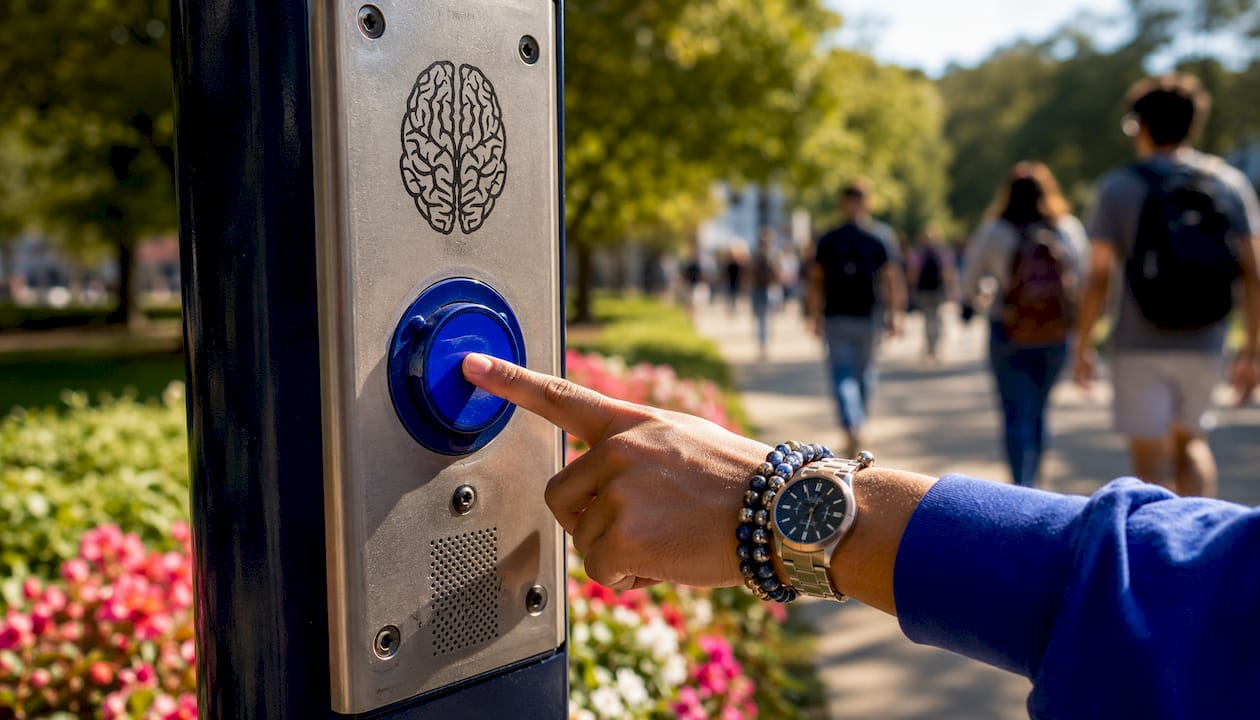
Note emergency blue-light phone locations on routes you use regularly, before you ever need them.
Pro Tip: If you need to attract bystander attention quickly, shout “fire” rather than “help.” Research from Clarkson University confirms that “fire” triggers a faster collective response because people process it as an immediate shared threat.
How to use campus emergency systems and what to confirm with your school
Enroll in your school’s emergency notification system on day one. Under the Clery Act, most U.S. colleges must publish annual crime statistics and maintain timely warning and emergency notification systems. That legal requirement means the infrastructure exists at virtually every campus. Your job is to activate it for yourself.
Key services to locate and use:
Emergency notifications: Text, email, and app-based alerts for imminent threats. Opt in through your student portal.
SafeWalk / SafeRide: Free escort services staffed by trained officers or student patrol. Campus safety programs at many schools include this as a core offering.
Campus police non-emergency line: Save it alongside 911. Campus officers respond faster to on-campus incidents than municipal police in many cases.
Safety apps: Many schools provide mobile apps with a virtual blue-light feature and friend-walk tracking, per UNC Chapel Hill’s personal safety guide.
Resource | What to confirm with your school |
Emergency notification system | How to enroll; which channels (text, email, app) |
SafeWalk / SafeRide | Hours, coverage area, how to request |
Campus police non-emergency | Direct number; response area boundaries |
Emergency blue-light phones | Map locations on your regular routes |
Campus safety app | Name of app; features available to students |
Everyday prevention habits for moving around campus safely
Choose well-lit, populated routes. Share your ETA with a roommate or trusted contact before walking anywhere alone at night. Use campus ride or escort services when they are available rather than defaulting to walking solo.
Practical checklist:
Carry a portable charger so your phone is never dead when you need it.
Keep your student ID and campus card on your person, not buried in a bag.
A small personal alarm is a low-cost, legal option at most campuses. Understand its limits: noise alone does not guarantee help, so pair it with a plan to move toward people.
Lock residence doors even when you are inside, and never prop open secure building entries. Low-tech protocols like these reduce unauthorized access more reliably than most high-tech measures.
Avoid isolated parking lots after dark. Park as close to your destination as possible and have your key ready before you reach the car.
What evidence-based self-defense and violence-prevention training actually covers
A quality program addresses the full arc from recognition to response: situational risk assessment, de-escalation and communication, behavioral indicators, legal basics, and practical physical defenses. Physical techniques are one component, not the whole curriculum.
Core modules you should expect:
Awareness and avoidance: Reading environmental cues and identifying risk before contact occurs.
Verbal de-escalation: Using calm, clear language to reduce tension and create space to exit.
Bystander intervention: Safe, practical ways to interrupt a situation without escalating it.
Crisis intervention: Structured responses to high-stress scenarios, including trauma-informed communication.
Physical self-defense skills: Techniques scaled to real-world scenarios, not sport competition.
Learning outcomes from a well-designed program include the ability to spot behavioral warning signs early, execute a safe escape, and know how to preserve evidence and report afterward. Trauma-informed programs also connect participants to survivor support resources, including RAINN’s National Sexual Assault Hotline at 800.656.HOPE (4673).
How to choose an evidence-based campus self-defense program
Prioritize programs with documented evidence, verified instructor credentials, a trauma-informed curriculum, and partnerships with universities or public agencies. Marketing language alone is not a credential.
Questions to ask any provider:
Can you share a full curriculum outline?
What are your instructors’ backgrounds, and do they pass background checks?
What is your participant-to-instructor ratio?
Do you have outcome data or evaluation reports from past programs?
How does your curriculum address trauma-informed practices and survivor referrals?
Red flags to avoid:
No written syllabus or vague program descriptions
Weapons-focused marketing aimed at students without legal or policy context
No mention of de-escalation or trauma-informed approaches
Instructor credentials that cannot be independently verified
Program type | Typical format | Cost model | Best for |
Campus workshop (single session) | 2–4 hours, in-person | Free to low-cost | Orientation, awareness building |
Multi-session course | Several hours over multiple sessions | Low to moderate | Skill development and retention |
Institutional certification program | Full-day or multi-day | Moderate to higher | Campus staff, student affairs teams |
Online seminar | Self-paced or live | Free to low-cost | Supplemental learning, remote access |
U.S. legal realities and campus policies that shape self-defense
U.S. self-defense law permits the use of reasonable force to protect yourself from imminent harm, but what counts as “reasonable” varies by state, and campus policies often impose additional restrictions. Know both layers before you act.
Policy checklist to verify with your campus:
Weapons rules: Most campuses prohibit firearms and restrict or ban pepper spray. Confirm your school’s specific policy before carrying anything.
Title IX reporting pathways: Title IX requires schools to respond to reports of gender-based violence. Know whether your campus has mandatory reporters and what confidential reporting options exist.
Campus conduct vs. criminal reporting: You can pursue both simultaneously. They are separate processes with different standards and outcomes.
When in doubt, prioritize escape and reporting over confrontation. RAINN emphasizes that safety measures reduce risk but cannot guarantee prevention, and that survivor rights under Title IX remain fully available after an incident. For gray-area questions about weapons, use of force, or reporting obligations, consult your campus public safety office or general counsel. This article is general information, not legal advice.
If an incident occurs: immediate steps, reporting, and support
Get to safety first. The Run/Hide/Fight framework gives you a clear decision sequence: run if an exit is available, hide if you cannot run, and fight only as a last resort.
Get to safety. Move away from the threat and reach a populated, secure location.
Call 911 or campus police. Report your location and what happened as clearly as you can.
Seek medical attention. Even if injuries seem minor, get evaluated.
Preserve evidence. Do not change clothes, shower, or clean up before a medical exam. Document visible injuries with photos. Save any relevant messages or communications.
Contact an advocate. Campus advocacy offices and RAINN can help you understand your options before you decide how to report.
Support contact | Purpose |
911 / campus police | Immediate emergency response |
Campus counseling center | Mental health support, free to students |
Title IX coordinator | Formal campus reporting and protective measures |
RAINN hotline: 800.656.HOPE | Confidential crisis support |
Campus advocacy office | Guidance on reporting options and rights |
How to keep skills fresh and integrate safety into student life
Brief, scheduled practice builds retention far better than a single workshop. A weekly 15-minute drill with a friend or small group is enough to maintain awareness habits and reinforce physical techniques.
Monday awareness walk: On your regular commute, consciously note exits, lighting gaps, and who is around you. No phone in hand.
Wednesday verbal drill: Practice de-escalation language with a partner using a low-stakes scenario. Focus on calm tone and clear exit phrases.
Friday scenario review: Walk through one “what would I do if…” scenario, including where you would go and who you would call.
Monthly route audit: Walk a new or infrequently used campus route and locate emergency phones and well-lit paths.
To build a broader safety culture, partner with student affairs to embed a 30-minute awareness module in new-student orientation. Form a campus practice group or safety club. Measure progress by confidence and habit consistency, not fear. The goal is readiness, not anxiety.
Why CVPSD is a trusted resource for campus violence prevention
CVPSD (Center for Violence Prevention and Self-Defense) is a 501©(3) nonprofit providing evidence-based crisis intervention, de-escalation, behavior analysis, and physical self-defense training to campuses, schools, nonprofits, and government agencies across the United States. Its nationwide training program is built around the same curriculum components this guide recommends: awareness, de-escalation, crisis intervention, and practical physical skills.
What to expect from CVPSD’s programs:
In-person campus workshops and multi-session courses
Online seminars for supplemental or remote learning
Instructor background checks and documented evidence base
Trauma-informed curriculum with survivor support referrals
Programs designed to meet state and local laws
When evaluating CVPSD or any provider, ask for a curriculum outline, instructor credentials, and any outcome data from past campus engagements. CVPSD’s role in educating at-risk communities includes partnerships with public agencies and schools, which is a concrete credibility signal. To request a campus proposal, visit cvpsd.org.
Key Takeaways
A campus safety strategy built on situational awareness, active use of emergency systems, and evidence-based training gives students and institutions the strongest, most practical foundation for reducing risk.
Point | Details |
Activate campus systems now | Enroll in emergency notifications and save campus police and 911 before you need them. |
Practice situational awareness daily | Treat awareness as a trainable habit: remove headphones, travel in groups, and trust your instincts. |
Verify campus policies | Confirm weapons rules, Title IX pathways, and SafeWalk hours with your specific school. |
Choose training with a full curriculum | Evidence-based programs cover de-escalation, crisis intervention, and physical skills, not just physical techniques. |
CVPSD for campus programs | CVPSD is a 501©(3) nonprofit offering evidence-based, trauma-informed training for campuses nationwide. |
The gap between a self-defense class and a safety culture
Most campus self-defense conversations stop at the physical techniques. That framing misses the larger point. The research is consistent: the students and staff who fare best in threatening situations are those who recognized the warning signs early, had a plan, and knew exactly who to call. Physical skills matter, but they are the last line, not the first.
What tends to get overlooked is the institutional side. A single workshop during orientation is not a safety program. Real campus safety culture requires recurring practice, embedded bystander training, and clear reporting pathways that students actually trust. When those elements are absent, even well-trained individuals hesitate because they are not sure the system will support them if they act or report.
The other underappreciated factor is trauma-informed design. A program that teaches physical techniques without addressing the psychological reality of threat response, or without connecting survivors to support, is incomplete. Students who have already experienced violence need a curriculum that meets them where they are, not one that assumes a neutral starting point. That is the standard worth holding providers to.
CVPSD offers evidence-based campus training you can book today
Campus safety officers, student affairs teams, and students looking for professional training have a direct option: CVPSD’s evidence-based programs are built for exactly this context. Unlike a generic self-defense seminar, CVPSD’s curriculum integrates de-escalation, crisis intervention, behavior analysis, and physical skills into a single, trauma-informed program that meets state and local laws.
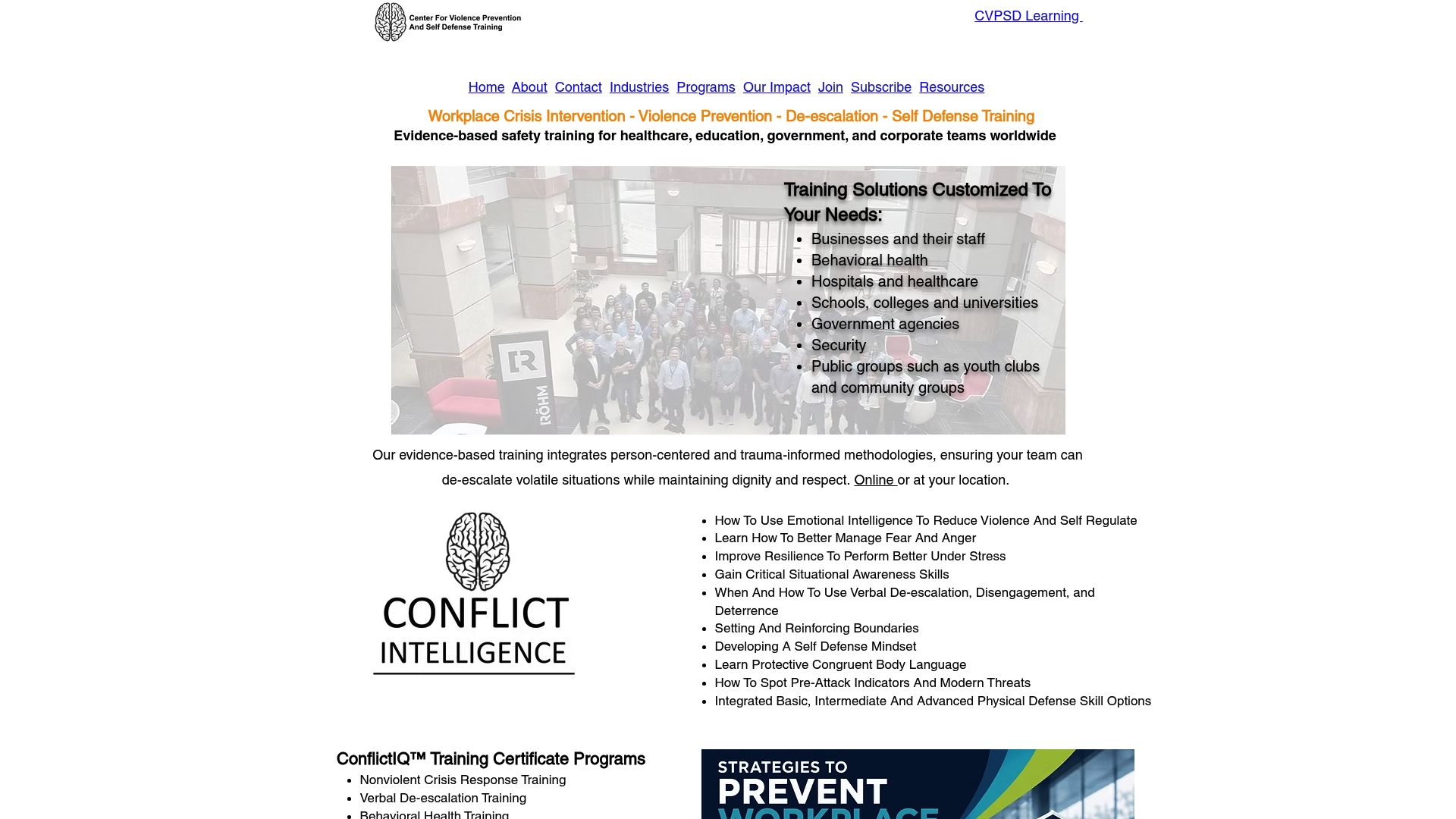
When you reach out, expect a needs assessment conversation, a recommended curriculum tailored to your campus population, scheduling options for in-person or online delivery, a pricing estimate, and an evaluation plan. CVPSD’s nonprofit status means the focus is on outcomes, not upselling. Schools, community organizations, and government agencies across the United States have partnered with CVPSD for this reason.
Request a campus program at cvpsd.org and start the conversation today.
Useful sources and further reading
Source | Type | What you will find |
Clery Center — Staying Safe Guide (2024) | Policy guide | Clery Act requirements, campus crime reporting, and emergency notification standards |
RAINN — Safety steps for students | Survivor support | Risk-reduction strategies, Title IX rights, and the National Sexual Assault Hotline |
Penn State campus safety guidance | Campus toolkit | Run/Hide/Fight framework, situational awareness, and practical student safety tips |
UNC Chapel Hill CBAM safety guide | Campus toolkit | Mobile safety apps, prevention habits, and campus resource listings |
University of Illinois Police — campus safety tips | Campus toolkit | SafeWalk details, residential security, and theft prevention guidance |
News overview | Practical checks: annual security report, support services, and reporting procedures |
Recommended
Campus Safety a Critical Consideration in College Choice: Survey Reveals Student Concerns
College Campus Safety Programs: What Every Student & Parent Must Know: Campus Safety Guide
The Importance of College Self-Defense Training Classes: A New Initiative in New Jersey
CVPSD Hosts Back-to-School: Back To College Self-Defense Class in Freehold, NJ


