
Teaching Kids Personal Boundary Awareness: Scripts by Age

Teach children personal boundary awareness by modeling respectful limits yourself, giving them short scripts to practice, and rehearsing those words until they come out naturally under pressure. That is the whole approach in one sentence, and it works better than a single “the talk” because it treats boundaries as a skill, not a lecture.
In the next hour, you can do three things: say one script out loud with your child, ask permission before you hug or tickle them today, and praise them the moment they say “stop” and mean it. Try this tonight: “Can I have a hug, or would you rather wave goodbye?” Giving a real choice, not a command, is the core move.
This approach lines up with the Positive Parenting boundary playbook, with practices recommended by the Child Mind Institute, and with the neuroscience concept of “peripersonal space,” the brain’s own early-warning system for closeness. Small, repeated practice moments build the habit faster than one big conversation ever will.
Model the behavior you want to see, out loud, in front of your child.
Use a short script instead of a long explanation.
Practice one tiny scenario today, then repeat it tomorrow.
Key Takeaways
Teaching children boundary awareness works best when adults model respectful limits, give kids short scripts, and rehearse those scripts often enough that they become automatic.
Point | Details |
Model before you teach | Ask permission, knock, and apologize when you cross a limit so your child sees reciprocity in action. |
Match scripts to age | Use “stop means stop” for toddlers and digital privacy scripts for teens, not a one-size-fits-all speech. |
Practice in short bursts | Five-minute role-plays, repeated often, build fluency faster than a single long conversation. |
Believe first, ask questions later | If a child discloses a violation, listen without leading questions and get medical or counseling support quickly. |
Get facilitator-led practice | CVPSD offers workshops and custom school sessions that turn these scripts into rehearsed, confident skills. |
Table of Contents
What Are Personal Boundaries and Bodily Autonomy?
A personal boundary is a limit a person sets on how close someone gets, physically or emotionally. Bodily autonomy is the simpler idea underneath it: a child’s body belongs to them, and they get a say in who touches it, how, and when. You can explain this to a five year old in one line: “Your body is yours, and you get to say what happens to it.”
Teaching this early pays off in several concrete ways.
Safety: children who practice saying “stop” and “no” are less likely to freeze when a real boundary violation happens.
Emotional security: kids who know their limits will be respected tend to trust adults more, not less.
Empathy: a child who understands their own limits learns to notice and respect other people’s limits too, a pairing Child Mind Institute researchers point to directly.
Self-regulation: naming a limit out loud is a form of emotional control, and it gets easier with repetition.
Comfort with closeness also varies by culture and family. Proxemics research from MIT shows that what counts as “too close” shifts across communities, so skip the rigid “arm’s length” rule and teach children to read their own reaction instead.
Pro Tip: When your child pulls away from a hug or flinches at a tickle, treat that reaction as real information, not rudeness. That uneasy feeling is your child’s brain doing exactly what it’s built to do.
Age-by-Age Scripts and Practice Goals
Boundary teaching is not a single conversation. It is a curriculum that changes as your child grows, and age-staged lesson design consistently produces stronger, more durable skills than waiting until the teenage years to bring it up.
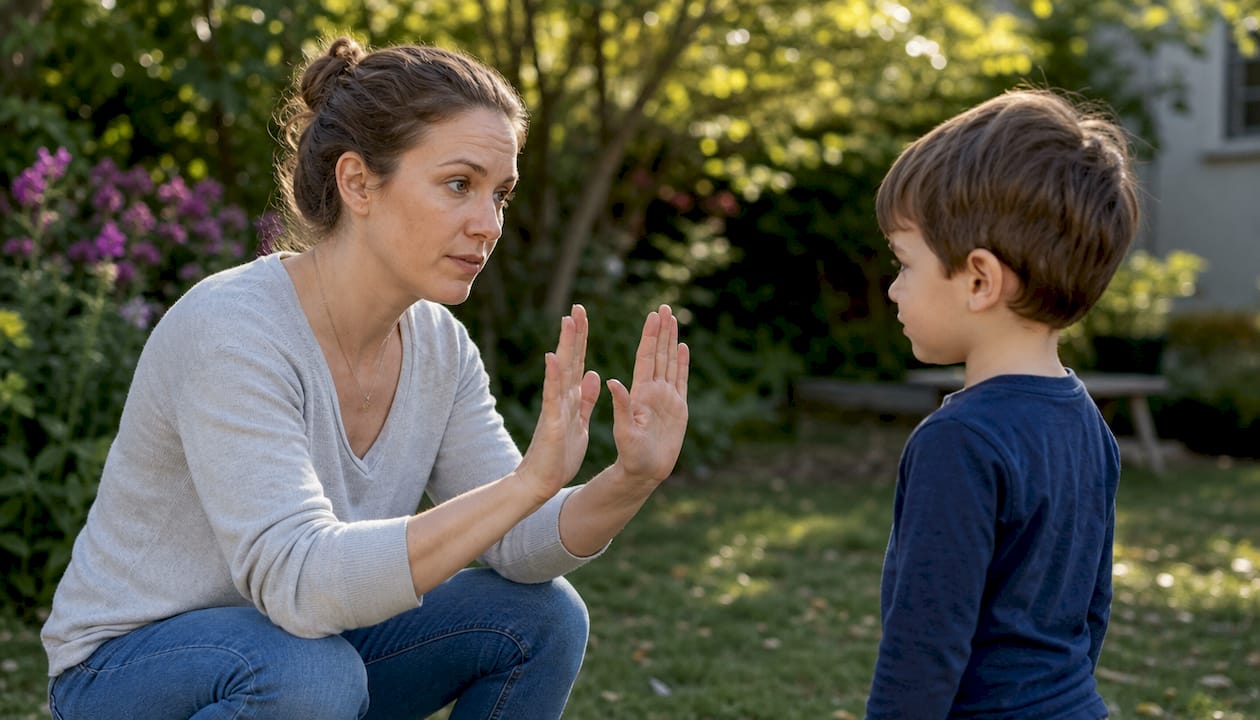
Under 3: naming body parts and practicing “no”
The goal at this age is simple: your toddler learns the words for their body and gets comfortable saying “no” to an adult without being punished for it.
Use correct names for body parts during bath time or diaper changes.
Let your toddler say “no” during tickling or rough play and stop immediately when they do.
Narrate consent out loud: “I’m going to pick you up now, okay?”
Sample script: “Stop” means stop, even in a game. Say it, then actually stop, every single time.
3 to 7: private parts, permission, and safe versus unsafe touch
Preschoolers and early elementary kids can grasp the idea that some parts of the body are private and that most touch requires permission.
Script for greetings: “You can wave, high five, or hug. You pick.”
Script for unwanted touch: “My body is mine. Please stop.”
Script for doctor visits: “The doctor can look at your body because Mom or Dad is here and it’s a checkup, not a game.”
Practice goals: say “stop” to a trusted adult in play, name three “private” body parts, and identify one adult they could tell if something felt wrong.
8 to 12: assertive language and social pressure
Kids this age face peer pressure more than adult overreach, so the scripts shift toward standing firm with friends.
Script for peer pressure: “No thanks, I don’t want to.” No apology needed, no explanation required.
Script for physical space: “Please back up, you’re in my space.”
Script for secrets that feel wrong: “I don’t keep secrets that make my stomach hurt. I’m going to tell.”
Practice goals: role-play saying no to a friend, practice repeating a refusal three times without caving, and identify two trusted adults outside the family.
Teens: digital boundaries and relational limits
Teenagers need boundary language for text messages, social media, and dating, not just physical space. Digital boundary guidance from Atrium Health recommends explicitly covering privacy settings, blocking, and the fact that anything shared online can spread beyond its original audience.
Script for pressure to share images: “I’m not comfortable sending that. I’m not going to.”
Script for relationship boundaries: “I need space tonight. That’s not a rejection, it’s a boundary.”
Script for digital privacy: “I don’t have to explain why I blocked someone.”
Practice goals: review privacy settings together monthly, discuss one recent scenario where a friend’s boundary was crossed online, and agree on a code word for “come get me” in uncomfortable situations.
For neurodivergent children, keep scripts shorter and more literal, and consider using visual aids or social stories instead of verbal-only practice. Share the exact scripts your child uses at home with teachers and other caregivers so the language stays consistent across school and family settings.
Activities and Role-Plays to Rehearse Boundaries
Rehearsal beats explanation. A child who has practiced saying “stop” out loud twenty times will use it faster in a real moment than one who only heard about it once.
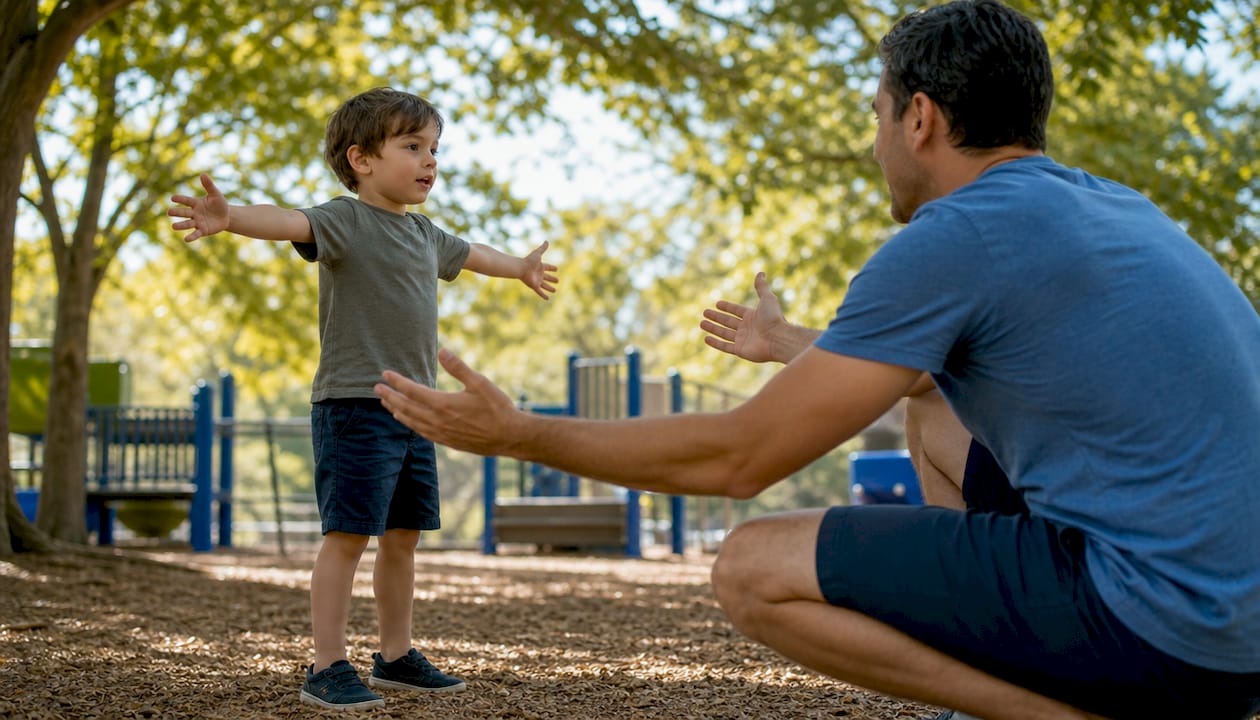
Personal space bubble: have your child stretch their arms out in a circle and call that their “bubble.” Practice noticing when someone steps inside it.
Doctor visit role-play: take turns being the doctor and the patient, narrating consent each time (“Can I check your ears now?”).
Emotion identification games: point to pictures or faces and name the feeling, then connect it to a body sensation (“Your tummy feels tight when you’re uncomfortable”).
Scripted refusal rehearsal: practice saying “no” or “stop” to silly, low-stakes requests before you need it for a real one.
Online safety drills: role-play a stranger messaging your child and practice the block-and-tell response.
A simple four-step role-play format works for almost any scenario:
Setup: describe the scenario in one sentence (“Someone at school keeps hugging you and you don’t like it”).
Model: you play the child first and demonstrate the script.
Rehearse: swap roles and let your child say the line themselves, more than once.
Feedback and praise: point out one specific thing they did well, not a generic “good job.”
Common scripts worth rehearsing on repeat: “Please stop” for unwanted touch, “I said no” for a repeated request, and “I’m going to tell someone” for anything that feels wrong and doesn’t stop.
Pro Tip: Skip the punishment when your child asserts a boundary clumsily, even if the timing is inconvenient. Praise the attempt, then refine the wording later. Five-minute practice sessions, done often, beat one long lecture every time.
How Adults Model Boundaries at Home
Kids learn boundaries faster from watching adults than from being told about them. Reciprocity is the whole lesson: if you want your child to respect limits, you have to visibly respect theirs.
Knock before entering your child’s room, even if the door is open.
Ask before borrowing their things, the same way you’d want them to ask before borrowing yours.
Apologize out loud when you cross a limit: “I shouldn’t have opened your backpack without asking. I’m sorry, I’ll ask next time.”
Try adopting one or two simple family rules, stated positively: “We ask before hugs.” “We say stop, and we stop.” These work because they apply to everyone in the house, adults included, and modeling this reciprocity teaches the lesson better than any conversation could.
Pro Tip: Consistency is what makes a boundary feel real. A limit enforced sometimes teaches a child to test it constantly. A limit enforced every time, delivered calmly, teaches them it’s safe to trust. Warm but firm beats both permissive and harsh.
What to Do if Your Child Discloses a Boundary Violation
If your child tells you someone crossed a boundary, your first response shapes whether they come to you again. Follow these steps in order.
Stay calm and get to safety first. Remove your child from the immediate situation if needed.
Listen without interrupting. Let them tell you in their own words, at their own pace.
Avoid leading questions. Ask “What happened next?” instead of “Did he touch you there?”
Document what was said, in their words, as soon as you can after the conversation.
Contact appropriate support: a pediatrician for a medical check, child protective services if needed, or a counselor for ongoing support.
Quick do’s and don’ts:
Do believe them and say so out loud: “I believe you. You did the right thing telling me.”
Do thank them for telling you, even if the story is hard to hear.
Don’t interrogate them for details or make them repeat the story multiple times.
Don’t promise secrecy. Say instead: “I might need to tell someone who can help keep you safe.”
Call emergency services immediately if your child is in current danger. Public health guidance from the CDC identifies consistent, supportive adult responses as one of the strongest protective factors after a disclosure, and it names schools and caregivers as essential partners in that response. Mandatory reporting rules vary by state and profession, so educators and caregivers should check their specific obligations with a school administrator or local child welfare office.
What the Research Says About Teaching Boundaries
The guidance in this piece isn’t a collection of parenting hunches. A few findings back it up directly.
Pairing empathy training with rehearsed assertiveness phrases helps children both respect others’ limits and advocate for their own, according to the Child Mind Institute.
Warmth without follow-through undermines the lesson; boundary skills stick best when parents combine warmth with firm, consistent limits.
Peripersonal space is computed by brain regions that combine vision, touch, and hearing, which is why a child’s gut discomfort is a reliable signal worth trusting.
CVPSD trainers emphasize the same principle in adult crisis intervention work: brief, repeated rehearsal under low stress builds the muscle memory needed for a calm, assertive response under real stress.
A child’s discomfort at unwanted closeness isn’t rudeness. It’s the same protective brain system adults rely on, working exactly as designed.
Your One-Page Boundary Cheat Sheet
Print this, screenshot it, or stick it on the fridge.
Three scripts: “You can wave or hug, you pick.” / “Stop tickling, I said stop.” / “The doctor can check because Mom is here.”
Two five-minute activities: practice the “personal space bubble” during a car ride; play the emotion-naming game during snack time.
Do: stop immediately when your child says stop, praise the attempt, stay calm.
Don’t: force affection, punish an assertive “no,” or dismiss their discomfort as overreacting.
The CVPSD Perspective on Boundary Education
At CVPSD, we treat boundary rehearsal the same way we treat any de-escalation skill: it only works if it’s practiced before the moment it’s needed, not explained after. Our trainers coordinate with schools and providers so the scripts a child learns at home match what they hear at school, because mixed messages are what break trust fastest.
Bring This Training to Your School or Organization
Reading scripts is a good start. Practicing them with a trained facilitator, in front of staff or a room full of kids, is what actually makes them stick under pressure. CVPSD runs both directions: workshops that train the adults who work with children, and age-specific sessions that put these scripts directly into kids’ hands.
CVPSD builds custom programs for schools, healthcare providers, and community organizations that want boundary education woven into their existing safety curriculum, not bolted on as a one-off assembly. Sessions typically include:
Age-specific lesson plans built around the same developmental bands covered above
Role-play scripts and facilitator guides staff can reuse year after year
Train-the-trainer options so your own staff can lead sessions independently
Coordination support so home and school messaging stays consistent
If you’re a school administrator, program director, or parent group leader looking to bring this kind of training to your community, book a consultation with CVPSD to talk through a custom session for your organization.
Sources
FAQ
How can I teach my children about personal boundaries?
Model respectful limits yourself, teach a short script for common moments, and practice that script through play until it becomes automatic under real pressure.
What are the seven types of boundaries?
Common frameworks describe physical, emotional, sexual, intellectual, financial, time, and material boundaries; for young children, focus mainly on physical and emotional boundaries first.
What activities help teach boundaries to kids?
Try the “personal space bubble” game, doctor visit role-play, emotion identification games, and scripted refusal rehearsals, ideally in short five-minute sessions rather than one long lesson.
How does CVPSD support boundary education for schools?
CVPSD builds age-specific lesson plans, role-play scripts, and train-the-trainer programs so schools can deliver consistent boundary education alongside broader safety training.
What should I do if my child says someone crossed a boundary?
Stay calm, listen without leading questions, believe them, and contact a pediatrician, counselor, or child protective services depending on what they’ve disclosed.
Recommended


