
Defensive Posture Explained: Identify It and Respond

Defensive posture is a physical position or state of readiness intended to protect a person, group, or territory from a perceived threat. The Collins English Dictionary defines the components precisely: “defensive” means intended to protect, and “posture” is the position in which you stand or sit. In practice, the term operates across three distinct contexts, each with its own logic:
Body language: Defensive posture signals emotional discomfort or withdrawal through nonverbal cues such as crossed arms and a turned torso.
Sports: A defensive stance is a trained physical position that maximizes reaction time, balance, and coverage.
Strategic and military settings: Defensive posture describes an organization’s or nation’s readiness state, designed to deter threats and preserve resources.
Each context treats posture differently. In interpersonal communication, it is a signal. In athletics, it is a readiness skill. In strategy, it is a deterrence mechanism. The sections below cover all three in depth.
Key Takeaways
Defensive posture is a single concept with three practical faces: a nonverbal signal in interpersonal communication, a trained athletic stance, and a strategic readiness state, and reading it accurately requires context, not just pattern recognition.
Point | Details |
Definition spans three contexts | Defensive posture means protection-oriented positioning in body language, sports, and strategic settings. |
Cue clusters, not single signals | Crossed arms, turned torso, and contraction are only meaningful when read together and against a behavioral baseline. |
Athletic stance drives performance | A low, balanced defensive stance improves reaction time, range, leverage, and mistake recovery. |
Strategic posture carries escalation risk | Disproportionate or poorly signaled defensive posturing can provoke counter-escalation rather than deterrence. |
CVPSD training closes the awareness gap | CVPSD offers evidence-based in-person and online programs that build practical response skills for organizations and individuals. |
Table of Contents
What does defensive posture look like in body language?
The body responds to perceived threat before the mind catches up. When someone feels criticized, cornered, or unsafe, the nervous system triggers a contraction response, and that response shows up in posture before a single word is spoken.

Research on defensive body-language cues identifies several reliable signals. Crossed arms are the most recognized: the person creates a physical barrier across the chest, reducing perceived vulnerability. A turned torso, where the shoulders and hips rotate away from the source of discomfort, signals a desire to disengage. Contraction, making oneself physically smaller by hunching the shoulders or pulling the limbs inward, reflects a protective withdrawal. Physical barriers, such as holding a bag, folder, or coffee cup between two people, serve the same function as crossed arms. Rigidity and minimal movement, where a person becomes very still or limits gestures, often indicate tension and guardedness.
Experimental work, including research by Fetterman and colleagues, suggests that closed postures can both express and reinforce social withdrawal, creating a feedback loop between body and emotional state.
How the same cue functions differently across contexts
Physical cue | Body language meaning | Sports function | Military/strategic meaning |
Crossed arms | Emotional withdrawal or discomfort | Not applicable | Closed formation, reduced exposure |
Low, contracted stance | Fear or submission | Optimal athletic readiness | Cover and concealment position |
Turned torso/orientation | Disengagement from conversation | Lateral defensive coverage | Angled positioning to reduce target profile |
Stillness/rigidity | Anxiety or guardedness | Pre-movement tension (coiled readiness) | Holding position, awaiting orders |
Pro Tip: Never read a single cue in isolation. A person crossing their arms in a cold room is not necessarily defensive. Look for clusters of at least two or three cues occurring together, compare them to the person’s baseline behavior, and factor in the environment before drawing any conclusion.
How is defensive posture built and used in sports?
Athletic defensive posture is not a passive position. It is an active, trained state of readiness that coaches across sports treat as the foundational skill from which all defensive effectiveness flows.
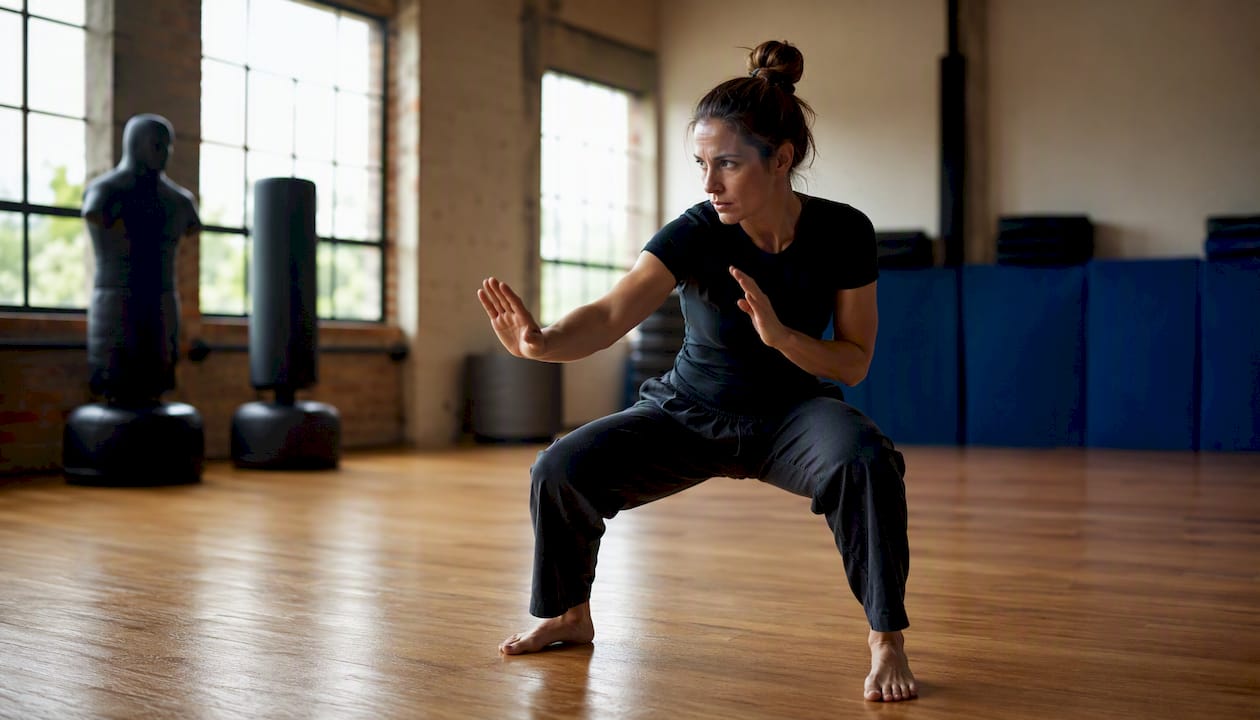
The core mechanics are consistent whether the sport is basketball, soccer, or volleyball. Feet should be shoulder-width apart or slightly wider, with the knees bent and tracking over the toes. Weight sits on the balls of the feet rather than the heels, allowing instant movement in any direction. The hips stay low, keeping the center of gravity close to the ground. The back stays relatively straight, and the arms are active, not hanging loosely at the sides.
Why the stance matters: four performance benefits
Coaching guidance from The Coaches Site identifies four direct performance benefits of a strong defensive stance:
Increased defensive range. A low, wide base allows a player to cover more lateral ground without losing balance.
Improved reaction time. Weight on the balls of the feet means the first step is faster, because the body is already loaded for movement.
Faster mistake correction. A balanced stance makes it easier to recover from a wrong-direction read without falling out of position.
Better leverage. A lower center of gravity gives a defender a mechanical advantage in physical contests.
Coaches consistently treat posture as the skill that predicts defensive effectiveness, not athleticism alone.
Three drills to build a reliable defensive stance
Stance hold. Get into the defensive position described above and hold it for 30 seconds. Focus on keeping the hips low and the weight forward. Rest and repeat three times. This builds the muscular endurance the stance requires.
Lateral slide series. From the defensive stance, slide laterally five steps left, then five steps right, keeping the hips low throughout. Never let the feet cross. Repeat for 60 seconds. This trains the footwork pattern that makes the stance functional during live play.
Stance-to-sprint. Start in the defensive stance, hold for two seconds, then explode forward or laterally on a coach’s signal or a visual cue. This connects the static position to real game movement and trains the explosive first step.
Resource note: Video demonstrations of basketball and volleyball defensive stances are widely available through coaching platforms such as The Art of Coaching Volleyball, which covers the advantages of the triple-threat defensive posture in team sports.
What does defensive posture mean in strategic and military terms?
At the organizational or national level, defensive posture describes the overall readiness, positioning, and signaling of a force or institution relative to a perceived threat. The purpose is threefold: deter aggression, preserve resources and personnel, and shape the adversary’s calculations without necessarily engaging in combat.
Several tactical principles define effective strategic defensive posture:
Defense-in-depth. Rather than concentrating all assets at a single line, forces are layered so that a breach at one point does not collapse the entire defense.
Mobility and exit routes. Modern military doctrine stresses that defensive posture must remain adaptable. A static defense becomes a trap. Effective defensive operations preserve the ability to maneuver, withdraw, and counterattack.
Time-and-distance management. Controlling the space between your position and a threat buys time to assess, decide, and act, reducing the likelihood of premature or mistaken responses.
Signal management. A well-calibrated defensive posture communicates cost to an adversary, making aggression appear too expensive, without advertising specific vulnerabilities.
Strategic analysts at CSIS caution that defensive posturing carries a real escalation risk. When a defensive posture is disproportionate to the perceived threat, or when its signals are ambiguous, an adversary may interpret it as preparation for offensive action. That misreading can trigger a counter-escalation, creating a spiral neither side intended. The lesson: posture must be calibrated and communicated with care.
A practical illustration: a security team establishing a perimeter around a facility does not simply place personnel at fixed points. They identify overlapping fields of observation, maintain clear communication channels, and designate withdrawal routes before any incident occurs. The posture deters, but it also preserves options.
How do you recognize and respond to defensive posture safely?
The first rule is simple: prioritize safety, gather context, then respond. Whether you are reading a colleague’s body language in a tense meeting or managing a potentially volatile encounter, the sequence matters.
Recognition steps
Scan for cue clusters. Look for two or more defensive signals occurring together: crossed arms paired with a turned torso, or physical barriers combined with minimal eye contact.
Establish a baseline. Compare what you are seeing to how this person normally presents. Some people habitually cross their arms. That alone means nothing.
Read the environment. A person hunching in a cold hallway is not necessarily defensive. Context shapes interpretation.
Notice micro-expressions. Brief flashes of fear, contempt, or anger lasting less than a second can confirm what the posture suggests.
Check for escalation cues. Rapid breathing, flushed skin, clenched fists, or a shift in weight toward you indicate heightened arousal and potential physical readiness.
Soft response: de-escalation in practice
When defensive posture signals emotional discomfort rather than physical threat, a calm, measured response is the most effective tool. Verbal de-escalation techniques consistently outperform confrontational approaches in reducing tension. Practical steps include:
Soften your own tone and slow your speech. A calm, quiet voice carries more authority than an urgent one.
Open your own body language: uncross your arms, angle slightly sideways rather than squaring up directly, and keep your hands visible.
Acknowledge the other person’s emotional state without judgment: “I can see this is frustrating” goes further than any logical argument.
Offer choices. Giving someone a small degree of control reduces the sense of being cornered that drives defensive posture in the first place.
For structured guidance on de-escalation in educational and organizational settings, CVPSD’s training resources provide evidence-based frameworks adapted for real-world environments.
Safety tip: When defensive posture escalates to physical threat indicators, shift your priority from communication to positioning. Increase distance, identify exits, place a physical barrier between yourself and the other person if possible, and call for assistance. Backing away without a plan can be as dangerous as standing still. Move with purpose toward cover and an exit route.
What are the benefits and risks of adopting a defensive posture?
Defensive posture exists because it works, at least in the short term. Understanding when it helps and when it costs something is what separates reactive behavior from deliberate strategy.
Why people adopt it
Protection. The most direct benefit: a defensive position reduces physical exposure and creates a buffer between a person and a threat.
Time to assess. Occupying a defensive position gives officers, and anyone in a high-stakes situation, more time to detect and evaluate a threat before committing to a response. That time reduces the probability of error.
Boundary signaling. In negotiations and interpersonal conflict, a closed posture can communicate that a person is not ready to concede, buying time to think.
Reduced perceived vulnerability. Psychologically, a defensive stance can lower the sense of exposure, which helps people remain calmer under pressure.
The costs
Defensive posture also carries real trade-offs. In social and professional settings, a consistently closed body posture signals distrust or hostility, which can damage relationships and reduce collaboration. In strategic contexts, an overly strong defensive posture risks the escalation spiral described earlier. In sports, a defensive stance that becomes too rigid or predictable limits offensive transition and can be exploited by an opponent who reads the pattern.
Pro Tip: Ask whether the defensive posture is adaptive or maladaptive. Adaptive: it is protecting you from a real, present threat and buying time for a better response. Maladaptive: it has become a habit that closes off communication or signals hostility when none is intended. If it is maladaptive, that is exactly what structured training is designed to address.
How do you practice defensive posture safely?
Safe, effective training follows a progression. Jumping into scenario-based practice without foundational work increases the risk of injury and reinforces bad habits.
Training checklist
Conduct a baseline assessment first. Know your current posture habits, physical limitations, and stress responses before adding complexity.
Use slow, progressive drills. Build the stance before adding movement. Add movement before adding a partner. Add a partner before adding scenario pressure.
Practice under supervision when possible. A qualified instructor catches errors that a mirror cannot.
Build in feedback loops. Video review, partner observation, and structured debriefs after scenario work accelerate learning more than repetition alone.
Include scenario-based practice with realistic context. Drills that never connect to real situations leave a gap between training and application.
Safety rules for physical practice
Warm up thoroughly before any contact or movement drill.
Establish clear stop signals with any training partner before starting.
Never practice physical defensive techniques without a qualified instructor present for the first time.
Conduct a brief medical and ethics check before role-play scenarios: confirm no injuries, agree on boundaries, and debrief afterward.
A short practice session you can try now
Stand in a neutral position and take three slow breaths to establish a calm baseline.
Move into the defensive stance: feet shoulder-width apart, knees slightly bent, weight on the balls of your feet, hands relaxed and visible at mid-height.
Hold the stance for 20 seconds. Notice where tension accumulates (usually the shoulders and jaw). Consciously release it.
Practice a slow lateral step left, then right, keeping the stance intact. Repeat five times each direction.
Return to neutral, breathe, and reflect on what felt stable and what felt awkward. That reflection is the feedback loop.
CVPSD offers both in-person and online training that builds on exactly this kind of foundational practice, scaling it to organizational needs with evidence-based crisis intervention and behavior analysis components.
Why do people adopt a defensive posture psychologically?
Defensive posture is not a choice in the conventional sense. It is a response. The nervous system reads a situation as threatening and prepares the body to protect itself, often before conscious awareness catches up.
The fight-or-flight response is the primary driver. When the brain perceives danger, whether physical, social, or emotional, it triggers a cascade of physiological changes: muscle tension increases, the body contracts toward its core, and posture shifts to minimize exposed surface area. This is the same mechanism that makes a person flinch before they decide to flinch.
Social threat activates the same system as physical threat. Criticism, public embarrassment, perceived rejection, and interpersonal conflict all register as threats in the brain’s threat-detection circuitry. That is why a person being criticized in a meeting crosses their arms without thinking about it. The body is protecting itself from a social wound the same way it would protect itself from a physical one.
Past experience shapes the threshold. Someone who has experienced repeated criticism or conflict may adopt defensive postures earlier and more intensely than someone with a lower threat history. Over time, a defensive posture can become a default resting state, a chronic pattern that no longer tracks the actual level of threat present. Recognizing this distinction, between a situational response and a habitual pattern, is one of the more practical insights that behavior analysis training provides.
How is defensive posture different from aggressive posture?
The distinction matters because misreading one for the other can escalate a situation that did not need to escalate.
Defensive posture is oriented inward and backward. The body contracts, turns away, or creates barriers. The goal is protection and withdrawal. Aggressive posture is oriented outward and forward. The chest expands, the chin lifts, the shoulders square directly toward the target, and the body leans in. The goal is dominance or attack.
Several specific contrasts help with identification:
Direction of movement. Defensive: weight shifts back or sideways. Aggressive: weight shifts forward, toward the other person.
Space use. Defensive: the person shrinks their footprint and avoids eye contact or uses it only briefly. Aggressive: the person expands into the other’s space and holds prolonged, hard eye contact.
Hand position. Defensive: hands are pulled in, held close to the body, or used to create barriers. Aggressive: hands may be raised, pointed, or held open and wide in a display of size.
Facial expression. Defensive postures often accompany fear, sadness, or a neutral, avoidant expression. Aggressive postures typically accompany anger, contempt, or a hard, fixed stare.
One important nuance: a person can shift between defensive and aggressive posture rapidly, especially when they feel cornered. A defensive posture that has no exit can convert to aggression quickly. That transition is one of the key escalation signals that de-escalation training specifically prepares practitioners to recognize and interrupt.
A practitioner’s perspective on defensive posture and safety
Most conversations about defensive posture focus on what it looks like. Fewer address what it means for the person displaying it. That gap matters.
When someone adopts a defensive posture, they are communicating something real: they do not feel safe. Responding to the posture without acknowledging that underlying state is a missed opportunity at best and a provocation at worst. The most effective practitioners, whether they work in crisis intervention, coaching, or conflict resolution, treat defensive posture as information, not as an obstacle.
The tendency to respond to defensive body language with more pressure, more argument, or a louder voice is understandable and almost always counterproductive. A calm, open response that gives the other person space and options is harder to execute under stress, which is precisely why it requires training rather than good intentions alone.
CVPSD’s work is grounded in the recognition that awareness without skill is incomplete. Knowing what defensive posture looks like is a starting point. Knowing how to respond to it safely, respectfully, and effectively is what actually reduces harm. That is the gap that evidence-based training is designed to close, and it is the reason organizations that work with at-risk populations, in schools, healthcare, and community settings, benefit from structured programs rather than one-time awareness sessions.
CVPSD training programs for organizations and individuals
CVPSD, the Center for Violence Prevention and Self-Defense, is a 501©(3) nonprofit that delivers evidence-based training to organizations that need more than awareness. The programs cover crisis intervention, de-escalation, behavior analysis, and physical self-defense, built on research and adapted to the specific environments where staff and community members face real risk.
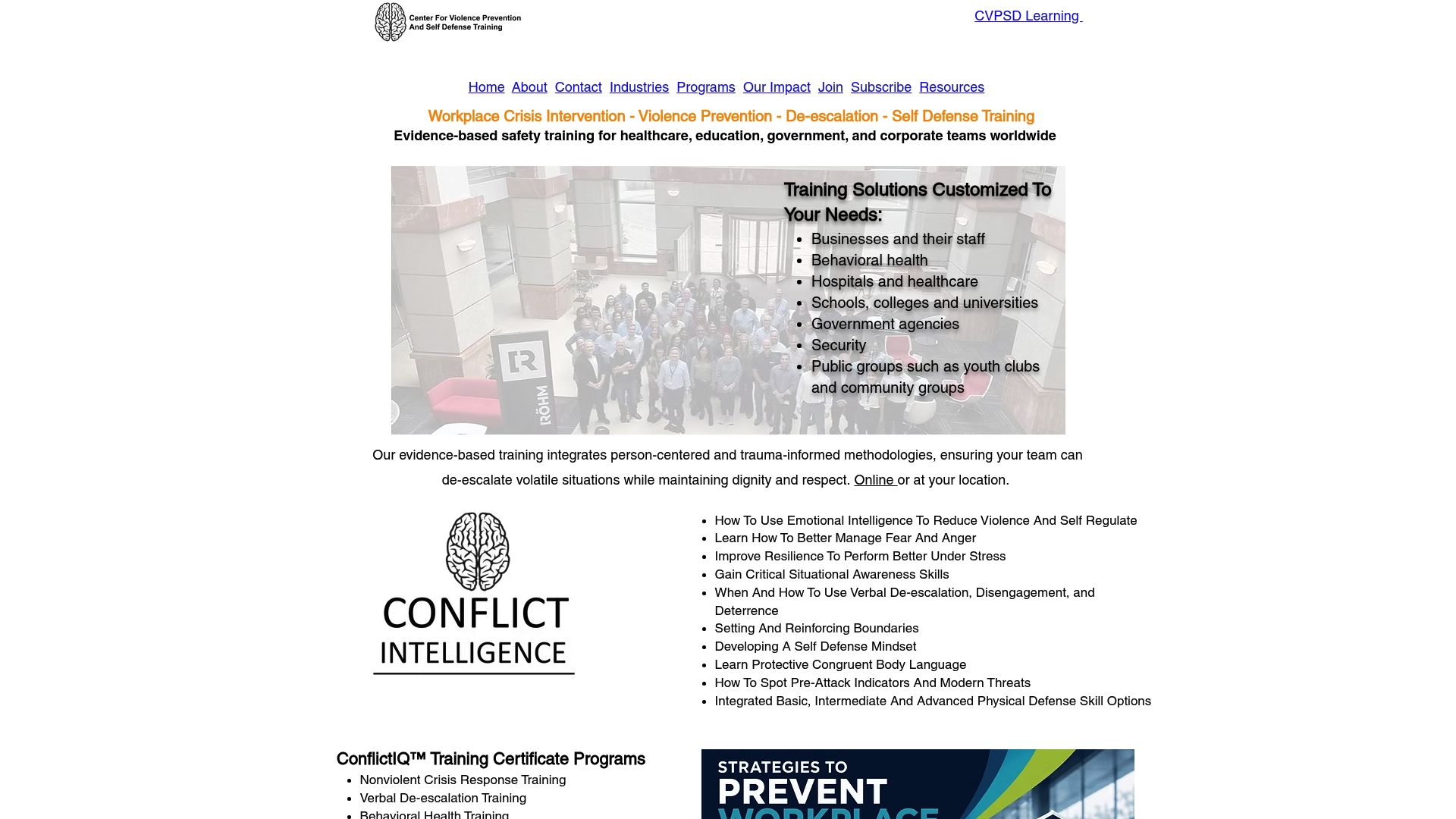
Organizations working in healthcare, education, behavioral health, and government settings can access CVPSD training in formats that fit their operational needs:
On-site workshops tailored to the organization’s population and risk profile
Public classes open to individuals and small teams
Online modules for self-paced learning and staff onboarding
To learn more or to book a training engagement for your organization, visit CVPSD’s training programs.
Sources
The following sources support the claims in this article and offer additional depth for readers who want to go further.
FAQ
What body language shows defensiveness?
Crossed arms, a turned torso, physical barriers held between people, and a contracted or hunched posture are the most common signals. Look for clusters of two or more cues together, not a single gesture in isolation.
What does a defensive stance mean in sports?
A defensive stance is a trained athletic position with feet shoulder-width apart, knees bent, weight on the balls of the feet, and hips low. It maximizes reaction time, balance, and coverage, and coaches treat it as the foundational skill for defensive effectiveness.
What does defensive posture mean in a military or security context?
It describes an organization’s overall readiness and positioning to deter threats, preserve resources, and shape an adversary’s decisions. Effective military defensive posture remains adaptable and always preserves mobility and exit options rather than becoming static.
What is a defensive posture when sitting?
A seated defensive posture typically involves crossed arms, a turned or angled torso away from the source of discomfort, legs crossed or pulled in, and reduced eye contact. It signals emotional withdrawal or discomfort and follows the same protective logic as standing defensive cues.
Is defensive posture always a sign of hostility?
No. Defensive posture signals self-protection, not aggression. A person displaying defensive cues feels unsafe or uncomfortable, not necessarily hostile. Responding with calm, open body language and empathic acknowledgment is more effective than interpreting defensiveness as a threat.
Recommended


