
Why Safety Training Saves Lives: A 2026 Guide

Updated: Jul 30

Safety training is the structured process of teaching people to recognize hazards, respond to emergencies, and protect themselves and others from harm. The evidence is clear: why safety training saves lives is not a philosophical question but a measurable fact backed by global data. Over 2.7 million workers die each year from work-related accidents and diseases. That number represents a preventable crisis, and structured safety education is the most direct tool for reducing it. Organizations that treat training as a core operational function, not a compliance checkbox, see measurable reductions in injuries, fatalities, and financial loss.
Why safety training saves lives: the core mechanism
Safety training prevents accidents by changing what people know, what they notice, and how they act under pressure. Trained workers recognize hazards before those hazards become incidents. They follow established procedures for high-risk tasks, and they respond to emergencies with practiced calm rather than reactive panic.
The gap between trained and untrained workers is significant. Research shows that 56.7% of trainees achieve good post-training knowledge, yet 11.7% of workers receive no training at all. That untrained segment carries disproportionate risk for themselves and everyone around them. Common knowledge gaps cluster around lockout/tagout procedures and hazard reporting, two areas where a single mistake can be fatal.
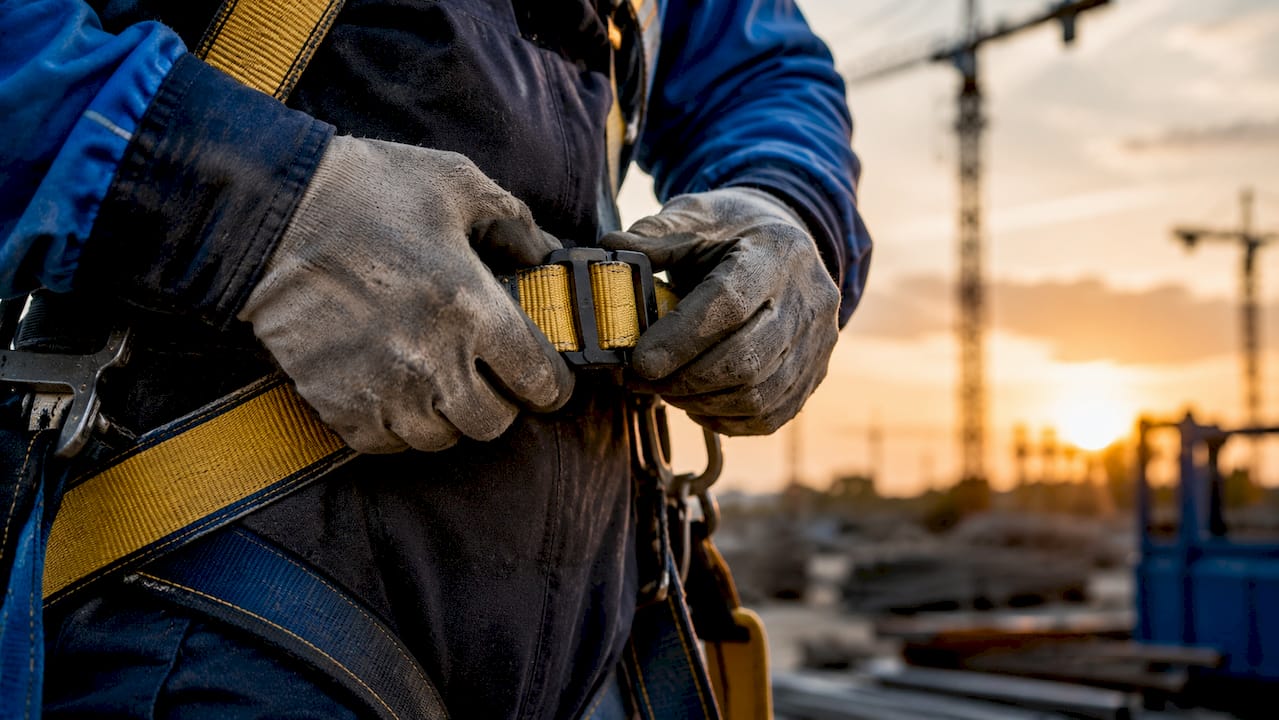
Trained workers also perform better in emergencies. Ongoing training eliminates panic, enabling calm responses that stop accidents from escalating. That distinction matters most in high-stakes moments: a worker who has practiced an emergency shutdown procedure executes it correctly under stress. A worker who has only read about it may freeze.
The four areas where safety training most consistently reduces harm are:
Lockout/tagout compliance — preventing accidental equipment energization during maintenance
Hazard recognition and reporting — identifying risks before they cause injury
Personal protective equipment (PPE) use — correct selection and consistent application
Emergency response procedures — structured, practiced reactions to fires, chemical spills, and medical events
How do organizational factors affect training effectiveness?
Training design matters, but organizational context determines whether that training actually changes behavior. A field experiment involving 12,761 firms found that collaboration between managers and workers on safety training significantly reduces accident rates and severity. The finding is counterintuitive to organizations that treat training as a top-down mandate: worker involvement in shaping training content drives adoption far more effectively than instruction alone.
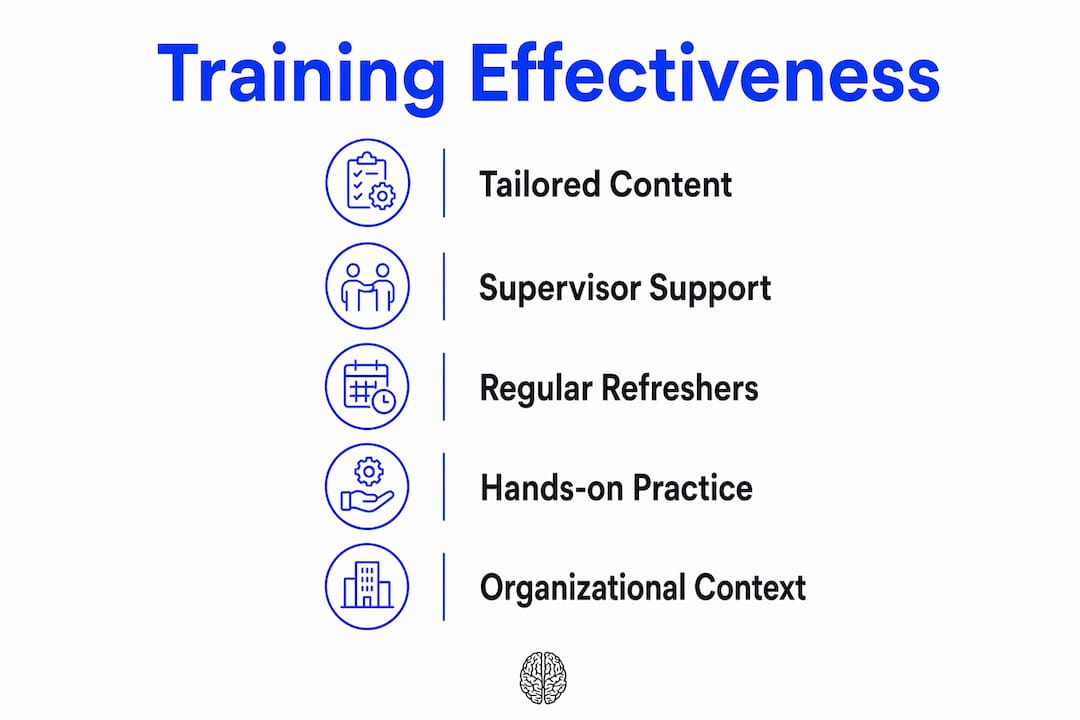
Supervisory span of control is another underappreciated variable. Fewer workers per manager correlate with better safety improvements. When supervisors oversee smaller teams, they can reinforce training behaviors consistently, catch unsafe habits early, and build the trust that makes workers willing to report near-misses.
Safety culture alone does not produce safe behavior. Structured safety training is key for effective compliance and participation, even in organizations with strong cultural values around safety. Culture sets the tone; training provides the specific skills and procedures that make safe behavior possible.
Key organizational factors that strengthen training outcomes:
Manager participation in training sessions, not just oversight
Clear operational standards that specify exact behaviors, not vague principles
Reduced supervisory ratios to allow consistent reinforcement
Integration with broader safety management systems so training is not isolated from daily operations
Worker input during program design to increase relevance and adoption
Pro Tip: Frame training as a concrete operational roadmap, not a cultural initiative. Workers respond to specific procedures and clear expectations far more reliably than to abstract values statements.
How does ongoing training sustain a safety culture?
Workplace risks evolve. New equipment, new chemicals, new workflows, and new personnel all introduce hazards that yesterday’s training did not address. Ongoing safety education keeps workers current and keeps organizations compliant with changing regulations.
The behavioral benefits of continuous training extend beyond knowledge retention. Safety training improves employee confidence, team collaboration, and organizational reputation, producing lasting safety culture benefits. Confident workers communicate hazards more readily. Teams that train together develop shared mental models of risk, which improves coordination during incidents.
Continuous training also supports adaptive risk management. Organizations that run regular refresher sessions identify gaps in existing procedures before those gaps cause harm. A quarterly drill reveals whether workers remember the correct evacuation route. An annual lockout/tagout refresher catches procedural drift before it becomes a fatality.
Benefits of ongoing safety training programs:
Sustained hazard awareness as operations and personnel change
Reduced panic and improved decision-making during real emergencies
Stronger team communication and shared situational awareness
Maintained regulatory compliance and reduced liability exposure
Improved organizational reputation with clients, insurers, and regulators
Pro Tip: Schedule refresher training after any incident, near-miss, or significant operational change. These moments create genuine motivation to learn, making retention measurably higher than routine calendar-based sessions.
How to implement effective safety training programs
Effective safety training programs share four design principles: they are tailored to specific hazards, they reach every worker, they engage supervisors as active participants, and they use outcome data to improve over time.
Tailoring training to industry and risk level is the starting point. A construction site requires fall protection and scaffolding procedures. A healthcare facility requires infection control and patient handling. Generic training modules cover legal minimums but miss the specific hazards that actually injure workers in a given environment. Implementation fidelity, the exact adherence to training design, is directly linked to injury reduction outcomes in small and mid-sized enterprises.
The steps for building a program that works:
Conduct a hazard assessment to identify the specific risks present in your environment
Map current training coverage to find which workers and which hazards have gaps
Design role-specific modules that address the actual tasks each group performs
Engage supervisors as co-trainers to reinforce content on the floor, not just in the classroom
Track leading indicators such as near-miss reports and PPE compliance rates to measure impact
Schedule refresher sessions at regular intervals and after any operational change
Hands-on safety training consistently outperforms lecture-based instruction for skill retention and behavioral change. Workers who practice procedures under realistic conditions transfer those skills to actual emergencies far more reliably than workers who only observe demonstrations.
Training programs improve knowledge and regulatory awareness but show only moderate behavioral impact when delivered in isolation. The solution is integration: training must connect to daily supervision, performance feedback, and safety management systems to produce lasting behavior change. Organizations that build this connection see the strongest reductions in injury rates.
Community organizations face similar implementation challenges. Building safe, inclusive environments requires the same principles that govern workplace safety: clear standards, trained facilitators, and consistent reinforcement of expected behavior. The population changes, but the framework holds.
Staff safety training programs that address regulatory and compliance requirements give organizations a structured foundation for meeting both legal obligations and genuine worker protection goals.
Key Takeaways
Safety training saves lives by converting knowledge into practiced behavior, and that conversion requires organizational commitment, not just classroom hours.
Point | Details |
Training closes the knowledge gap | 11.7% of workers receive no training, creating concentrated risk that structured programs directly eliminate. |
Collaboration drives adoption | Manager-worker collaboration on training design significantly reduces accident rates, as shown in a study of 12,761 firms. |
Ongoing training prevents escalation | Regular refresher sessions eliminate panic responses and keep workers current as workplace hazards evolve. |
Implementation fidelity matters | Exact adherence to training design is directly linked to injury reduction, especially in small enterprises. |
Culture needs structure | Safety culture alone is insufficient; specific, operational training programs are required for real behavior change. |
Safety training is more than a legal obligation
I have seen organizations invest in safety culture initiatives, post values on walls, and celebrate safety milestones, then watch injury rates stay flat. The reason is almost always the same: culture without concrete training is aspiration without skill.
The most common implementation failure I observe is treating training as an event rather than a system. A one-day onboarding session followed by nothing is not a safety program. It is a liability shield. Real protection comes from training that connects to daily supervision, that gets refreshed when operations change, and that workers actually trust because their managers take it seriously enough to participate.
The second failure is confusing knowledge with behavior. Training programs improve knowledge and regulatory awareness but have moderate behavioral impact on their own. Behavior changes when training is specific, practiced, and reinforced by the people workers see every day. That means supervisors must be trained first, and they must be held accountable for what happens on their teams after the classroom session ends.
Leadership commitment is not a soft factor. It is the structural condition that determines whether everything else works. Organizations where senior leaders participate in training, ask about near-miss reports, and treat safety data as seriously as financial data produce measurably safer workplaces. That is not an opinion. It is what the research consistently shows.-- Will
CVPSD’s training programs for organizations and communities
CVPSD works with organizations across sectors to deliver evidence-based safety education that goes beyond regulatory minimums.
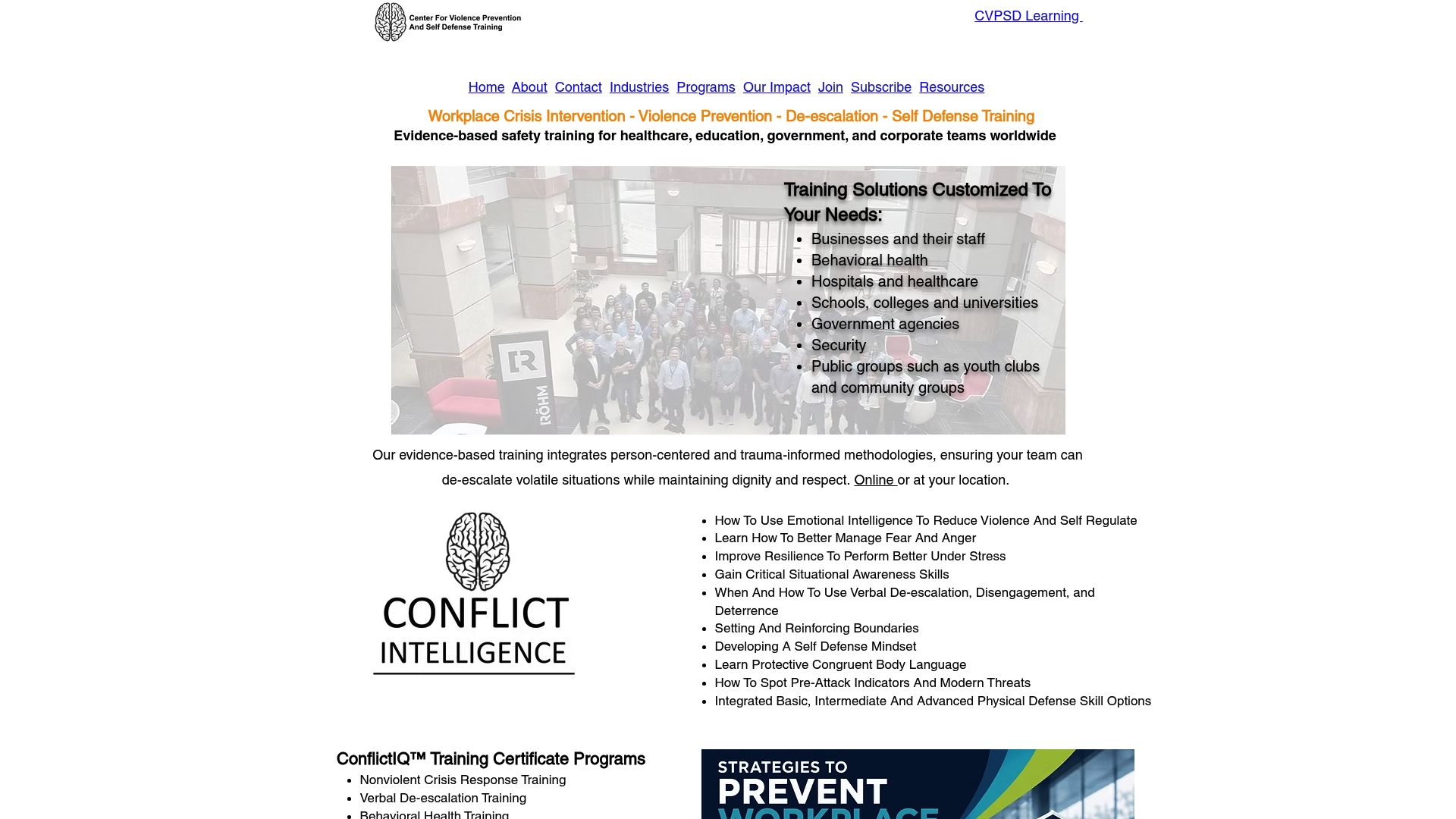
The Center for Violence Prevention and Self-Defense offers in-person and online training programs covering crisis intervention, de-escalation, behavior analysis, and physical self-defense. Programs are tailored for schools, nonprofits, government agencies, and private organizations, and all content meets state and local legal standards. Whether your team needs foundational safety education or specialized crisis response training, CVPSD builds programs around the specific risks your people face. Visit CVPSD’s training programs to learn how evidence-based education protects your team and the communities you serve.
FAQ
Why does safety training save lives?
Safety training saves lives by teaching workers to recognize hazards, follow safe procedures, and respond calmly to emergencies before accidents escalate. Over 2.7 million workers die annually from work-related causes, and structured training directly reduces that toll.
How does safety training prevent workplace accidents?
Safety training prevents accidents by closing knowledge gaps in high-risk areas like lockout/tagout, PPE use, and hazard reporting. Workers who practice emergency procedures respond correctly under stress instead of freezing or making errors.
What makes a safety training program effective?
Effective programs are tailored to specific hazards, reach every worker, engage supervisors as active reinforcers, and track behavioral outcomes rather than just attendance. Implementation fidelity is the single strongest predictor of injury reduction in small and mid-sized organizations.
How often should safety training be refreshed?
Safety training should be refreshed at regular intervals and immediately after any incident, near-miss, or significant operational change. Ongoing training sustains hazard awareness and prevents the procedural drift that leads to preventable injuries.
Is safety culture enough without formal training?
Safety culture alone is insufficient for real behavior change. Structured safety education is required for effective compliance and participation, even in organizations with strong cultural values around safety.
Recommended


