
How Situational Awareness Prevents Attacks: a Personal and Workplace Guide

Situational awareness prevents attacks by giving you early detection, options, and time. When you notice a threat before it reaches you, you can avoid it, deter it, or respond to it with a clear head rather than a panicked one. Three mechanisms drive that outcome:
Detect early. Pre-attack indicators appear before violence does. Recognizing them creates distance between you and danger.
Create options. Awareness reveals exits, cover, allies, and de-escalation paths that a distracted person never sees.
Shorten the response loop. A prepared mind processes threat cues faster, cutting the time between “something is wrong” and a protective decision.
The sections below cover the three levels of awareness, the cognitive frameworks that explain how it works, the cues to watch for, daily drills, training evidence, failure modes, and when to call for help.
Key Takeaways
Situational awareness prevents attacks by creating early detection, expanding your options, and shortening the time between recognizing a threat and acting on it.
Point | Details |
Three-level model | Perception, comprehension, and projection work together to turn observation into protective action. |
Pre-attack cues | Witness scanning, purposeful positioning, and stacked behavioral shifts are reliable early indicators. |
Daily drills matter | Baseline scanning, exit mapping, and phone discipline build awareness as a habit, not a one-time skill. |
Awareness has limits | Call 911 when a threat is imminent, a weapon is visible, or the situation is beyond individual control. |
CVPSD training | CVPSD offers scenario-based, evidence-grounded programs that build recognition speed and escalation clarity for organizations. |
Table of Contents
What situational awareness actually means and its three levels
How situational awareness prevents attacks: the mechanisms behind it
What training and evidence say about building situational awareness
Why situational awareness fails and how to reduce those failure modes
How your brain and body respond faster when awareness is trained
Real incidents where situational awareness changed the outcome
Technology tools that support awareness without creating distraction
CVPSD training builds situational awareness into reliable practice
What situational awareness actually means and its three levels
Situational awareness is the continuous process of observing your environment, understanding what those observations mean, and anticipating what is likely to happen next. It is not paranoia. It is structured attention.
Psychologist Mica Endsley formalized the concept in three levels that build on each other:
Level 1: Perception. You notice what is present. A person standing near an exit. A bag left unattended. A voice that rises above the ambient noise. This is raw input.
Level 2: Comprehension. You interpret what you noticed. That person near the exit has been there for ten minutes and keeps glancing at the door. The bag has no owner nearby. Comprehension turns data into meaning.
Level 3: Projection. You anticipate what comes next. If that person moves toward you, what are your options? Where is the nearest exit? Projection is what lets you act before an event rather than react after it.
A practical example ties all three together. You walk into a parking garage and notice a man sitting in an idling car facing the entrance (perception). He watches each person who enters but does not get out (comprehension). You recognize this as a possible pre-positioning behavior and choose a different row, staying near the elevator bank (projection). No confrontation. No drama. Just a better outcome from structured attention. CVPSD’s situational awareness series covers how heuristics, atmospherics, and proxemics sharpen each of these levels in practice.

How situational awareness prevents attacks: the mechanisms behind it
The connection between awareness and prevention is not abstract. It runs through specific cognitive and behavioral pathways.
The OODA loop (Observe, Orient, Decide, Act), developed by military strategist John Boyd, describes how fast decision-making works under pressure. A person with trained awareness completes the Observe and Orient steps faster because they have already established a baseline and know what deviates from it. That speed advantage is the difference between choosing an exit and being trapped.
Routine Activities Theory (Cohen & Felson, 1979) offers a complementary lens. Crime requires three elements to converge: a motivated offender, a suitable target, and the absence of a capable guardian. Situational awareness directly addresses two of those three. A person who scans their environment, maintains confident posture, and positions themselves near exits is a less suitable target and functions as their own capable guardian.
Three short scenarios show how these mechanisms play out:
Street scenario. A woman walking to her car notices a man who has changed direction twice to stay behind her. She crosses the street, enters a lit store, and calls her contact. The man does not follow. Her awareness created a deterrence signal and an escape route before any confrontation began.
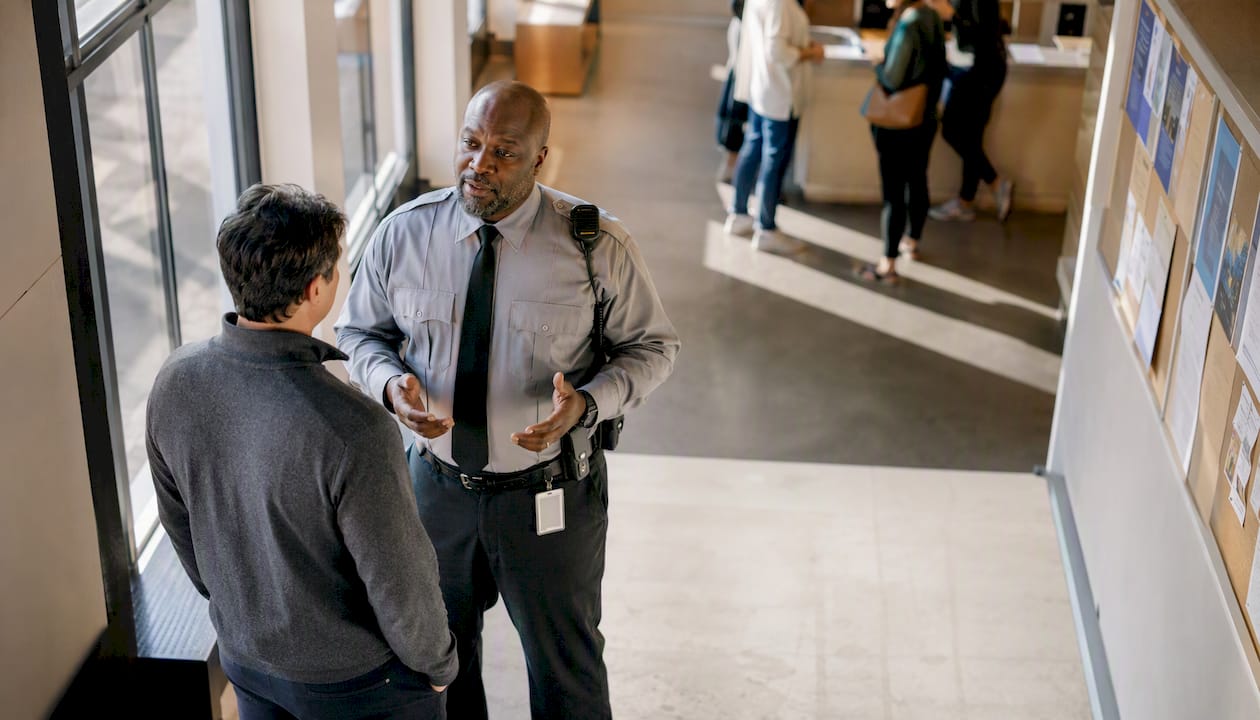
Workplace scenario. A hospital security officer notices a visitor who bypassed the check-in desk, is moving toward a restricted hallway, and has made eye contact with staff in a way that feels confrontational rather than curious. The officer intercepts with a calm, non-threatening greeting. The visitor, now acknowledged and redirected, leaves. Early comprehension prevented escalation.
Driving scenario. A driver notices a vehicle that has matched his lane changes three times on the highway. Instead of pulling off at his intended exit, he continues to a well-lit gas station with other people present. The following vehicle passes without stopping. CVPSD’s Situational Awareness Opportunity Curve framework describes exactly this kind of decision window.
What specific cues commonly precede an attack
Pre-attack behavior is observable. Knowing what to look for converts ambient noise into a usable signal. ASU PopCenter’s street robbery analysis identifies behavioral and environmental indicators that consistently appear before violent incidents. Common cues include:
Witness scanning. A person who repeatedly checks whether others are watching before approaching.
Purposeful positioning. Moving to cut off exits or close distance without a clear social reason.
Target glancing. Repeated, brief eye contact with a specific person or their belongings.
Loitering near transitions. Parking lots, stairwells, and doorways are high-risk zones; lingering there without purpose is a signal.
Sudden behavioral shift. A person who was calm becomes agitated, or one who was agitated goes suddenly quiet.
Concealment behavior. Adjusting clothing near the waistband, keeping one hand hidden, or angling the body away.
Interview behavior. Asking questions that feel like reconnaissance (“Are you alone?” “Where are you headed?”) rather than genuine conversation.
The difference between an anomaly and an actionable indicator is context. A person standing near an exit is an anomaly. A person standing near an exit, who scans for witnesses, closes distance when you move, and asks where you are going is an actionable indicator. Reading the signals that matter requires stacking cues, not reacting to any single one in isolation.
Pro Tip: Use a simple Rule of Threes: if you notice three independent cues from the same person or location within a short window, treat it as a threshold crossed and change your position or seek help. One cue is curiosity. Three cues is a pattern.
Daily habits and short drills that build reliable awareness
Awareness is a skill, not a personality trait. It improves with deliberate, low-stakes practice.
Baseline scanning. Every time you enter a new space, take five seconds to note who is present, where the exits are, and what the ambient noise and activity level feel like. This sets the baseline against which anomalies become visible. Ready recommends identifying exits and meeting points as a core preparedness habit, and the same logic applies to daily environments.
Exit mapping. Before you sit down in a restaurant, board a train, or enter a meeting room, locate two exits. This takes three seconds and requires no special training. Over time it becomes automatic.
Five-details recall. After leaving a space, try to recall five specific details: a person’s clothing color, a license plate, a sound, a smell, a position. This sharpens the perception layer of awareness without creating anxiety.
Phone discipline. Phones are the single most common awareness disruptor. Practice keeping your phone in your pocket when moving through transition zones: parking lots, elevators, stairwells, and public transit stops. NHTSA research on distracted driving shows that divided attention sharply reduces hazard detection, and the same principle applies on foot.
Verbal boundary practice. Practice saying “No” and “Stop” clearly and calmly in low-stakes situations. The ability to set a verbal boundary without hesitation is a deterrence tool that most people never rehearse.

Pro Tip: Integrate awareness practice into your existing commute rather than treating it as a separate activity. Pick one transition point each day, such as your parking lot or train platform, and run a full baseline scan before you look at your phone. Consistency in a familiar environment builds the habit faster than occasional high-intensity drills.
For solo individuals, personal preparedness planning tools offer structured checklists for mapping exits, emergency contacts, and personal information, which complement daily awareness habits with a documented plan.
What training and evidence say about building situational awareness
Training accelerates awareness development in ways that solo practice cannot fully replicate. The most effective programs share common elements.
U.S. Army Advanced Situational Awareness Training uses role play, nonverbal cue recognition, and repeated scenario practice to help personnel identify anomalies and anticipate hostile intent. The key insight from military training is that recognition speed improves when people practice with realistic, varied scenarios rather than static classroom instruction.
OSHA’s workplace-violence prevention programs provide a structured framework for organizations, covering policy development, staff training, environmental design, and reporting systems. Organizations that implement all four components reduce both incident rates and the severity of incidents that do occur.
USFA/FEMA workplace safety resources reinforce that coordinated preparedness, including regular drills and clear reporting channels, produces measurable safety improvements across industries.
Effective training formats differ in what they target:
Format | Primary outcome | Best suited for |
Classroom instruction | Conceptual knowledge, policy awareness | Initial onboarding, compliance |
Scenario-based drills | Recognition speed, decision-making under pressure | Security staff, healthcare workers |
Field practice (live environment) | Habit formation, baseline calibration | All staff, ongoing reinforcement |
Role play with coached feedback | Nonverbal cue reading, de-escalation timing | Supervisors, front-line responders |
Threat-intelligence-based training, which adapts scenarios to current attack patterns rather than using static templates, builds transferable recognition skills that hold up when real-world conditions change. CVPSD’s situational awareness training series applies this adaptive approach across healthcare, education, and corporate environments.
Why situational awareness fails and how to reduce those failure modes
Even well-trained people lose awareness. Understanding the failure modes is the first step to mitigating them.
Common causes of awareness breakdown:
Phone and screen distraction. Divided attention reduces peripheral vision and slows threat recognition.
Normalcy bias. The tendency to assume that because nothing bad has happened before, nothing bad will happen now. This is the most common reason people ignore early warning signs.
Confirmation bias. Interpreting ambiguous cues to match a preferred conclusion (“He’s probably just waiting for someone”).
Fatigue. Mayo Clinic guidance notes that insufficient sleep degrades attention and decision-making, both of which are foundational to situational awareness.
Multitasking. The brain does not truly multitask; it switches rapidly between tasks, and each switch creates a gap in environmental monitoring.
Tunnel vision under stress. Once a threat is identified, attention can narrow so sharply that secondary threats or escape routes become invisible.
Mitigation is practical. Reduce phone use in transition zones. Use simple checklists before entering high-risk environments. Prioritize consistent sleep. Build buddy-check habits in workplace settings so awareness is shared rather than individual. CVPSD’s guidance on situational awareness under stress addresses how to maintain environmental monitoring even when the body’s stress response is active.
When situational awareness isn’t enough
Awareness is a powerful preventive tool, but it has real limits. An attack that begins without warning, a determined attacker who conceals intent until the last moment, or a situation that escalates faster than any individual can process, these are scenarios where awareness alone cannot guarantee safety. Recognizing those limits is part of responsible training.
Call 911 immediately when: a threat is imminent or in progress, a weapon is visible, someone has been harmed, or you have lost control of the situation. Do not attempt to manage an active threat through awareness alone.
In workplace settings, OSHA’s framework requires organizations to establish clear reporting channels so that staff can escalate concerns before they reach a crisis point. A suspicious person reported to security is a far better outcome than an individual trying to manage the situation alone. Workplace safety preparedness consistently shows that organizations with defined reporting protocols respond faster and with less harm.
Awareness of your own limits is also part of the skill. Knowing when to step back, report, and let trained responders take over is not a failure of awareness. It is its highest expression.
How your brain and body respond faster when awareness is trained
Situational awareness works partly because of how the brain processes threat. The amygdala, the brain’s threat-detection center, responds to pattern mismatches. When a trained person has established a clear baseline, a deviation from that baseline triggers a faster amygdala response than it would in someone who has not been paying attention. That faster trigger gives the prefrontal cortex, the decision-making center, more time to generate a response before the body’s fight-or-flight cascade takes over.
Untrained individuals often experience threat recognition and physiological stress response almost simultaneously, which compresses the decision window. Trained awareness separates those two events. Recognition comes earlier, stress response follows, and the person has already begun moving toward an exit or a verbal boundary before the full adrenaline surge hits.
This is why awareness becomes an advantage only when observation is tied to defined indicators and pre-planned responses. Without those anchors, an observation stays an observation. With them, it becomes a decision.
Real incidents where situational awareness changed the outcome
Documented cases consistently show that awareness created the margin that prevented harm.
In 2013, an off-duty law enforcement officer at a shopping mall noticed a man whose jacket was too heavy for the weather, who kept one hand near his waistband, and who was moving against the flow of foot traffic toward a crowded food court. The officer alerted mall security and positioned herself near an exit. The man was stopped and found to be carrying a concealed weapon. No shots were fired. The intervention happened entirely in the pre-event window.
Healthcare settings produce similar patterns. A hospital documented a case where a nurse noticed that a patient’s family member showed concerning behavior such as repeated requests to be left alone with the patient, inquiries about staff shift changes, and agitation when another nurse entered the room. She flagged the behavior to security before any incident occurred. The family member was later found to have a restraining order against the patient. The nurse’s comprehension of stacked cues, not any single red flag, drove the intervention.
These cases reflect what ASU PopCenter’s crime analysis framework describes as the crime triangle: motivated offender, suitable target, absent guardian. In both cases, a capable guardian, someone paying attention and willing to act, disrupted the triangle before violence could occur.
Common misconceptions about situational awareness
Several widespread beliefs about situational awareness actively reduce personal safety.
“It means being suspicious of everyone.” Awareness is about reading context, not assigning suspicion to individuals. The goal is to notice deviations from a baseline, not to treat every stranger as a threat. Conflating the two creates anxiety without improving safety.
“It’s only for security professionals.” Every person navigates public and semi-public spaces daily. The habits that protect a security officer, scanning, exit mapping, baseline calibration, are the same habits that protect anyone walking to their car at night.
“If something bad happens, you’ll just know.” The body does send signals, but those signals require a trained mind to interpret correctly. Untrained people often rationalize away early warning signs because they feel uncomfortable acting on incomplete information. Training builds the threshold clarity that makes acting on early signals feel appropriate rather than presumptuous.
“Awareness is enough on its own.” As the previous section notes, awareness is a prevention tool, not a guarantee. It works best when paired with pre-planned responses, clear escalation paths, and the willingness to call for help.
Technology tools that support awareness without creating distraction
Several categories of technology can extend situational awareness without pulling attention away from the environment.
Personal safety apps. Apps like bSafe and Noonlight allow users to share real-time location with trusted contacts and trigger silent alerts. They work best when set up in advance so activation requires minimal attention in the moment.
Wearables with passive alerts. Devices like the Apple Watch can detect falls and unusual heart rate patterns and send alerts without requiring the user to look at a screen. Some security-focused wearables include discreet SOS buttons.
Environmental sensors. In workplace settings, gunshot detection systems (such as ShotSpotter, used in many U.S. municipalities) and access control systems with anomaly alerts extend organizational awareness beyond what any individual can monitor.
Dashcams and rearview cameras. In vehicle contexts, a dashcam with a wide-angle rear view extends the driver’s perceptual field without requiring head turns that break road attention.
The consistent principle across all of these tools is that they should reduce cognitive load, not add to it. A tool that requires active management during a transition zone is a distraction, not an aid. Threat-intelligence-based training increasingly incorporates technology integration as a skill, teaching people to use tools as a complement to human observation rather than a replacement for it.
The case for prevention-first training
Most people who have been through a violent incident describe the same thing afterward: there were signs they did not know how to read. That observation is not a criticism. It is a training gap.
The conventional framing of personal safety focuses heavily on physical response: what to do when an attack is already happening. That framing is necessary, but it is incomplete. Physical response training addresses the last three seconds of a threat sequence. Situational awareness training addresses the three minutes, three hours, or three days before that sequence begins.
The evidence from military training, organizational safety research, and criminology all points in the same direction. Prevention is not passive. It is an active, practiced skill that requires defined indicators, clear thresholds, and pre-planned responses. Awareness without those anchors is observation. Awareness with them is protection.
CVPSD training builds situational awareness into reliable practice
CVPSD delivers structured, evidence-based training that moves situational awareness from concept to habit. Programs cover behavior analysis, de-escalation, crisis intervention, and physical self-defense, with scenario-based drills designed to sharpen recognition speed and clarify escalation thresholds for real environments.
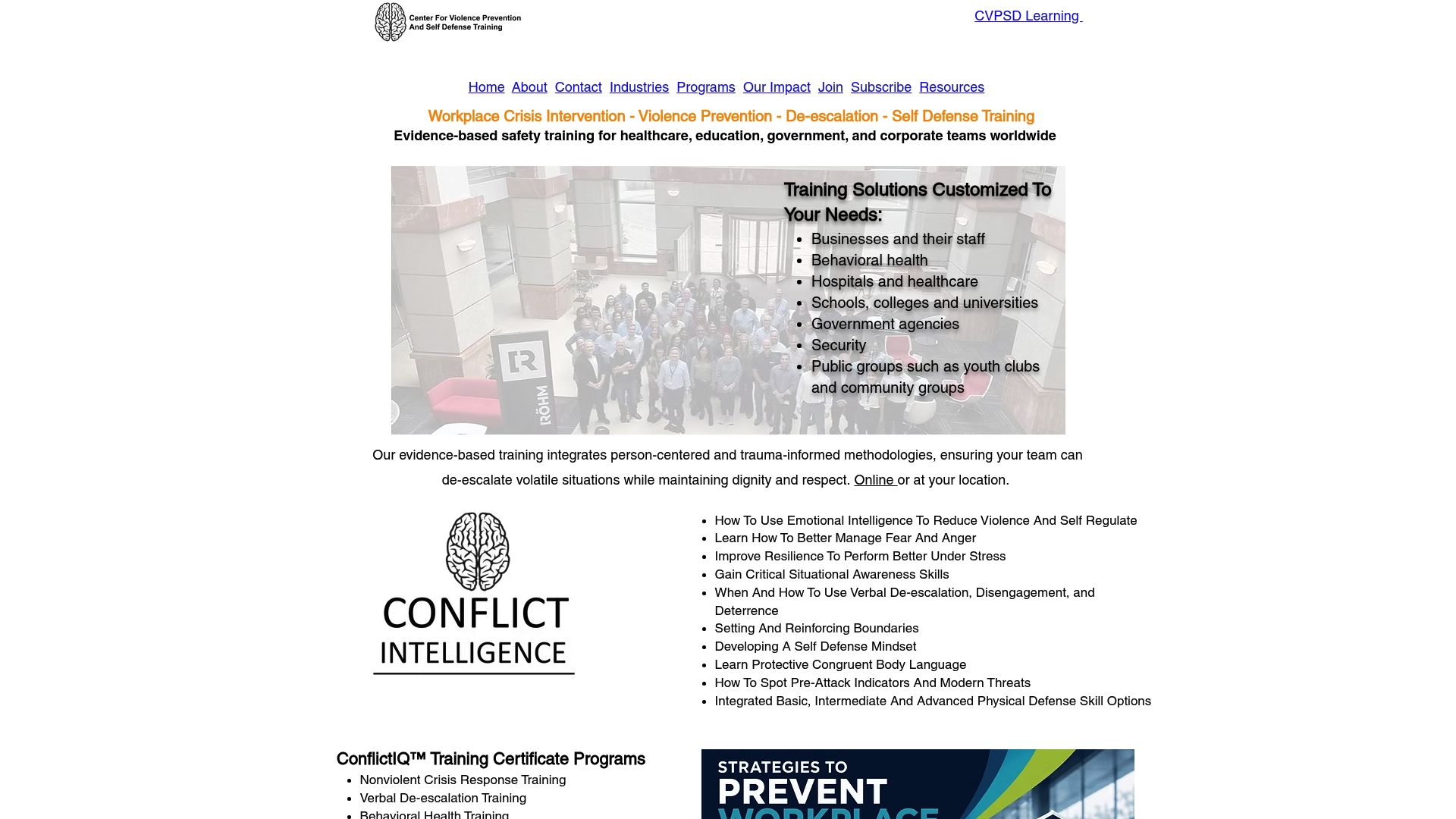
Organizations in healthcare, education, corporate, and government sectors work with CVPSD to build staff confidence, reduce reaction time, and establish documented reporting protocols that meet OSHA and state compliance standards. Training is available online and in person, tailored to the specific risk profile of each organization.
To schedule a training program for your team, visit CVPSD’s training programs and connect with a program coordinator who can match the right format to your organization’s needs.
Sources
The following sources provide deeper grounding in the research and frameworks referenced throughout this article:
FAQ
Why is situational awareness so important for personal safety?
Situational awareness creates the time and options needed to avoid or de-escalate a threat before it becomes physical. Without it, most people react after an attack has already begun rather than preventing it.
What are the three key elements of situational awareness?
The three levels are perception (noticing what is present), comprehension (understanding what it means), and projection (anticipating what is likely to happen next), a framework developed by psychologist Mica Endsley.
What causes a lack of situational awareness?
The most common causes are phone distraction, normalcy bias, fatigue, and multitasking. Each reduces the brain’s ability to detect and interpret environmental cues accurately.
How does situational awareness prevent attacks in workplace settings?
In workplaces, trained staff recognize pre-attack behavioral cues, report concerns through established channels, and de-escalate early, all of which OSHA’s workplace-violence prevention framework identifies as core components of effective incident reduction.
Can situational awareness training be learned, or is it a natural ability?
Awareness is a trainable skill. Programs like those offered by CVPSD use scenario-based drills, cue recognition practice, and threshold-setting exercises to build reliable awareness habits in individuals who have no prior security background.

About the Author: William DeMuth is the Director of Training at the Center for Violence Prevention and Self Defense (CVPSD) in Freehold, NJ. With over 35 years of research in violence dynamics and personal safety, William specializes in evidence-based training that bridges the gap between compliance and real-world conflict resolution. The architect of the ConflictIQ™ program, he holds advanced certifications and has trained under diverse industry leaders. Today, he actively trains civilians, healthcare workers, and corporate teams in situational awareness, threat assessment, behavior analysis, de-escalation strategies, and physical tactics.


