
Cal/OSHA vs OSHA: 5 Steps California Employers Must Take

Cal/OSHA enforces workplace safety for nearly all California workplaces; where both federal and state requirements apply, the stricter standard controls. When Cal/OSHA and federal OSHA rules diverge on the same hazard, employers must follow whichever one demands more protection. A narrow set of exceptions, mostly federal enclaves and federal employers, still falls under federal OSHA. If you operate a business in California, treat Cal/OSHA as your primary regulator unless you have specific reason to believe otherwise.
Cal/OSHA vs OSHA Key Takeaways
Employers in California generally must follow Cal/OSHA regulations, which often impose stricter standards than federal OSHA, especially regarding programs like IIPP and WVPP.
Federal OSHA retains jurisdiction over federal government agencies, certain military bases, federal enclaves, maritime work, and USPS facilities, requiring separate compliance checks.
California-specific standards demand more comprehensive documentation, hazard assessment, and employee training, making thorough program implementation critical for compliance.
Most inspections are triggered by complaints, with unprepared workplaces facing multiple citations for missing or outdated written programs and records.
Conducting voluntary consultations and maintaining current, site-specific programs like IIPP, ATD, and WVPP helps reduce citation risk and prepares workplaces for inspections.
Table of Contents
How California’s State Plan Works Alongside Federal OSHA
California runs its own occupational safety program under Section 18 of the federal OSH Act, which lets states take over enforcement as long as their rules match or exceed federal protections. The California State Plan has operated this way for decades, and it means Cal/OSHA answers to a state agency first, not a federal one.
The California Department of Industrial Relations (DIR) administers Cal/OSHA and enforces the standards written into Title 8 of the California Code of Regulations. Federal OSHA doesn’t disappear from the picture, though. It keeps a supervisory role over every state plan, including California’s, through what’s called an Operational Status Agreement, or OSA. That agreement spells out:
What responsibilities federal OSHA still holds directly
Which categories of employers or worksites remain under federal jurisdiction
How federal OSHA monitors California’s plan for continued approval
Think of it as a franchise model: California runs daily operations, but federal OSHA holds the standard the whole system has to meet.
Who Cal/OSHA Covers and Where Federal OSHA Still Applies
Jurisdiction confusion causes more compliance headaches than almost any other issue in this space. Here’s how to sort it out.
Assume Cal/OSHA applies by default. Cal/OSHA has authority over nearly all private-sector and state or local government workplaces in California, from a five-person retail shop to a county hospital.
Check for federal employer status. If your organization is a federal government agency; federal OSHA retains jurisdiction, not Cal/OSHA.
Identify federal enclaves. Certain federal installations, including some military bases, sit outside Cal/OSHA’s reach and answer to federal OSHA instead. The Operational Status Agreement names these categories specifically.
Flag maritime work on navigable waters. Longshoring and related maritime activities often fall under federal OSHA rather than Cal/OSHA.
Remember USPS operations. United States Postal Service facilities are federally regulated regardless of their California location.
Verify before you assume. If your worksite touches any of these categories, confirm status directly with the OSHA regional office or with DIR rather than guessing. Employers on military bases or tribal land benefit especially from confirming jurisdiction early, since a wrong assumption discovered mid-inspection is far costlier to fix than one caught in advance.
Cal/OSHA Regulations That Go Further Than Federal Standards
This is where the practical differences between Cal/OSHA and federal OSHA show up most for California employers. Several California-specific standards demand more documentation, more training, and more proactive planning than federal OSHA requires anywhere else in the country.
Injury and Illness Prevention Program (IIPP): California requires nearly every employer to maintain a written IIPP identifying a responsible person, a system for identifying hazards, and a documented process for correcting them. Federal OSHA has no equivalent blanket mandate.
Aerosol Transmissible Diseases (ATD) standard: Healthcare employers and certain congregate settings must implement exposure control plans, respiratory protection, and specific training tied to airborne pathogen risk.
Heat illness prevention: Outdoor employers must provide water, shade, and scheduled rest breaks, along with acclimatization procedures and high-heat procedures once temperatures cross defined thresholds.
Workplace Violence Prevention Plan (SB 553): Most California employers now need a written WVPP, a violent incident log, and recurring employee training, a requirement with no federal counterpart of the same scope.
Pro Tip: Don’t treat these as separate compliance projects. A well-built IIPP often becomes the backbone that your ATD plan, heat program, and WVPP all reference, which cuts duplicate paperwork and makes inspections faster to navigate.
The full text for each standard lives in the Title 8 index that DIR maintains, and it’s worth bookmarking if you’re responsible for keeping any of these programs current.
What a Cal/OSHA Inspection Actually Looks Like
Most Cal/OSHA enforcement starts with a complaint, not a random visit. Serious or imminent hazard complaints get faster response times than routine ones, and inspectors, known as Compliance Safety and Health Officers (CSHOs), arrive with broad authority once they’re on site.
CSHOs can review training records, injury logs, and written programs on request.
They can interview employees privately, without a supervisor present.
They can take samples, photographs, and measurements relevant to the complaint or any hazard observed in plain view.
They can issue citations on the spot for serious or willful violations.
One pattern trips up employers repeatedly: a single missing program, especially a missing IIPP, tends to generate several related citations rather than one. A gap in your written program often correlates with gaps in training records and hazard communication, and inspectors document all of it. The practical lesson is to focus on complete documentation and prompt corrective action rather than fixating on any single citation number.
Federal OSHA can resume enforcement authority in extraordinary circumstances defined by the OSA, though this is rare and generally tied to broader concerns about whether California’s plan continues to meet the “at least as effective” standard.
A Compliance Checklist California Employers Can Actually Use
Building compliance from scratch feels overwhelming until you break it into sequence. Here’s the order that reduces citation risk fastest.
Write and maintain a site-specific IIPP. Name a responsible person, document your hazard identification process, and keep a running log of corrective actions.
Assess ATD exposure if you’re in healthcare or a congregate setting. Implement respiratory protection, fit testing, and annual training where applicable.
Build a Workplace Violence Prevention Plan if SB 553 applies to you. Maintain a violent incident log and retrain employees on the schedule the law requires.
Put heat illness prevention in writing for any outdoor work. Document your water, shade, and rest provisions along with an acclimatization plan for new or returning workers.
Request a Cal/OSHA consultation before you need one. These voluntary, non-punitive assessments identify gaps without triggering citations, and keeping records of the consultation and your follow-up corrections builds a paper trail that helps you later.
Pro Tip: Calendar your WVPP and ATD training renewals the same week each year. Employers who tie recurring compliance tasks to a fixed date rarely miss them; those who wait for a reminder often do.
Where to Verify the Rules Yourself
Reading the primary sources takes less time than most employers expect, and it settles jurisdictional questions faster than a guess.
OSHA’s California State Plan page explains the state plan’s legal foundation.
The Federal Register notice on the Operational Status Agreement lays out exactly what federal OSHA retains.
DIR’s Title 8 index is the searchable source for every Cal/OSHA standard.
Cal/OSHA’s consultation program offers free, voluntary worksite assessments separate from enforcement.
How CVPSD Approaches Cal/OSHA-Ready Program Design
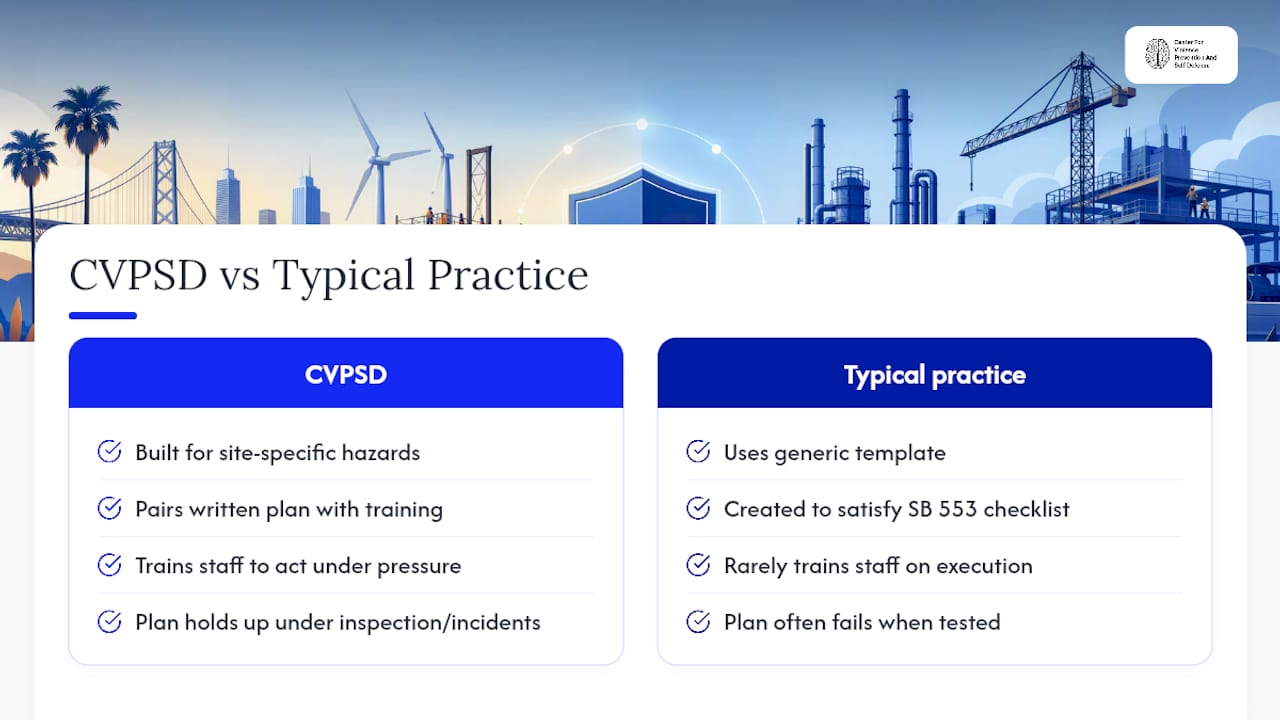
Written programs pass Cal/OSHA scrutiny when they reflect what actually happens at a site, not a generic template. CVPSD builds workplace violence prevention plans around the specific hazards a healthcare unit, school campus, or government office faces, then pairs the written plan with de-escalation training that gives staff the skills the plan assumes they have.
The gap CVPSD sees most often: organizations write a WVPP to satisfy the SB 553 checklist, then never train staff to execute it under pressure. A plan without practiced response habits behind it rarely holds up when an inspector, or a real incident, tests it.
Contributing author: Shawn Lebrock, compliance content lead.
Why “Meeting Federal OSHA” Isn’t the Same as Being Compliant in California
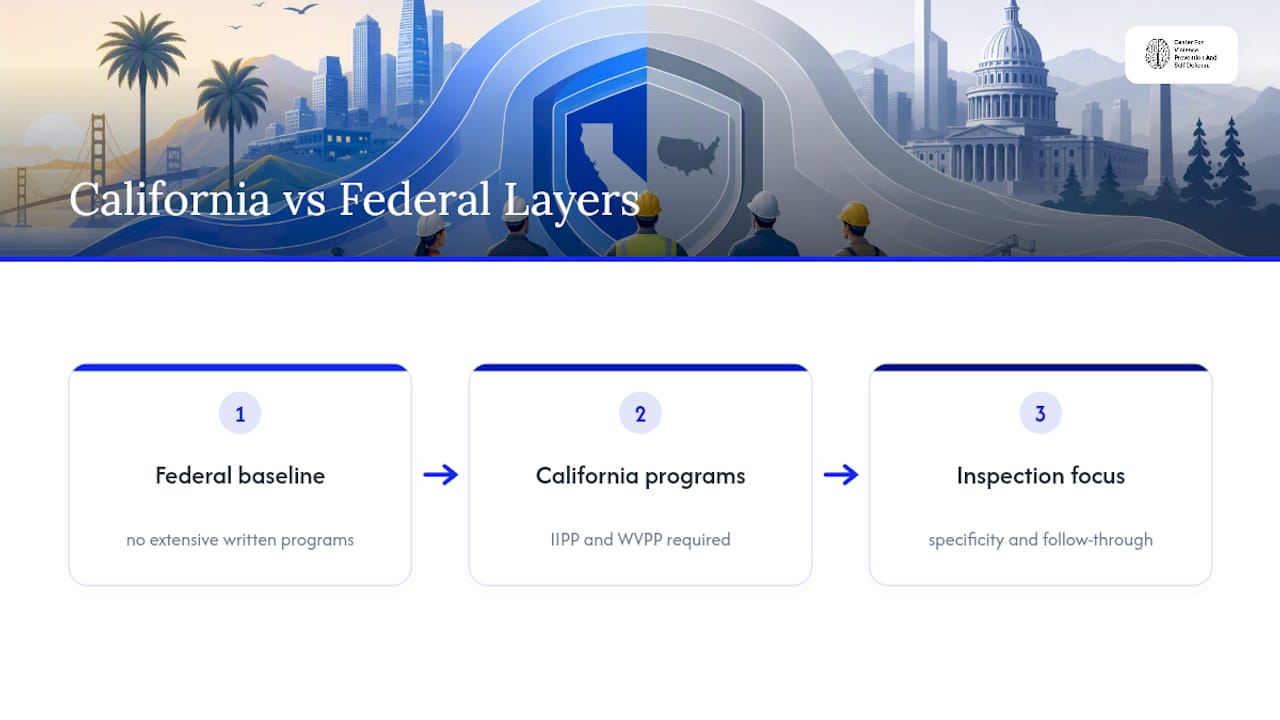
The most common mistake employers make on this topic isn’t misunderstanding jurisdiction. It’s assuming federal OSHA compliance is a safe floor. It usually isn’t. California layers written-program requirements, like the IIPP and now the WVPP, on top of a federal baseline that never demanded that level of documentation in the first place.
Conventional advice tends to frame Cal/OSHA versus OSHA as a jurisdictional trivia question: which agency technically has authority over your site. That’s the wrong starting point for most employers, because the answer is almost always Cal/OSHA, and dwelling on the exceptions distracts from the real work.
The priority should be building written programs that hold up under actual inspection, not just filing paperwork to check a box. A WVPP that nobody has practiced, or an IIPP that lists a responsible person who left the company two years ago, will fail an inspector’s questions just as fast as having no program at all. Compliance in California rewards specificity and follow-through more than it rewards knowing which section of the OSH Act applies to you.
— Shawn Lebrock
Get Your Workplace Violence Prevention Plan Inspection-Ready
CVPSD is the alternative to generic compliance templates for California employers building an SB 553 program from the ground up. Instead of a document written to satisfy a checklist, CVPSD designs written plans and pairs them with de-escalation and crisis intervention training your staff will actually retain and use under pressure.
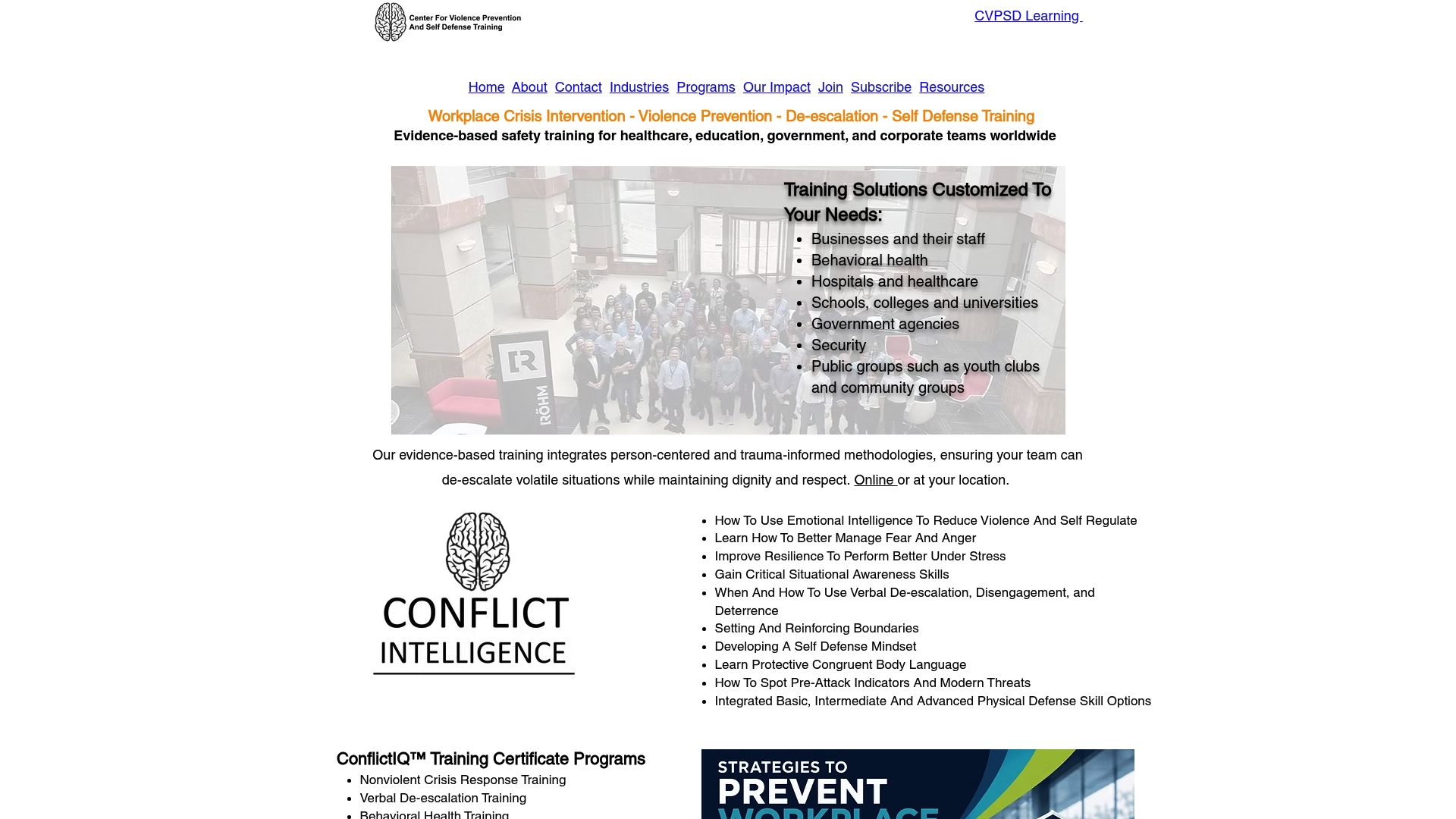
CVPSD works with healthcare systems, schools, nonprofits, and government agencies across California, tailoring both the written program and the training format to the risks each setting actually faces. The organization’s approved status with the Defense Logistics Agency reflects the same standard applied to federal-sector clients. Employers also managing broader safety compliance programs, including DOT drug testing requirements, often find that pairing violence prevention training with existing policy frameworks closes gaps faster than building each program in isolation.
Visit CVPSD’s landing page to start a consultation and get a written plan and training program built around your actual workplace.
Sources
FAQ
Are OSHA and Cal/OSHA the Same Thing?
No. Cal/OSHA is California’s state-run occupational safety agency, approved under Section 18 of the OSH Act, and it enforces its own Title 8 standards that in several areas exceed federal OSHA requirements.
Does the United States Still Have OSHA?
Yes. Federal OSHA continues to operate nationwide, sets the baseline every state plan must meet or exceed, and retains direct jurisdiction over federal employers and specific enclaves even within state-plan states like California.
Does Cal/OSHA Override Federal OSHA?
Within California, Cal/OSHA is the primary enforcement authority for nearly all private and state/local workplaces, and its standards apply instead of federal OSHA’s wherever they’re stricter or more specific, such as the IIPP and WVPP requirements.
What Are the Latest Cal/OSHA Updates for 2026?
Recent Cal/OSHA activity centers on continued implementation and enforcement of the SB 553 Workplace Violence Prevention Plan requirements, with training and incident-log obligations remaining active priorities for inspectors across many industries.
How Do I Know if My California Worksite Falls Under Federal OSHA Instead?
Check whether your site is a federal enclave, a federal government employer, a maritime operation on navigable waters, or a USPS facility. If so, confirm status directly with the OSHA regional office or DIR before assuming either agency’s rules apply.
Recommended
About the Author: William DeMuth is the Director of Training at the Center for Violence Prevention and Self Defense (CVPSD) in Freehold, NJ. With over 35 years of research in violence dynamics and personal safety, William specializes in evidence-based training that bridges the gap between compliance and real-world conflict resolution. The architect of the ConflictIQ™ program, he holds advanced certifications and has trained under diverse industry leaders. Today, he actively trains civilians, hea


