
30/90/12 Month Roadmap for ED Violence Prevention for Leaders

The most effective step ED leaders can take is to implement a sustained, leadership-backed, multicomponent violence prevention program rather than a single fix like metal detectors or a one-time training day. The Joint Commission mandates this structure, OSHA’s guidance outlines its components, and organizations like CVPSD help build and sustain it. Facilities that commit to this model report fewer incidents, steadier staff confidence, and cleaner regulatory standing.
Table of Contents
Why Emergency Department Violence Prevention Has Become Urgent
The Multicomponent Prevention Model: What to Include and Why It Works
Policy, Governance, and Program Requirements ED Leaders Must Meet
Staff Training and Simulation: Building Real De-Escalation Skill
Environmental and Engineering Controls: Design Fixes That Actually Reduce Risk
Reporting, Data Collection, and Supporting Staff After an Incident
What Twenty Years of Watching EDs Struggle With This Taught Me
How CVPSD Supports a Complete ED Violence Prevention Program
Why Emergency Department Violence Prevention Has Become Urgent
Violence in the emergency department is not an occasional bad shift. It is a recurring operational hazard that shapes staffing, morale, and patient care quality every day. Nurses and patient care aides absorb the brunt of it, often during triage or while managing agitated patients in crowded waiting areas, and the physical and psychological toll accumulates fast when incidents go unaddressed.
The pattern behind the numbers: Crowding, long wait times, understaffing, and a mix of intoxication and behavioral health crises consistently show up as the operational drivers behind ED violence, according to the Annals of Emergency Medicine review by Rabin and colleagues. These are not random triggers. They are predictable pressure points that hospitals can plan around.
The same review draws a distinction that shapes how EDs should respond: not every violent episode comes from the same place.
Intentional aggression involves a person acting with clear intent to intimidate or harm, often tied to substance use, criminal behavior, or an escalating personal dispute.
Medically driven violence stems from delirium, dementia, hypoxia, hypoglycemia, or a psychiatric crisis where the patient’s behavior is a symptom rather than a choice.
Frontline staff need to distinguish between the two quickly, because a security-first response to a delirious patient can worsen the medical emergency instead of resolving a threat.
Wait times and overcrowding amplify both categories simultaneously, which is why capacity management belongs in every prevention conversation.
Treating both categories with the same protocol wastes resources and can put patients experiencing a medical crisis at greater risk instead of protecting staff.
The Multicomponent Prevention Model: What to Include and Why It Works
Bundled interventions outperform isolated fixes, and the evidence on this point is consistent. A systematic review of evidence-based strategies for reducing workplace violence in healthcare settings found that integrated approaches combining education, screening, environmental changes, and policy consistently beat any single intervention on both incident reduction and staff perception scores.
A complete program needs six interlocking pieces:
Leadership and governance: a designated program leader with authority to allocate budget and enforce policy, not a title with no teeth.
Written policy: a zero-tolerance stance on violence paired with clear procedures for response, documentation, and escalation.
Staff training: de-escalation, crisis intervention, and simulation-based practice delivered on a recurring schedule, not a single onboarding module.
Risk screening: validated tools applied at triage to flag patients who need a modified approach before a crisis develops.
Environmental controls: the physical and technological layer, from sightlines to panic alarms.
Reporting and post-incident support: a system that captures data and takes care of staff after an event.
Single fixes fail because they treat a systems problem as a point problem. Metal detectors screen for weapons but do nothing for the nurse managing a delirious patient at 3 a.m. Training alone raises confidence but rarely lowers incident rates unless it is paired with policy and environmental change, according to research on implementing evidence-based violence prevention strategies. The bundle works because each component covers a gap the others leave open.
Pro Tip: Audit your current program against these six components before adding anything new. Most EDs already have two or three pieces in place; the gap is usually in governance and post-incident support, not training.
Policy, Governance, and Program Requirements ED Leaders Must Meet
Accreditation and regulatory expectations are not abstract. They spell out specific structural requirements, and meeting them protects both staff and the organization’s standing.
The Joint Commission requires accredited hospitals to maintain a workplace violence prevention program led by a designated individual and developed with a multidisciplinary team. That team needs to conduct proactive annual worksite analyses that identify hazards before an incident forces the issue, and role-tailored training covering recognition, response, and reporting is required at hire and annually thereafter.
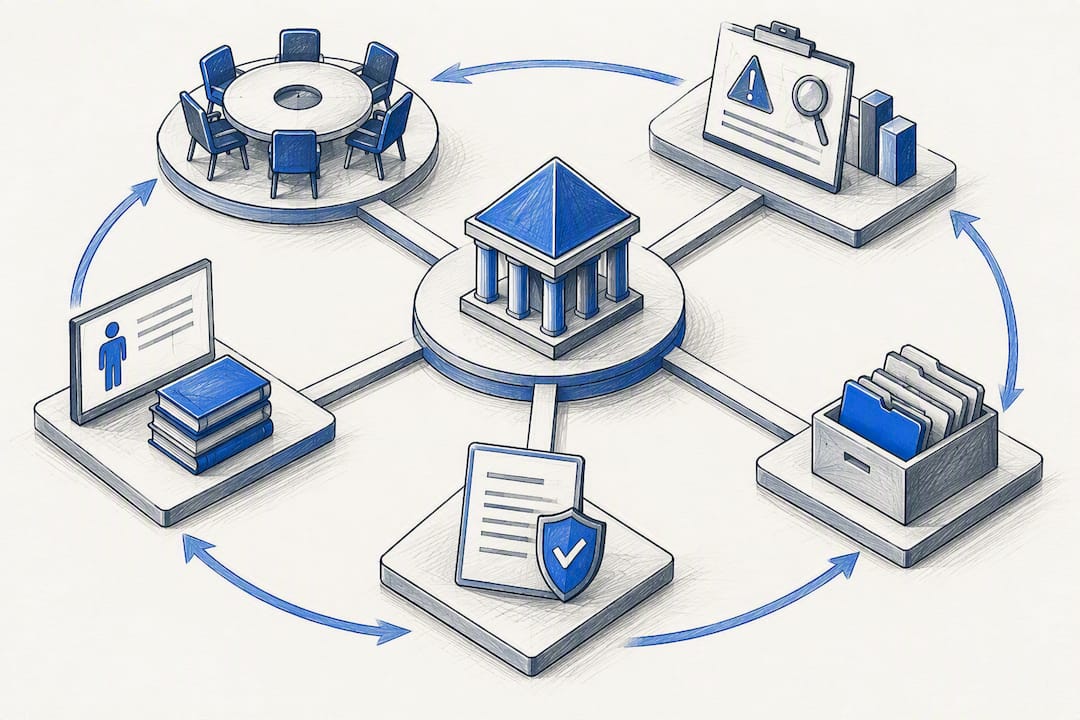
OSHA’s guidance runs parallel to this. Its recommended Workplace Violence Prevention Program framework calls for management commitment, employee participation in program design, worksite analysis, hazard prevention and control measures, training, and consistent recordkeeping. Neither body treats these as optional add-ons. They are the baseline structure a functioning program needs.
Federal attention on this issue keeps growing, with multiple bills introduced in the 119th Congress addressing violence against healthcare workers specifically. That trend signals that documentation and formal programs will matter more, not less, in the years ahead.
Here’s where to start:
Designate a program leader with real authority over budget, scheduling, and policy enforcement.
Form a multidisciplinary committee including nursing, security, administration, and behavioral health representation. Informal or ad hoc committees consistently fail to meet accreditation standards, according to research on effective violence-prevention committees.
Adopt a written zero-tolerance policy that defines prohibited behavior and outlines consequences clearly.
Schedule the annual worksite analysis and treat its findings as an action list, not a filing exercise.
Document every training session and mitigation step so the program can withstand an accreditation review.
Staff Training and Simulation: Building Real De-Escalation Skill
Training works best when it is practiced, not just presented. A scoping review on preventing patient and visitor violence against emergency nurses found simulation-based training and validated risk-assessment tools among the most promising interventions for improving staff ability to recognize and manage escalating behavior.
Effective programs share a few structural traits:
Short, recurring sessions beat annual marathon trainings for retention.
In-situ drills, run on the actual unit with real equipment, translate better to live incidents than classroom-only instruction.
Train-the-trainer models let a hospital build internal capacity instead of depending entirely on outside consultants for every refresher.
Behavioral threat assessment training, which teaches staff to read warning signs before a situation escalates, pairs well with de-escalation curricula rather than replacing them.
The evidence has a caveat worth taking seriously: training alone tends to raise staff confidence without moving the needle on actual incident rates unless it is reinforced by policy and environmental changes, per research on implementing evidence-based strategies. Confidence is not the same as a lower assault count, and leaders who measure only the former can miss that the program isn’t working at the system level.
Pro Tip: Build a 15 to 20 minute de-escalation refresher into monthly staff meetings instead of relying on a single annual course. Short, frequent repetition holds up better under real pressure than a day-long session staff take once a year.
Documented competency checks matter here too. Track who completed which module and when, fold training into new-hire orientation from day one, and treat the annual refresher as a floor, not a ceiling.
Environmental and Engineering Controls: Design Fixes That Actually Reduce Risk
The physical layout of an ED shapes how often conflict escalates before anyone intervenes. OSHA’s guidance names several proven engineering controls, and most are within reach for facilities of any size.
Sightlines and visibility: open triage layouts let staff spot escalating behavior before it reaches a crisis point.
Controlled access points: limiting entry to one monitored route cuts down on unregistered visitors wandering into treatment areas.
Panic alarms: placed at triage, nursing stations, and patient rooms, with a tested response protocol behind them.
Camera coverage: in waiting areas and hallways, both as a deterrent and as documentation after an incident.
Bolted or breakaway furniture: reduces the odds that a chair or side table becomes a weapon during a struggle.
Adequate lighting: especially in parking areas and entryways, where after-dark incidents cluster.
Weapons-screening programs, including metal detectors, deserve a specific caution. They are popular and visible, but research examining their limits suggests they may not meaningfully reduce absolute violence rates and can divert budget away from more effective behavioral and policy interventions. Treat detection technology as one layer, never the whole strategy.
Low-cost operational fixes round out the picture. Posting current wait times and having staff make periodic rounds through the waiting area both correlate with lower waiting-room aggression, since patients who know what to expect tend to escalate less than those left guessing, per the Annals of Emergency Medicine review. Verifying visitor registration and checking for active restraining orders before issuing a visitor badge is another inexpensive step with outsized impact, according to research on hospital security practices.
Risk Screening: Catching Warning Signs Before They Escalate
Screening tools give triage staff a structured way to flag risk instead of relying on gut instinct alone, and the Rabin et al. review points to several frameworks worth building into daily workflow.
STAMP flags Staring, Tone, Anxiety, Mumbling, and Pacing as early behavioral indicators worth a second look at triage.
ABC frameworks break assessment into Antecedent, Behavior, and Consequence, helping staff document what triggered an episode rather than just its outcome.
Brief behavioral checklists give triage nurses a fast, standardized way to note risk without slowing down an already busy intake process.
EHR-integrated visual flags carry that risk assessment forward, so the next nurse on shift sees the same information instead of starting from zero.
Standardized handoff language during shift change keeps a flagged risk from getting lost between teams, a step research on embedding screening tools identifies as critical for continuity.
Clinical differentiation belongs inside this workflow too. Before assuming a security issue, staff should rule out delirium, hypoglycemia, hypoxia, or intoxication as the actual driver of agitated behavior. A quick vitals check and mental status screen at triage often answers that question faster than waiting for the situation to escalate further.
Reporting, Data Collection, and Supporting Staff After an Incident
Underreporting is one of the most stubborn problems in ED violence prevention, and it usually comes down to friction. Staff skip filing a report when the form is long, the process eats into a break, or nothing visible happens after the last one they submitted.
Cut the reporting form down to the essentials and make digital entry possible from a shared device on the floor.
Protect time for staff to complete a report instead of expecting it done off the clock.
Track incident frequency, location and time patterns, restraint or medication use, staff injury counts, and periodic staff perception surveys.
Share committee action taken on prior reports, since silence after a report is the fastest way to kill future reporting.
Case studies and before/after analyses show measurable reductions in restraint use and assault incidents when procedural guidelines and staff training are applied together and sustained over time, according to a PMC review on emergency department violence interventions.
After an incident, a structured debrief and psychological first aid should happen within the same shift when possible, not weeks later in a generic meeting. Corrective action, whether it’s a policy tweak, an environmental fix, or additional training, needs to route back through the governance committee so the data actually changes something.
A phased roadmap for rolling out your program over time
Building a full program at once overwhelms most EDs. Phasing it keeps momentum without stalling on scope.
First 30 days: Designate a program lead, fix the most urgent environmental hazards (broken locks, dead panic alarms, blind corners), simplify the incident reporting form, and communicate the zero-tolerance policy to every shift.
Days 31 to 90: Launch recurring training cycles, pilot a triage screening tool on one shift before rolling it hospital-wide, verify panic systems and radio communication actually work end to end, and start collecting baseline incident data.
Months 4 through 12: Complete the required annual worksite analysis, measure outcomes against your baseline, refine policy based on what the data shows, and budget for ongoing training and any capital environmental improvements identified.
Timeframe | Primary focus | Key deliverable |
30 days | Leadership and immediate fixes | Designated lead, active zero-tolerance policy |
90 days | Training and screening pilot | Baseline metrics, tested panic systems |
12 months | Evaluation and refinement | Completed worksite analysis, budgeted next cycle |
Each phase builds on the last. Skipping straight to training without fixing an obvious environmental hazard, or launching a screening tool without a governance committee to review its results, tends to stall the whole effort within a few months.
What Twenty Years of Watching EDs Struggle With This Taught Me
Most ED violence prevention programs fail for a boring reason: they treat training as the finish line instead of the starting point. A department runs one strong de-escalation session, confidence scores go up, and leadership moves on. Then six months later, incident numbers haven’t budged, and nobody connects the dots back to the fact that the environmental fixes and policy updates never happened.
The EDs that actually change their numbers are the ones where staff start reporting more, not less, because they trust something happens with that report. That shift in reporting behavior is the real early signal a program is working, long before the incident-rate charts show it.
Choosing an outside training partner that aligns with Joint Commission and OSHA expectations, rather than a generic course, can make the difference between a certificate on the wall and a measurable change in how staff handle the next crisis.- Shawn Lebrock
How CVPSD Supports a Complete ED Violence Prevention Program
Building the governance, training, and documentation pieces of a violence prevention program from scratch strains most ED budgets and staff calendars. Some organizations offer evidence-based programs built to map onto Joint Commission expectations, so teams are not reinventing curriculum while also trying to run a department.
The ConflictIQ™ series covers this ground in stages, from foundational de-escalation (ConflictIQ™ 100) through advanced behavioral management, giving leadership a structured path instead of a single one-off seminar. For departments that need something specific to their patient population, layout, or existing policy gaps, Customized Training builds a program around your actual environment rather than a generic template. All of it comes with the observed skills assessment and documentation your accreditation team will want on file.
Programs are available in-person, online, and through train-the-trainer certification, so a facility can build internal training capacity instead of depending on outside instructors for every refresher cycle. Review the full training program lineup and start mapping which tier fits your department’s current gaps, or browse the complete training catalog to get a quote for your team.
Sources
FAQ
What are the three levels of hostile behavior?
Behavioral threat models generally describe escalation in three stages: anxious or agitated behavior, verbal aggression or threats, and physical aggression. Recognizing the shift from anxious to verbally aggressive is where de-escalation training has the most leverage, since intervening early prevents the jump to physical violence.
What are some safety tips for workplace violence in the ED?
Keep sightlines open at triage, verify visitor registration before issuing badges, and make sure panic alarms are tested regularly rather than assumed functional. Posting current wait times and having staff make visible rounds through the waiting area both correlate with lower aggression, according to the Annals of Emergency Medicine review.
What is the role of law enforcement in reporting workplace violence?
Law enforcement typically gets involved for incidents that meet the threshold of criminal assault or an active safety threat, working alongside hospital security and the violence prevention committee rather than replacing internal reporting. Internal incident data still needs to be captured separately, since not every episode rises to a police report but all of them should inform the hospital’s own risk mitigation record.
What are some examples of violence prevention programs?
Examples include hospital-wide programs built around Joint Commission’s required governance structure, OSHA’s Workplace Violence Prevention Program framework, and training-based programs like CVPSD’s ConflictIQ™ series, which combines de-escalation instruction with behavioral threat assessment. The strongest programs pair training with policy and environmental changes rather than relying on training alone.
How much does CVPSD’s ED violence prevention training cost?
Pricing for CVPSD’s ConflictIQ™ programs and customized training engagements is available on request through the training program page. The self-paced online conflict resolution course is listed on the product catalog at no cost.
Recommended
About the Author: William DeMuth is the Director of Training at the Center for Violence Prevention and Self Defense (CVPSD) in Freehold, NJ. With over 35 years of research in violence dynamics and personal safety, William specializes in evidence-based training that bridges the gap between compliance and real-world conflict resolution. The architect of the ConflictIQ™ program, he holds advanced certifications and has trained under diverse industry leaders.


